


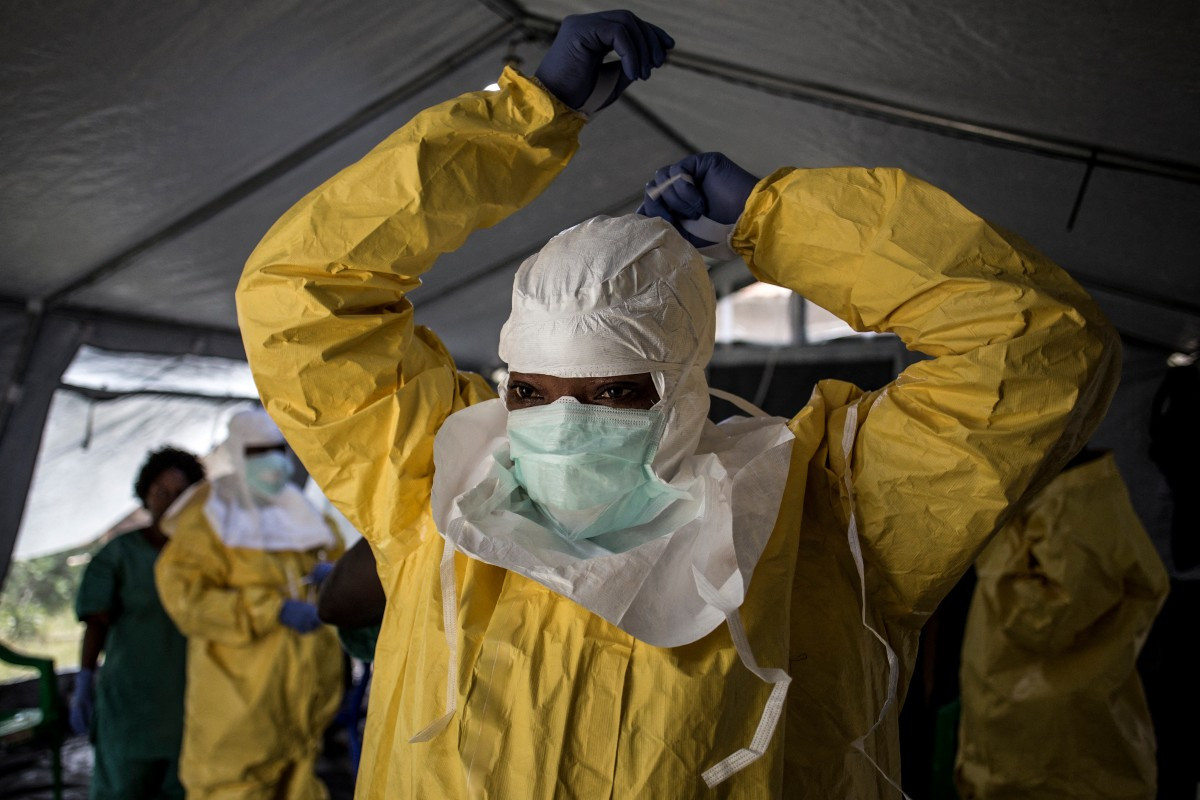
The World Health Organization has declared the latest Ebola outbreak in the Democratic Republic of the Congo and neighbouring Uganda a public health emergency of international concern, after the virus killed nearly 90 people.
The outbreak began in eastern DRC’s Ituri province and involves the rare Bundibugyo strain of Ebola. Health officials say this strain is especially concerning because there is currently no approved vaccine or specific treatment for it.
Although the WHO raised its alert level, it stopped short of calling the outbreak a pandemic. The agency also advised countries not to close borders or restrict trade, warning that such measures could make containment harder by pushing travel into informal and unmonitored routes.
Outbreak Began in Eastern DRC
According to health authorities, the outbreak was first reported in Ituri province, near the borders with Uganda and South Sudan. Africa CDC said there had been hundreds of suspected cases and 88 deaths by Saturday.
The first known patient was a nurse who arrived at a health facility in Bunia, the capital of Ituri, on April 24 with symptoms similar to Ebola. The outbreak is believed to have started in Mongwalu, a busy mining area where population movement is frequent.
Officials say infected people later travelled to other areas to seek treatment, helping the virus spread beyond the original outbreak zone. This movement has made the response more difficult, especially in a region already affected by weak healthcare access and armed violence.
Uganda Confirms Linked Cases
Uganda has also reported laboratory-confirmed cases connected to travellers from the DRC. At least one death was recorded in the capital, Kampala.
Doctors Without Borders warned that the fast rise in cases and deaths, combined with cross-border spread, is extremely worrying. The organisation said urgent action is needed because many people in Ituri already face insecurity and limited access to medical care.
What Is Ebola?
Ebola is a serious viral disease first identified in 1976 near the Ebola River in what is now the DRC. The virus is believed to come from wild animals, especially bats, before spreading to humans.
It can spread through direct contact with infected bodily fluids or contaminated items. People become infectious after symptoms begin.
Common symptoms include fever, vomiting, diarrhoea, extreme weakness and muscle pain. In severe cases, the illness can become life-threatening. The incubation period can range from two to 21 days.
The Bundibugyo strain, first identified in Uganda in 2007, has been described by DRC health officials as highly lethal, with a fatality rate that can reach around 50 percent.
What the WHO Declaration Means
A public health emergency of international concern is one of the WHO’s highest alert levels under global health rules. It is used when an outbreak may spread across borders and requires coordinated international action.
WHO Director-General Tedros Adhanom Ghebreyesus said neighbouring countries face a high risk of further spread because of travel, trade, population movement and uncertainty over the outbreak’s full scale.
The WHO urged nearby countries to activate emergency systems, strengthen border health checks, isolate confirmed cases and monitor people who may have been exposed. It also recommended that exposed individuals avoid international travel for 21 days.
At the same time, the agency said border closures are not recommended because they could make tracking cases more difficult.
DRC Has Faced Ebola Before
The DRC has recorded at least 17 Ebola outbreaks since the virus was first discovered. The country’s deadliest outbreak lasted from 2018 to 2020 and killed nearly 2,300 people.
Another outbreak last year killed at least 34 people before it was declared over in December. Since Ebola was first identified, the disease has killed about 15,000 people, mostly in Africa.
Conflict Could Slow the Response
Containing the outbreak may be especially difficult because Ituri and other parts of eastern DRC continue to face violence from armed groups.
The WHO warned that insecurity, humanitarian problems, population movement and informal health facilities could increase the risk of wider spread. These same challenges complicated previous Ebola responses in North Kivu and Ituri.
Eastern DRC has faced conflict for more than three decades, with armed groups competing for control in the mineral-rich region. Recent attacks have killed dozens of people, adding more pressure to an already fragile public health response.
A Critical Test for Regional Health Systems
The Ebola outbreak in DRC and Uganda is now a major test for regional health authorities. While the WHO has not declared a pandemic, the emergency alert shows that the situation is serious and requires fast coordination.
With no approved vaccine or treatment for the Bundibugyo strain, health teams are focusing on early detection, isolation, contact tracing and cross-border monitoring.
For communities already affected by conflict and limited healthcare, the coming weeks will be crucial in determining whether the outbreak can be contained or spreads further across the region.