


At least 12 people have been killed in Israel attacks across southern Lebanon, including senior officers from the Lebanese army. The attacks came only days after Lebanon and Israel agreed to a conditional ceasefire during talks mediated by the United States.
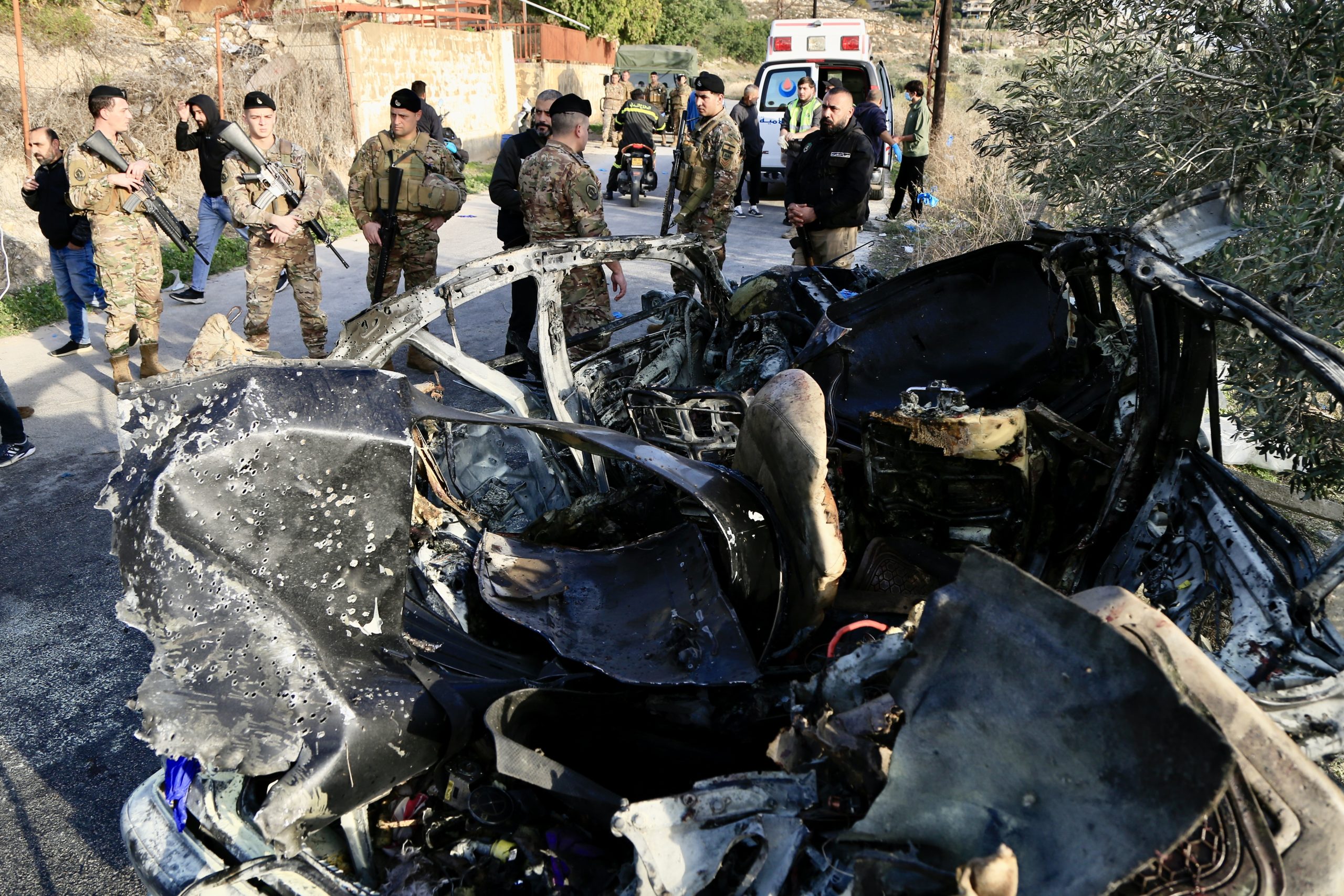
Lebanon’s army said a brigadier general, a captain, and a soldier were killed when an Israeli strike hit a military vehicle on the Khardali-Nabatieh road.
The Israeli military said the strike took place in an “active combat zone” and added that movement in such areas must be coordinated with Israeli forces. It also said the incident was still being reviewed.
Lebanon Condemns the Attack
The Lebanese army accused Israel of carrying out repeated and deliberate attacks that could undermine efforts to reach a political solution.
Lebanese President Joseph Aoun strongly condemned the strike, calling it a clear violation of Lebanon’s sovereignty and international law.
Prime Minister Nawaf Salam also denounced the attack, describing it as a serious crime against Lebanon and its people. He offered condolences to the families of Brigadier General Wassam Sabra, Captain Elie Khoury, and soldier Hussein Ghozal.
Regional Anger Grows
Hezbollah also condemned the strike, calling it a grave attack on Lebanon. The group accused the Lebanese government of accepting pressure from Washington while exposing the country to further violence.
Iran’s Foreign Ministry spokesperson Esmaeil Baghaei said the killings showed that Israel was targeting Lebanon as a whole. He described the attack as an assault on Lebanon’s army, sovereignty, and stability.
Several regional countries also criticised the strike. Saudi Arabia rejected the targeting of Lebanon’s sovereignty and army, while Jordan called the attack a violation of Lebanese security and international law. Qatar described it as a dangerous escalation and urged the international community to pressure Israel to stop its attacks.
The United Nations peacekeeping force in southern Lebanon, UNIFIL, said such attacks violate Lebanon’s sovereignty and UN Security Council Resolution 1701, which helped end the 2006 war between Israel and Hezbollah.
More Strikes Reported Across Southern Lebanon
Lebanon’s state-run National News Agency reported that an Israeli air strike on the village of Saksakiyah in the Sidon district killed six people and wounded four others.
Another person was killed in a drone strike targeting a car in Deir al-Zahrani, while later strikes on the Zifta-Nabatieh highway and Habboush municipality also killed people.
Israel also renewed forced displacement orders for several southern Lebanese villages, including Armati, Mashgara, Kafr Huna, Sajad, and Ansariya. Residents were ordered to move north of the Zahrani River.
Israel Says Hezbollah Sites Were Hit
The Israeli military said it had struck around 150 Hezbollah targets in southern Lebanon over two days. It said the targets included weapons storage sites, command centres, rocket launchers, and other military infrastructure.
Israel said those locations were being used to prepare and carry out attacks against Israeli soldiers.
Late on Saturday, the Israeli military said two of its soldiers had been killed in southern Lebanon. One died after suffering serious injuries, while the other was killed during an operation.
Hezbollah said its fighters had struck an Israeli Merkava tank at the Blat outpost in the Bint Jbeil area using a drone.
Fragile Ceasefire Under Pressure
A ceasefire meant to stop fighting between Israel and Hezbollah began on April 17, but it has not been fully respected. Both sides have repeatedly accused each other of violating the agreement.
A new conditional ceasefire was announced this week by Lebanese and Israeli envoys in Washington. However, Hezbollah leader Naim Qassem rejected the deal, saying it did not include Hezbollah and did not require Israel to withdraw from southern Lebanon.
The Lebanese army has generally avoided direct confrontation with Israel and has not taken part in the current conflict.
Conflict Toll Continues to Rise
The latest fighting between Israel and Hezbollah began in early March after Hezbollah said it was acting in support of Tehran.
According to Lebanon’s Health Ministry, Israeli attacks across Lebanon have killed at least 3,593 people and injured 10,990 others since March 2.
Al Jazeera’s correspondent in Beirut said Lebanese soldiers and officers have been killed before during the conflict, but this is the first reported killing of such a high-ranking general.
Iran Rejects Lebanon Bargaining Claim
The attacks also added tension between Lebanon and Iran. Iranian Foreign Minister Abbas Araghchi rejected President Aoun’s suggestion that Lebanon had become a bargaining chip for Tehran in talks with the United States.
Araghchi said that if Lebanon were truly a bargaining chip for Iran, a deal would already have been reached. He urged Aoun to focus on what he called Lebanon’s real enemy.
Lebanon Faces Growing Uncertainty
The killing of Lebanese army officers has increased pressure on an already fragile ceasefire process. While Israel says it is targeting Hezbollah infrastructure, Lebanese officials argue that the strikes are violating the country’s sovereignty and weakening diplomatic efforts.
With Hezbollah rejecting the latest ceasefire terms, Israel continuing military operations, and regional powers issuing warnings, the situation in southern Lebanon remains unstable.