


A leading global shipping organisation has criticised both the United States and Iran over their recent seizure of commercial vessels, calling for the immediate release of all crew members and warning that the actions violate international law.
John Stawpert, marine director of the International Chamber of Shipping, said merchant seafarers should be able to carry out their work freely and without intimidation. He described the capture of civilian ships as a direct challenge to freedom of navigation, a principle protected under international law.
According to Stawpert, commercial crews are being caught in a political confrontation that should never involve ordinary maritime workers. He stressed that the people on board these vessels are simply transporting trade and should not face detention as part of a wider geopolitical dispute.
His organisation, which represents about 80 percent of the world’s merchant fleet, said the current pattern of ship seizures has created a dangerous situation for international shipping and added fresh uncertainty to an already unstable region.
Concerns Grow Over Hormuz Tolls and US Blockade
Stawpert also criticised Iran’s stated intention to charge tolls in the Strait of Hormuz, arguing that such a move has no basis in international law and could create a troubling precedent for other major shipping routes.
He warned that if one country is allowed to impose such conditions in Hormuz, the same logic could be applied elsewhere in key global waterways such as the Strait of Gibraltar or the Strait of Malacca.
At the same time, he said US President Donald Trump’s naval blockade of Iranian ports has only added to the confusion facing shipping companies. Already dealing with the effects of Iran’s effective closure of the strait, operators are now also trying to assess the risks created by American military action in the same waters.
Stawpert said the lack of clarity around targeting conditions and enforcement has made the operating environment even more unpredictable. In his view, both Iran’s restrictions and the US blockade are disrupting the principle of safe and open passage for international shipping.
Commercial Crews Caught in a Wider Political Standoff
The warnings come after both Washington and Tehran announced the capture of two commercial vessels each over the past week, as tensions continue in and around the Gulf.
The US Department of Defense said on Thursday that it had seized the Iran-linked Majestic X in the Indian Ocean while it was allegedly transporting sanctioned oil. That followed the earlier interception of another vessel, Tifani.
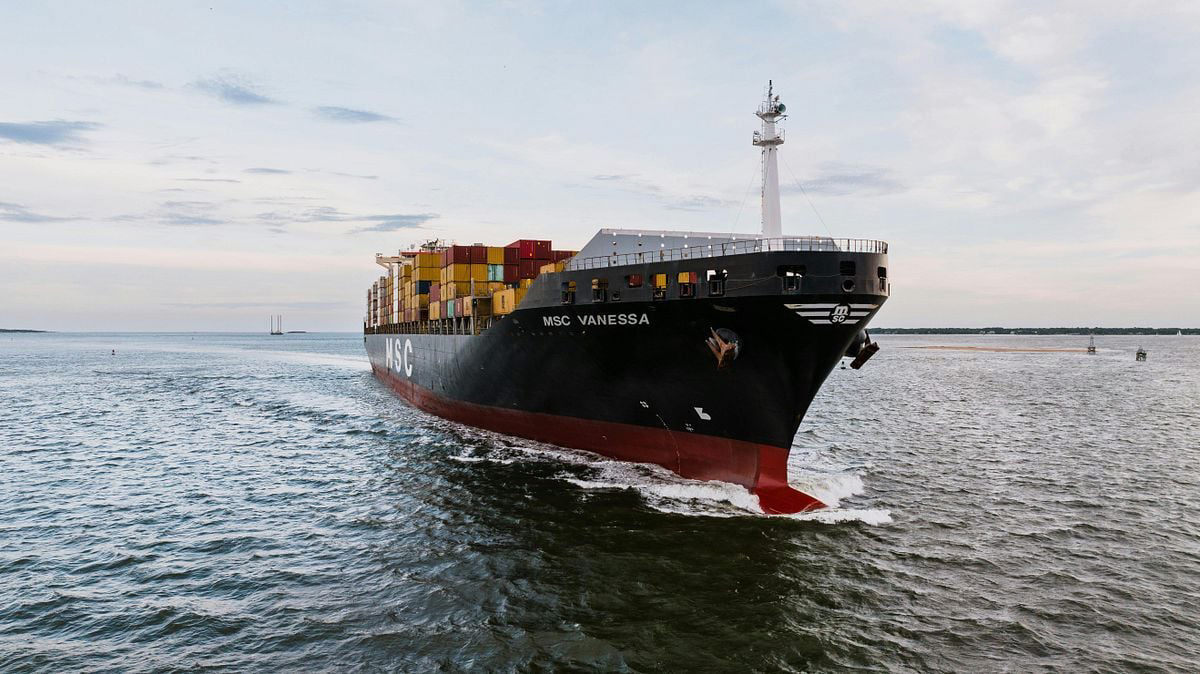
Iran’s Islamic Revolutionary Guard Corps said on Wednesday that it had seized the Panamanian-flagged MSC Francesca and the Greek-owned Epaminondas. Iranian authorities said the ships were operating without the required permits and had tampered with their navigation systems.
The Philippines’ Department of Migrant Workers confirmed that 15 Filipino seafarers were aboard the two vessels taken by Iran. Officials said Tehran had assured them that the crew members were safe and unharmed. Montenegro’s maritime minister also said four Montenegrin crew members aboard the MSC Francesca were in good condition.
There have been no official updates on the condition of the crews aboard the vessels captured by US forces. Stawpert said there was no indication the detained seafarers were being abused, but stressed that this misses the central issue. In his view, they should not be in custody at all.
Thousands of Seafarers Remain Stranded in the Gulf
Beyond the ships that have been directly seized, the International Chamber of Shipping is also deeply concerned about the wider human toll on the maritime workforce.
Stawpert said an estimated 20,000 seafarers remain stranded in the Gulf because of the effective closure of the Strait of Hormuz. He described their welfare as a major priority, warning that the psychological pressure on crews is likely becoming severe after weeks of being unable to leave.
He said many of these workers are now effectively living under conditions close to house arrest, trapped by the security crisis and uncertainty over when regular transit might resume.
His call was direct: both the US and Iran should respect freedom of navigation and restore the right to innocent passage as quickly as possible.
Global Energy and Trade Continue to Feel the Impact
The disruption in the Strait of Hormuz is already having major consequences for the wider world. The waterway normally carries about one-fifth of global oil and natural gas supplies, making it one of the most important energy routes on the planet.
Its continued blockage has pushed fuel prices higher worldwide and forced many governments to introduce emergency energy-saving measures. Shipping activity remains far below normal levels, with reports indicating that only five ships passed through the strait in the last 24 hours.
Before the US and Israel launched war against Iran on February 28, the strait handled an average of 129 daily transits, according to United Nations Trade and Development figures.
The latest warnings from the shipping industry underline how quickly a military and political standoff can spill into global trade. For maritime operators, the issue is no longer only about geopolitics. It is also about the safety of civilian crews, the stability of energy markets and the basic legal principle that commercial vessels should be allowed to move without being turned into instruments of state pressure.