


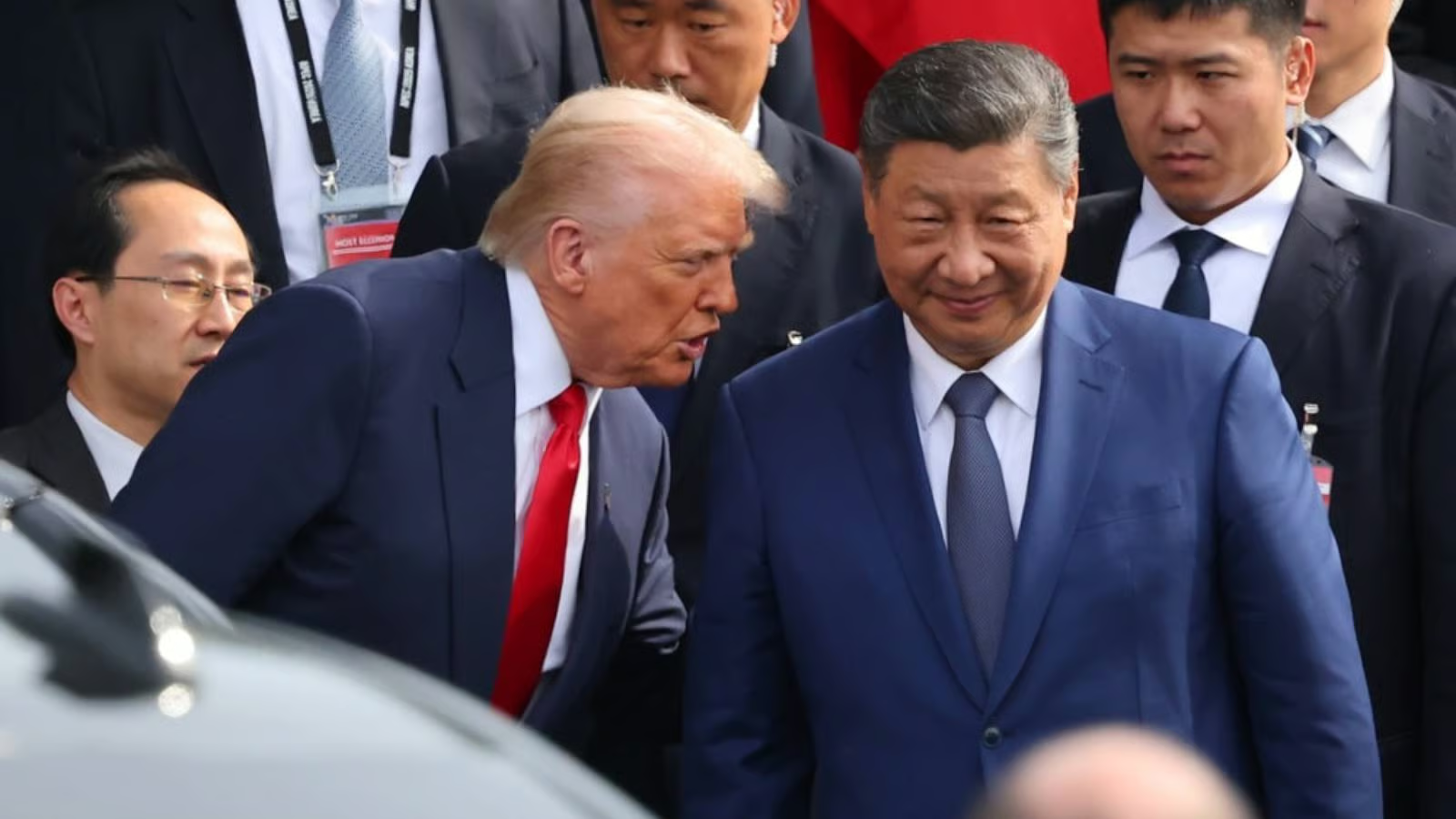
United States President Donald Trump’s visit to Beijing ended without a clear breakthrough on efforts to stop the war on Iran. Although Washington had spent weeks urging China to use its influence over Tehran, the meetings between Trump and Chinese President Xi Jinping produced little sign of a shared strategy to end the conflict.
Trump left Beijing on Friday afternoon after spending a little more than 40 hours in the Chinese capital. During that time, the two leaders discussed several global issues, including the ongoing war involving Iran, the United States, and Israel.
However, statements from both sides showed that Washington and Beijing remained largely fixed in their original positions. The war, which began on February 28, has now entered its 77th day.
China Repeats Call for Ceasefire
China used the summit period to restate its opposition to the war. Beijing said the conflict had caused heavy losses for people in Iran and other countries in the region. China also argued that ending the crisis quickly would benefit not only the US and Iran, but also the wider Middle East and global community.
The Chinese Foreign Ministry said dialogue remained the best path forward and welcomed ongoing ceasefire efforts being mediated by Pakistan. Beijing also called for a comprehensive and lasting ceasefire as soon as possible.
China linked its position to Xi Jinping’s broader four-point plan for peace and stability in the Middle East. The plan emphasizes peaceful coexistence, political negotiations, shared security, and development-based cooperation.
US Focuses on Iran’s Nuclear Ambitions
The Trump administration continued to frame the war as necessary to prevent Iran from obtaining a nuclear weapon. Washington has repeatedly said Iran must never be allowed to develop nuclear arms.
China’s statement, however, used more cautious language. Beijing did not explicitly repeat the US position that Iran must never have a nuclear weapon. Instead, China called for political talks and a settlement on Iran’s nuclear issue that addresses the concerns of all parties.
Iran has publicly denied any intention to build nuclear weapons. Still, its nuclear programme remains a major point of tension, especially because Tehran is believed to have a large stockpile of uranium enriched to 60 percent. A 90 percent enrichment level is generally associated with weapons-grade uranium.
Strait of Hormuz Remains a Key Dispute
The Strait of Hormuz was another major issue during the summit. The White House said both sides agreed that the waterway must remain open to support the free flow of energy.
The strait is one of the world’s most important energy routes. Before the war, around 20 percent of global oil and liquefied natural gas supplies passed through it. Since early March, Iran has restricted shipping through the route and required selected vessels to negotiate passage with the Islamic Revolutionary Guard Corps.
Washington said Xi opposed the militarisation of the strait and rejected the idea of charging tolls for vessels passing through it. The White House also said Xi showed interest in buying more American oil to reduce China’s dependence on the strait in the future.
China’s own statement did not mention Iranian tolls or militarisation directly. Instead, Beijing said the conflict had damaged global growth, supply chains, international trade, and energy stability.
No Major Shift from Either Side
The summit showed that neither Washington nor Beijing had significantly changed its position. The US continued to focus on Iran’s nuclear programme and freedom of navigation through the Strait of Hormuz. China continued to push for dialogue, ceasefire efforts, and a broader political settlement.
This was not the outcome the Trump administration appeared to want. In the weeks before the summit, US officials had pressed China to play a more active role in influencing Iran, especially because Beijing is a major buyer of Iranian oil and depends heavily on Gulf energy supplies.
At the same time, Trump publicly downplayed the need for China’s help. He said the US did not need assistance on Iran and claimed Washington would win the war “one way or the other.”
US Officials Sent Mixed Signals
Before and during the summit, senior US officials gave different messages about China’s role. Some said Beijing had significant influence over Tehran and should help reopen the Strait of Hormuz. Others insisted Washington could handle the situation without Chinese support.
US Defense Secretary Pete Hegseth told lawmakers that China had “a lot of leverage” over Iran, while also saying the greatest influence remained with Trump. Treasury Secretary Scott Bessent urged China to support international efforts to reopen the strait.
Secretary of State Marco Rubio also said it was in China’s interest to help resolve the crisis because of its reliance on energy shipments through Hormuz. He said Washington hoped to convince Beijing to take a more active role in pushing Iran away from its current actions in the Persian Gulf.
Energy Crisis Adds Pressure
The summit took place during a global energy crisis caused by disruption around the Strait of Hormuz. With Iran limiting shipping and the US imposing a naval blockade on ships entering or leaving Iranian ports, oil and gas supplies have faced serious pressure.
China is especially exposed to this disruption because it relies heavily on Gulf oil transported through the strait. It is also a major buyer of Iranian oil. That dependence gives Beijing a strong interest in restoring stability, but not necessarily on Washington’s terms.
The gap between Chinese and American statements suggests both powers agree on the need to avoid deeper disruption, but disagree on how to pressure Iran and how to end the war.
Conclusion
The Xi-Trump summit in Beijing ended without a major breakthrough on the Iran war. While both sides discussed the conflict, their official statements showed clear differences in priorities.
The US emphasized Iran’s nuclear programme, keeping the Strait of Hormuz open, and stopping Tehran’s regional actions. China called for dialogue, a ceasefire, and a political settlement based on its broader Middle East peace plan.
For now, the war continues, the Strait of Hormuz remains a flashpoint, and global energy markets remain under pressure. The summit may have clarified where Washington and Beijing stand, but it did not produce the diplomatic shift needed to end the conflict.