


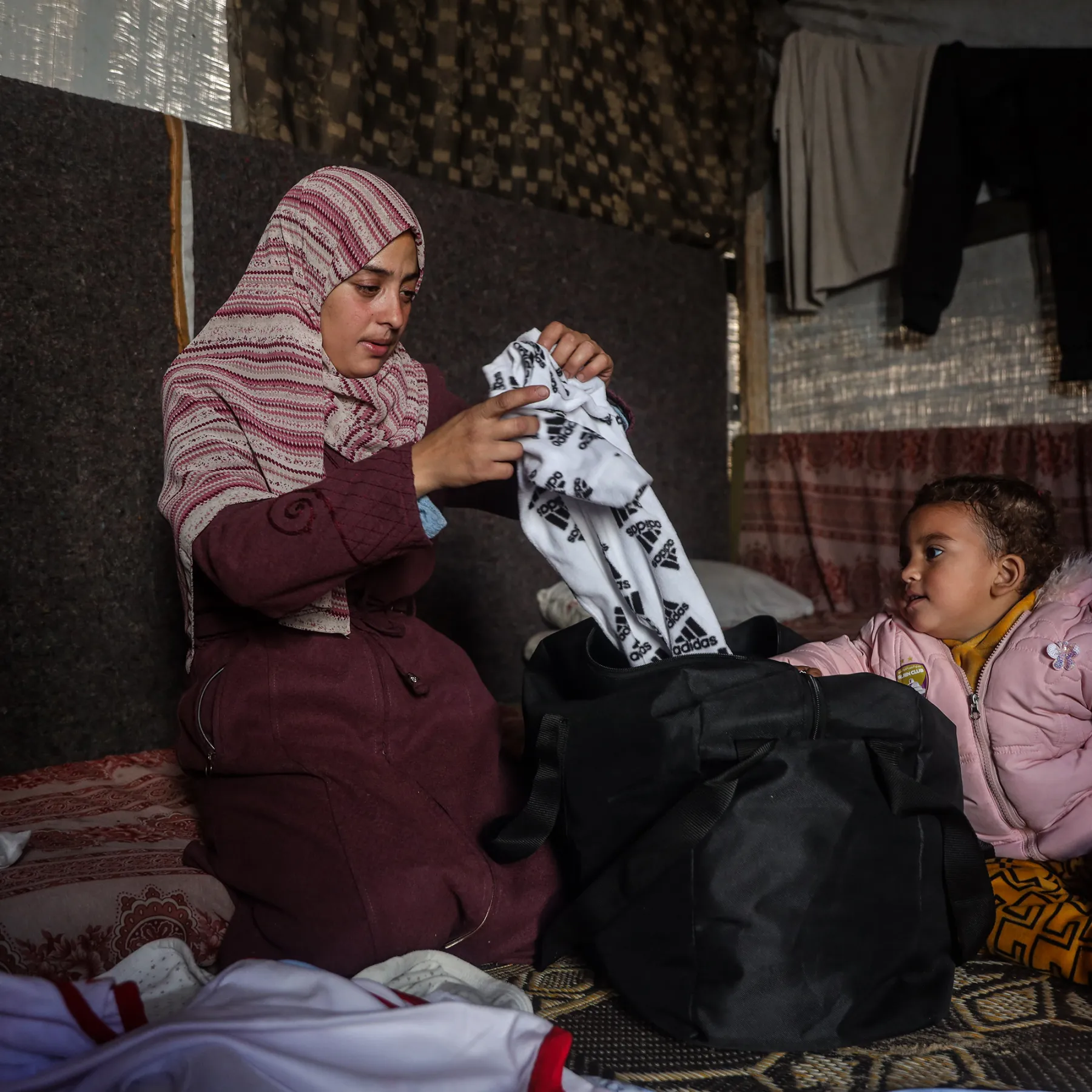
For a year and a half, the family of Eid Nael Abu Shaar, a Palestinian man from Gaza, believed their eldest son was dead. They searched hospitals and morgues, obtained a death certificate and even set up a mourning tent to grieve his loss. Then, in a sudden and shocking turn, a lawyer informed them that Eid was still alive and being held in Israel’s Ofer Prison.
The news ended 18 months of anguish for the Abu Shaar family, but it also exposed a much larger humanitarian crisis in Gaza, where thousands of families are still waiting for answers about missing relatives. Many do not know whether their loved ones were killed under rubble, buried in unidentified graves or taken into Israeli detention centres without any information being shared.
A family’s search moved from morgues to official mourning
Eid disappeared on December 15, 2024, while trying to find work near central Gaza’s Netzarim Corridor, an area his family described as one where many Palestinians had been killed or had gone missing. His father, Nael Abu Shaar, said the search pushed the family close to breaking point. He spent days and nights moving between hospitals and morgues, opening refrigerated compartments himself in the hope of finding any sign of his son. Yet every search ended with the same outcome: nothing.
The family also sought help from the International Committee of the Red Cross and from human rights organisations, but again found no trace of Eid. With no official record of his detention and no evidence that he was alive, they eventually surrendered to what seemed like the only possible conclusion. They held mourning rituals and secured documents from Gaza’s Ministry of Health declaring him dead.
A mother’s belief kept hope alive
Despite the official declaration, Eid’s mother, Maha Abu Shaar, said she never fully accepted that her son was gone. She refused to take part in the absentee funeral prayer and kept believing that he was still alive. Her instinct appeared impossible to prove for months, until a released detainee said he had encountered a man named Eid Abu Shaar in prison. That fragment of hope was finally confirmed by a lawyer on Monday.
The confirmation transformed the family’s home from a place of mourning into one of celebration. Neighbours joined the Abu Shaars in distributing sweets, marking what many described as a miracle. Yet even amid the joy, the family’s relief was incomplete. Knowing that Eid is alive has not ended the fear, because now they are left worrying about what he may be enduring behind prison walls.
One family’s relief reflects a much wider crisis
Human rights advocates say Eid’s case is only one example of a much broader pattern. Nada Nabil, director of the Palestinian Center for the Missing and Forcibly Disappeared, told Al Jazeera that between 7,000 and 8,000 Palestinians are currently missing because of the war, with around 1,500 believed to be forcibly disappeared inside Israeli prisons.
Nabil argued that Israel’s refusal to provide information about detainees is not a bureaucratic failure but a deliberate tactic. He said the policy of total secrecy is used to deepen the suffering of families and turn uncertainty into a form of collective punishment. According to him, publishing lists of detainees or allowing the Red Cross access would be simple, but concealment has instead been chosen.
Families trapped in “suspended grief”
The result of that uncertainty is what psychologists describe as suspended grief or ambiguous loss. Families without confirmation of life or death remain caught between hope and despair, unable to move forward in any real way. Nabil said this has consequences far beyond emotional pain. It also creates legal and social paralysis. Wives do not know whether they are widowed or still married, and basic questions around inheritance, remarriage and family responsibilities remain unresolved.
In Gaza’s harsh conditions of displacement, the absence of a family member like Eid also brings practical hardship. Each missing person leaves behind a gap in labour, care and income, increasing the burden on those still struggling to survive.
Fear and silence deepen the suffering
Nabil also described what he called a total failure by international organisations working around Gaza. He said the Red Cross has been blocked from visiting Israeli prisons or receiving detainee lists since the start of the war. In his view, that reflects a world in which power has outweighed law, leaving Gaza’s victims exposed to repeated violations without meaningful protection.
Many families are also afraid to speak publicly. Some worry that reporting a loved one as missing could make them a target for an Israeli air strike. Others fear that publicising the name of a detainee may lead to harsher treatment or torture inside prison. That fear deepens the silence and isolation surrounding the missing.
For the Abu Shaar family, the return of hope has not erased anxiety. Maha said she is happy to know her son is alive, but now fears even more for what he may be suffering in detention. Her relief, like her grief before it, remains unfinished until the day she can hold him again.