


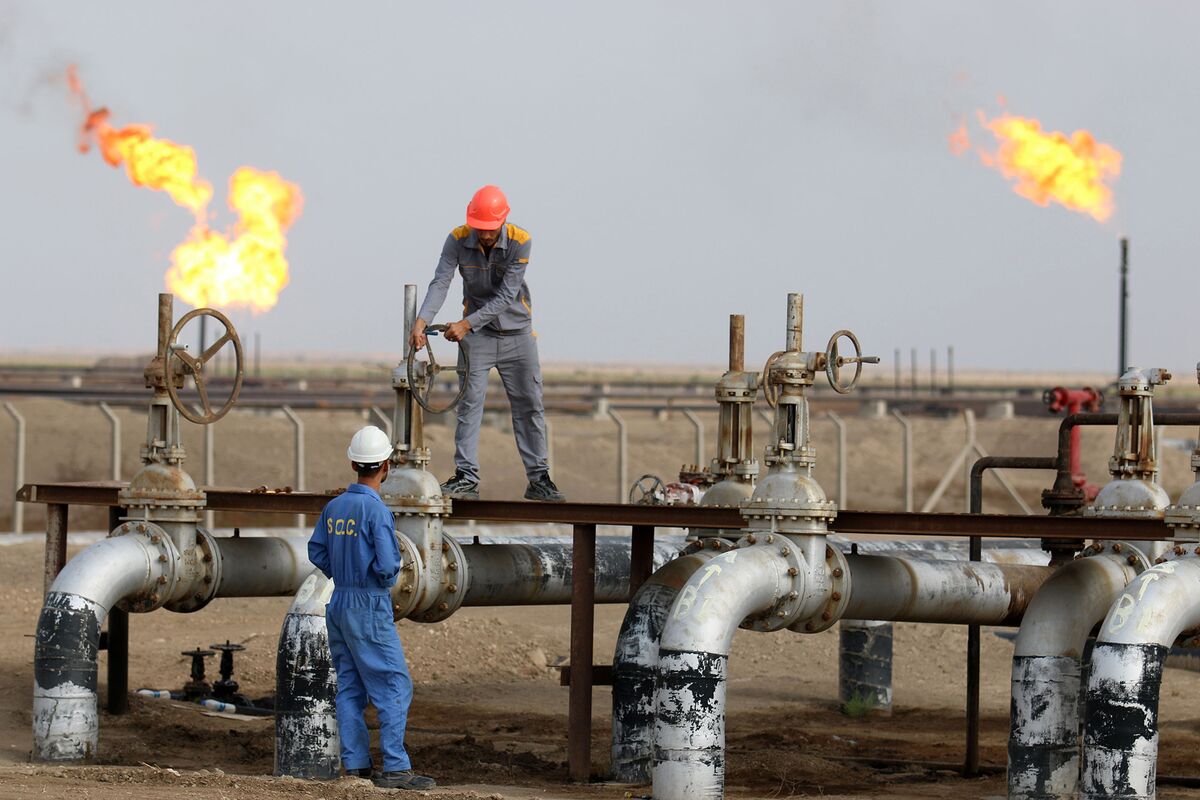
The United States has imposed sanctions on Iraq deputy oil minister, Ali Maarij al-Bahadly, along with several leaders of pro-Iran armed groups, accusing them of helping Tehran sell oil in violation of US sanctions.
According to the US Treasury, the sanctions are part of a broader effort to stop Iran from using Iraqi oil networks and institutions to move crude, generate revenue and support allied militias. Treasury Secretary Scott Bessent said Washington believes Iran has been exploiting resources that belong to Iraq in order to finance operations hostile to the United States and its partners. At the time of the report, neither Iraq nor Iran had publicly responded to the allegations.
The move also comes at a time of heightened tension between Washington and Tehran over the Strait of Hormuz, adding another layer to a much wider regional confrontation.
Who was sanctioned and why
Ali Maarij al-Bahadly is the highest-profile Iraqi official named in the latest sanctions. The report says he has played a major role in Iraqi oil governance over several years, first through parliament’s oil and gas committee and later through senior positions inside the oil ministry, including acting minister and deputy leader of the ministry.
The US Treasury also sanctioned Mustafa Hashim Lazim al-Behadili, described as a key economic figure within the Iran-backed Asa’ib Ahl al-Haq movement, as well as Ahmed Khudair Maksus Maksus and Mohammed Issa Kadhim al-Shuwaili, who were identified as senior officials in the pro-Iran Kata’ib Sayyid al-Shuhada group.
According to Washington, al-Behadili was involved in financing oil smuggling and dealt directly with Iran and the Quds Force. Maksus and al-Shuwaili were accused of involvement in illicit weapons purchases. None of those named in the sanctions had publicly commented on the accusations at the time the article was written.
How the US says Iraq was used to help Iran
The core US accusation is that Iraq has been used as a route to disguise and move Iranian oil. Treasury officials say al-Bahadly played an important role in facilitating the diversion of Iraqi oil products to benefit an Iran-linked smuggler and Asa’ib Ahl al-Haq.
According to the US version of events, Iranian oil was relabelled as Iraqi so it could reach international markets more easily and avoid sanctions. Washington also argues that corruption inside Iraqi institutions helped make this operation possible and allowed the system to keep functioning.
The report notes that Iraq’s Oil Minister Hayan Abdel-Ghani said in March last year that Iranian tankers had used forged Iraqi documents while trying to evade US sanctions. It also cites expert assessments reported by Reuters in late 2024, suggesting that Iran may earn at least $1bn a year from a smuggling network that diverts fuel from Iraqi asphalt plants, blends it with Iraqi oil and exports it as if it were fully Iraqi. Reuters also reported that Iran has been able to obtain hard currency from Iraq through exports, helping it reduce the impact of sanctions on its banking system.
Why Iranian oil sanctions matter so much
The sanctions against Iran’s oil sector are a major part of the Trump administration’s so-called maximum pressure policy. Trump first reimposed oil sanctions on Iran in 2018 after withdrawing from the nuclear agreement with Tehran. Those measures sharply limited Iran’s ability to sell its oil freely, even though some countries were given narrow exceptions.
According to the report, those restrictions stayed largely in place under President Joe Biden, but were tightened again during Trump’s second term, especially before the US-Israeli war on Iran.
Oil remains one of Iran’s most important economic lifelines. The sector accounts for about 80 percent of Iranian exports and contributes roughly a quarter of the state budget. That means any system that allows Tehran to keep moving oil or receiving payment for it becomes strategically important for the country. From Washington’s perspective, that is exactly why such smuggling networks are being targeted.
Iraq’s ties to Iran make the issue especially sensitive
The sanctions also highlight Iraq’s difficult position between two powerful partners. Iraq and Iran remain closely linked politically and ideologically, especially through the Coordination Framework, the pro-Iran bloc that dominates politics in Baghdad. Many Iraqi leaders have spent time in Iran, particularly before the 2003 US-led invasion that removed Saddam Hussein.
Since then, Iran has expanded its influence in Iraq partly through Shia armed groups, many of which now also have political wings. According to the report, those groups have embedded themselves in major sectors of the economy, including oil, helping to create a shadow system that can support both Iran and pro-Iran forces elsewhere in the region.
But Iraq also depends heavily on the United States for military and economic support, which means its leaders are constantly trying to avoid provoking either side too much. The report notes that Trump had already used US leverage earlier to help block the return of Nouri al-Maliki as Iraq’s prime minister, and has backed the new prime minister-designate, Ali al-Zaidi.
More than an oil case
These sanctions are not just about one ministry official or one smuggling route. They reflect Washington’s broader view that Iran uses Iraq not only as a neighbour and ally, but also as an economic and logistical platform to blunt the effect of American sanctions.
By going after Iraq’s deputy oil minister, the United States is sending a message that it is willing to target senior state figures if it believes they are helping Tehran sustain its oil trade. That raises the stakes for Baghdad, which must now navigate an even narrower path between its ties to Iran and its dependence on the US.
At the centre of the dispute is a simple question with major consequences: whether Iraq’s oil system has become one of the most important channels through which Iran keeps its sanctioned economy alive. According to Washington, the answer is yes, and that is why these sanctions were imposed.