


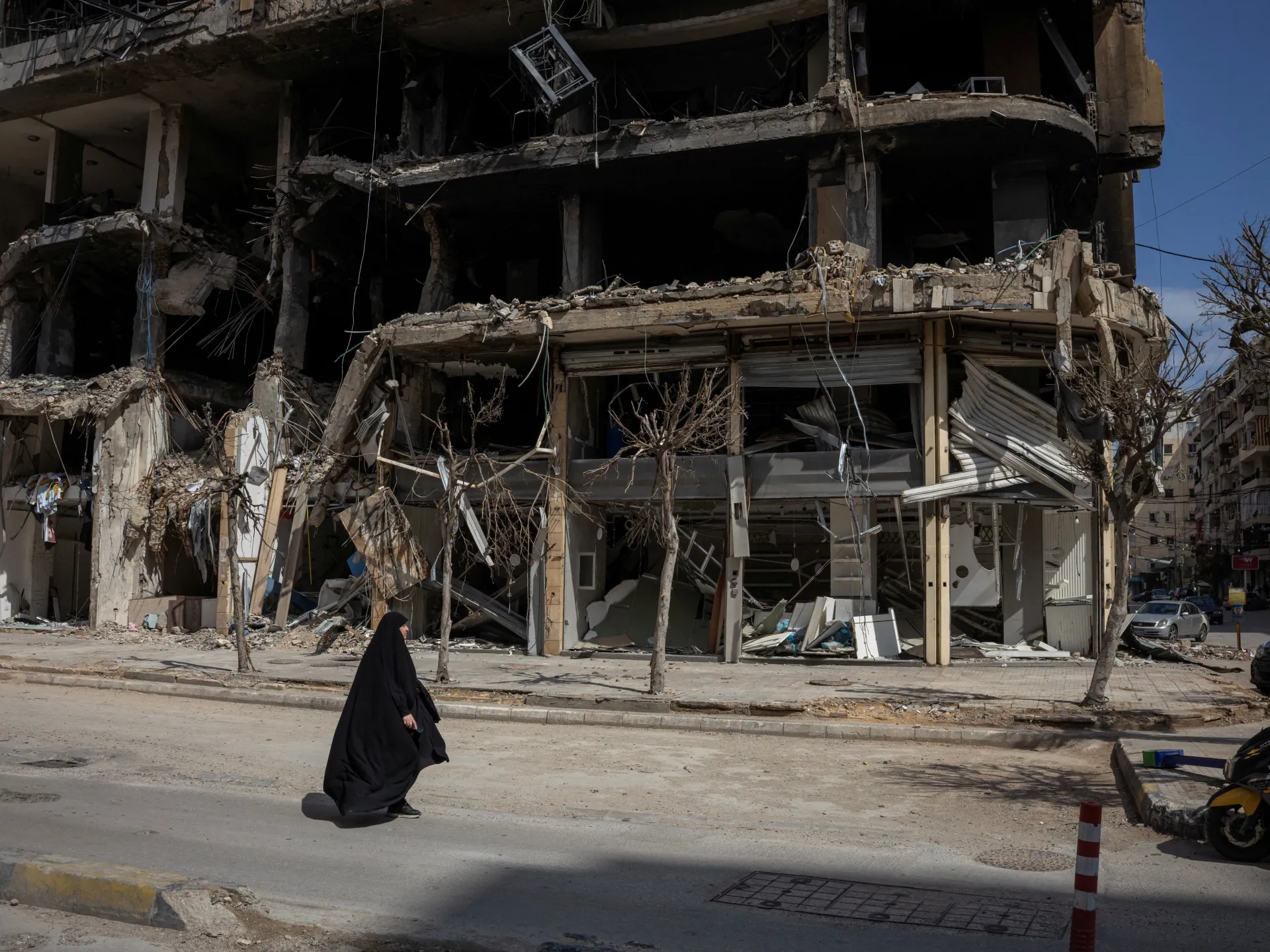
A shopkeeper in Beirut laughed when asked about the upcoming direct talks between Lebanon and Israel in Washington, DC, but his reaction reflected more than humour. He suggested that even sharing an opinion on the negotiations could be risky, capturing the tension and deep division surrounding the issue inside Lebanon.
The talks, scheduled for Thursday evening, have stirred strong and conflicting feelings in a country still reeling from war. For some Lebanese, the negotiations are an unavoidable step and perhaps the only realistic option left to the state. For others, the talks are unacceptable, with many arguing that only Hezbollah’s armed resistance can protect Lebanon and secure a meaningful outcome.
That divide reflects a wider national struggle over how Lebanon should respond to Israeli military pressure and whether diplomacy can succeed where force and outside mediation have failed.
Negotiations Begin Under the Shadow of Ongoing Violence
The controversy is sharpened by the timing of the talks. They are taking place while Israeli forces remain on Lebanese territory and continue to carry out attacks and demolitions.
According to the report, Israel intensified its war on Lebanon again on March 2, after Hezbollah responded to continued Israeli strikes for the first time in more than 15 months. Hezbollah said its action also came in response to the Israeli-US killing of Iran’s Supreme Leader Ayatollah Ali Khamenei two days earlier.
Since March 2, Israel has killed 2,294 people in Lebanon, including journalists and medics, while displacing more than 1.2 million people. It has also expanded its invasion and set up what it calls a yellow line stretching around 10 kilometres from the border. Residents inside that zone are not allowed to return to their homes, and the report says homes and entire villages there have been demolished.
Al Jazeera visited towns in the south including al-Mansouri, Majdal Zoun and Qlaileh, where buildings had been reduced to rubble. Even in the days immediately before the talks, the attacks continued. On Wednesday, Israel killed five people, including front-line reporter Amal Khalil, and on Thursday Lebanon’s Health Ministry said another Israeli strike had killed three more.

What Lebanon Wants From the Talks
The negotiations are described as the first direct talks between Lebanon and Israel in decades. They follow an initial meeting held in Washington on April 14.
The new round is set to include Lebanon and Israel’s ambassadors to the United States, the US ambassadors to Lebanon and Israel, and US Secretary of State Marco Rubio. Lebanon’s side is expected to push for an extension of the current ceasefire as a condition for moving forward, arguing that Israel has repeatedly violated it.
Prime Minister Nawaf Salam has also said Lebanon will seek a full Israeli withdrawal from its territory and the return of Lebanese detainees held by Israel.
But Hezbollah has rejected the talks, and opposition is not limited to the group itself. Ahead of the previous round of negotiations earlier in April, hundreds of protesters gathered in central Beirut to demonstrate against them. For critics, the core problem is that Lebanon is entering the process without meaningful leverage and may be pushed into a deal that serves Israel’s interests far more than its own.
Many Lebanese Fear the Talks Could Favour Israel
Among those sceptical of the process is lawyer Fouad Debs, who argued that any deal possible under current conditions is likely to heavily favour Israel. He said Lebanon is approaching the negotiations unprepared, without leverage or deterrence, and claimed the only real deterrent the country still has is Hezbollah, which he says the government is now trying to weaken internally.
Debs suggested Lebanon should consider other options instead, including going to the International Criminal Court and aligning with countries trying to hold Israel accountable through legal and diplomatic channels.
This view reflects a broader feeling among many Lebanese that Israel rarely keeps its side of agreements and that the United States cannot be seen as a neutral mediator. For that reason, some prefer resistance or believe Iran, Hezbollah’s longtime backer, has stronger leverage and should negotiate on Lebanon’s behalf.
Others Say Diplomacy Is the Least Bad Option
Not everyone who supports the talks believes they are ideal. Some simply see them as the least damaging option available.
Jad Shahrour of the Samir Kassir Foundation said Lebanon’s long and bloody history with Israel must be taken seriously, but also argued that negotiations do not automatically mean full normalisation. In his view, they could instead be the first step in allowing the Lebanese state to reassert authority over the country.
He openly acknowledged that Lebanon has little power and little leverage, but asked what practical alternatives remain. Hezbollah’s strategy, he said, has not delivered the desired result either. For him, rejecting diplomacy altogether risks bringing bombings back to Beirut, allowing Israeli forces to advance further and leaving civilians exposed without protection from either Hezbollah or the state.
That argument captures the difficult choice many Lebanese now face. The question is not whether the talks are good, but whether they are better than the other bad options on the table.
A Country Searching for a Path Forward
The debate over the talks is also linked to Lebanon’s unresolved arguments over Hezbollah’s weapons and the role of the state.
After the civil war ended in 1990, militias disarmed, but Hezbollah kept its weapons as part of what it called resistance to Israeli occupation in the south. When Israel withdrew in 2000, Hezbollah’s armed status became a major domestic issue. The group once enjoyed broad popularity, but the report says it now has limited support outside the Shia Muslim community.
Following the 2024 ceasefire, the Lebanese state pledged to disarm Hezbollah and tasked the Lebanese Armed Forces with doing so. Progress was made, but critics inside and outside Lebanon said it was too slow.
Now, after thousands of deaths and mass displacement, Lebanon remains deeply torn between those who want the state to take control through diplomacy and those who still see resistance as essential. Some analysts argue that even with little leverage, Lebanon can still shape the talks by setting its own terms and avoiding steps that damage its standing in the region.
That balance may be difficult to achieve, but it reflects the reality facing Lebanon today: a country battered by war, split over strategy, and entering high-stakes talks with no clear consensus on what peace should look like.