


The Cuban government has strongly rejected a new round of sanctions imposed by United States President Donald Trump, calling the measures coercive, unlawful and aimed at punishing ordinary Cubans rather than just state officials. Cuban Foreign Minister Bruno Rodríguez said the sanctions amount to collective punishment and argued that Washington has no legal right to impose such restrictions on Cuba or on third countries and entities linked to it. Reuters reported that the new measures were announced through an executive order on May 1, prompting an immediate response from Havana.
Rodríguez said the sanctions are extraterritorial and violate the United Nations Charter. He also accused the United States of trying to intensify suffering on the island at a time when Cubans are already enduring severe economic pressure. His remarks framed the latest US action as part of a wider campaign of political and economic aggression rather than a narrowly targeted policy move.
White House Moves to Tighten Pressure
According to reporting on the new executive order, the sanctions focus on individuals, groups and entities that support Cuba’s security forces or are accused by Washington of corruption, serious human rights abuses, or backing the Cuban government. The White House also claimed, without publicly presenting evidence in the reporting cited here, that Cuba provides a safe haven for transnational armed groups, including Hezbollah.
The new measures appear to form part of a broader hardening of Trump’s Cuba policy. Recent US pressure has already included steps that effectively tightened fuel supplies to the island, worsening an energy crisis that has contributed to more frequent electricity blackouts and deeper economic pain. Reuters also reported growing concern in Havana over the expanding scope of sanctions during Cuba’s traditional May Day events.
Cubans Face the Burden of a Deepening Economic Crisis
The strongest criticism from Havana centres on the impact these measures are expected to have on daily life. Cuban officials say the sanctions do not simply affect the state. They also increase hardship for ordinary people already dealing with shortages, weak economic growth and an unstable power grid. The broader context is a country facing heavy strain from restricted fuel access, fragile public services and worsening living conditions.
That is why Cuban leaders describe the latest US action as collective punishment. In their view, the measures are designed to squeeze the island economically until political pressure builds from within. Havana has long argued that this approach violates international norms by targeting an entire population through economic force.
Politics and Pressure Continue to Drive the Dispute
The sanctions also arrive during a period of heightened confrontation between Washington and Havana. Trump’s administration has been signalling a more aggressive posture, and recent reports describe the Cuba issue as part of a wider regional pressure strategy. That has made the political atmosphere even more tense, with Cuban officials warning that external pressure is being used to destabilise the country’s internal order.
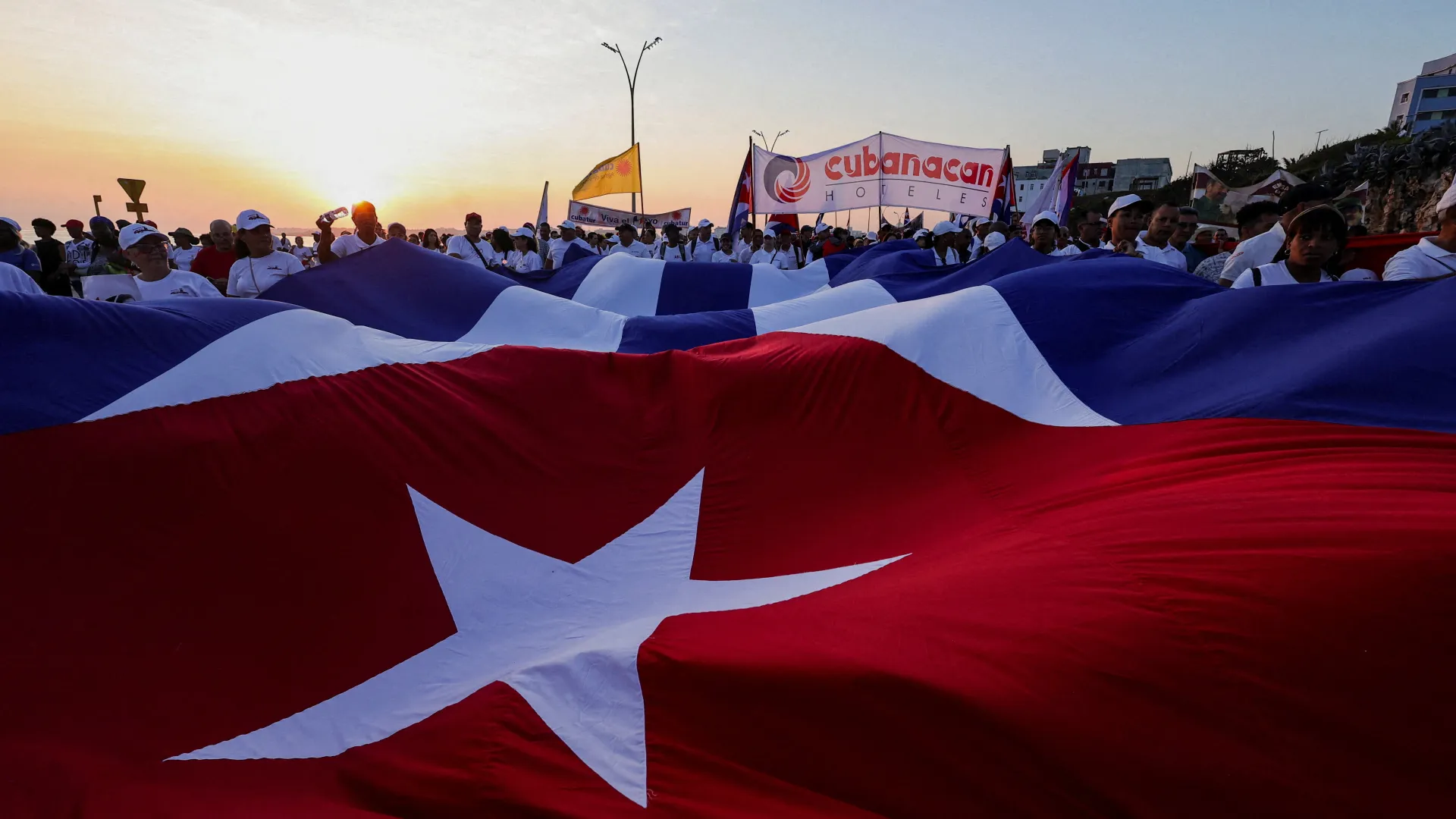
At the same time, Cuba has tried to present a message of resilience. During May Day events in Havana, senior leaders including Raúl Castro and President Miguel Díaz-Canel appeared publicly as the government sought to project unity in the face of renewed US pressure. Reuters reported that the demonstrations drew very large crowds despite severe logistical problems tied to the island’s energy shortage.
A Familiar Conflict With New Consequences
The latest confrontation shows how deeply entrenched the dispute between the United States and Cuba remains. For Washington, the sanctions are presented as a tool to pressure the Cuban state and those who support it. For Havana, they are seen as another attempt to punish the wider population and tighten a long-standing policy of economic isolation.
What is already clear is that the political argument is being matched by real-life consequences on the island. As Cuba struggles with fuel shortages, blackouts and broader economic stress, the government is trying to rally domestic support by portraying the sanctions as both illegal and cruel. The United States, meanwhile, appears determined to push harder. For ordinary Cubans, that means the fallout from this latest round of sanctions may be felt most sharply not in speeches or diplomatic statements, but in everyday life.