


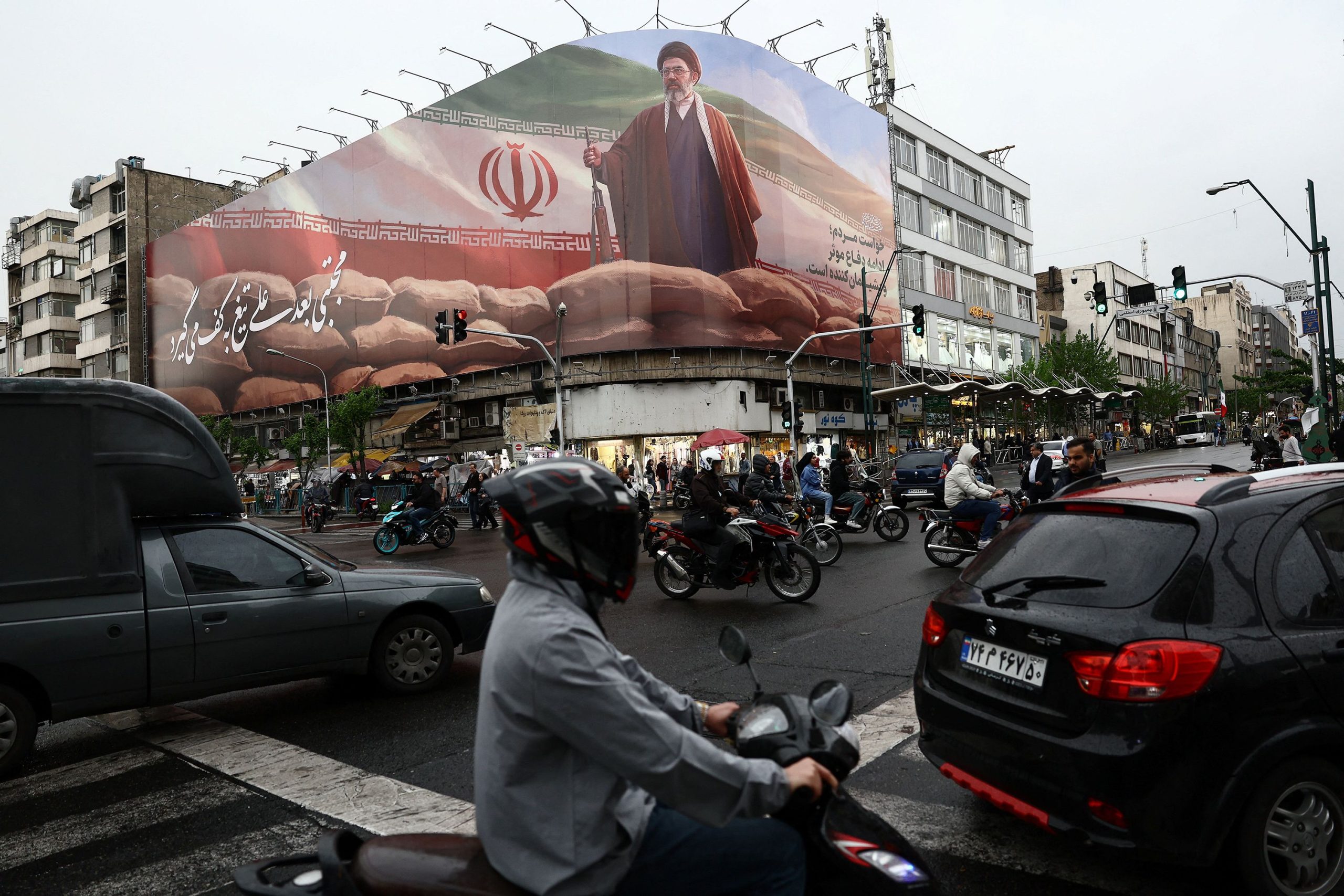
Efforts to secure a peace deal between the United States and Iran appear to have run into another serious obstacle, with both sides accusing each other of making impossible demands while the conflict’s wider economic and regional effects continue to spread. On day 73 of the war, the gap between Washington and Tehran remained clear, even as pressure mounted for a breakthrough.
Late on Sunday, US President Donald Trump rejected Iran’s latest proposal to end the war, offering no detailed explanation for why he dismissed it. His response came only days after Washington had floated a fresh offer in an attempt to restart negotiations. Tehran’s counterproposal, released on Sunday, focused on ending the war across all fronts, especially in Lebanon, while also calling for an end to the naval blockade and the removal of US and international sanctions. At the same time, it insisted that Iran should keep control over its nuclear programme and foreign policy, the very areas Washington has cited as central reasons for launching the war.
Trump described Tehran’s answer as totally unacceptable, while Iranian state media said the American plan amounted to Iran surrendering to Trump’s greed. The language on both sides showed that diplomacy is still alive in form, but increasingly blocked in substance.
Strait of Hormuz remains a central pressure point
The continuing impasse in the Strait of Hormuz is one of the clearest signs of how unresolved the conflict remains. The narrow waterway, which before the war carried one-fifth of the world’s oil and liquefied natural gas flows, has become one of the most dangerous and economically sensitive points in the entire confrontation.
Oil prices jumped again after Trump’s latest comments. Brent crude, the main international benchmark, rose 2.69 percent to $104.01 a barrel late on Sunday, reflecting how closely markets are watching every development in the talks and every sign of military or diplomatic deadlock. The report also noted that prices climbed more than four dollars a barrel on Monday as it became clearer that no immediate agreement was in sight and the strait remained largely closed.
Even so, some shipping has continued under highly unusual conditions. Data from Kpler and LSEG showed that three crude tankers managed to leave the Strait of Hormuz last week with their tracking systems switched off, an apparent attempt to avoid drawing Iranian attention. That detail underlines how tense the route remains, with commercial passage continuing only under significant risk.
Gulf states report new drone threats
The regional atmosphere stayed highly unstable over the past 24 hours. The United Arab Emirates said it intercepted two drones that came from Iran. Qatar separately condemned a drone attack in its waters involving a cargo vessel arriving from Abu Dhabi, while Kuwait said its air defences had dealt with hostile drones that entered its airspace.
These developments suggest that even while Washington and Tehran continue to exchange proposals, the wider Gulf remains vulnerable to incidents that could easily trigger another dangerous escalation. The war may not be at full intensity across every front, but it is still shaping the security calculations of multiple states in the region.
Violence continues in Iran and Lebanon
Inside Iran, the judiciary’s Mizan outlet reported that a 29-year-old man, Erfan Shakourzadeh, was executed after being convicted of spying for US and Israeli intelligence services. According to the report, he had worked at a scientific organisation linked to satellite activities and was accused of passing classified information to foreign intelligence agencies after his arrest last year.
In Lebanon, Israeli military action also continued despite a US-brokered ceasefire announced on April 16. Air raids were reported on the towns of Kfar Tebnit and Choukine, according to Al Jazeera Arabic. Two Lebanese medics and one civilian were killed in an Israeli attack on emergency response centres in Bint Jbeil. Israel’s military also announced the death of Alexander Glovanyov, a 47-year-old army driver killed in combat near the Lebanese border.
Together, these incidents show that the war’s diplomatic track remains deeply entangled with continuing violence on the ground. Even as negotiators exchange texts and counteroffers, real conflict continues in multiple places.
International diplomacy widens but momentum is weak
The broader diplomatic calendar suggests that global powers are increasingly being pulled into the crisis, even if that has not yet produced movement. European Union foreign ministers are meeting in Brussels to discuss both the Iran war and the war in Ukraine. At the same time, Trump is expected to arrive in Beijing on Wednesday evening for talks with Chinese President Xi Jinping, with Iran set to be one of the issues on the agenda.
That wider involvement reflects the fact that the conflict is no longer a narrowly regional matter. Energy prices, global shipping, inflation concerns and alliance politics are all now closely tied to what happens in US-Iran diplomacy. Still, the report makes clear that outside attention has not yet translated into real progress between the two sides themselves.
Economic pressure builds as voters and markets react
The political cost of the war is also becoming more visible in the United States. The report says surveys show the war is unpopular with American voters, who are already facing sharply higher petrol prices less than six months before midterm elections that will determine whether Trump’s Republican Party keeps control of Congress.
The wider financial picture reflects that strain. The US dollar rose for a second day in Asian trading, helped by safe-haven demand linked to the shaky ceasefire and by strong jobs data. Gold prices, however, fell as the lack of progress in negotiations pushed oil higher and increased fears that inflation could stay elevated for longer, which in turn may keep interest rates higher.
Day 73 ends with more friction than progress
After 73 days of war, the central dynamic remains the same: both Washington and Tehran say they want an acceptable deal, but each is rejecting the other’s terms. Iran wants sanctions relief, an end to the blockade and recognition of its strategic autonomy. The United States continues to insist on conditions Tehran sees as too broad and too intrusive.
With drone threats spreading across the Gulf, violence continuing in Lebanon, executions inside Iran and oil markets reacting sharply to every twist in the talks, the latest diplomatic clash has left the sense of deadlock even deeper. For now, the war’s 73rd day has brought no breakthrough, only another reminder that peace proposals are still colliding with the realities of power, pressure and mistrust.