


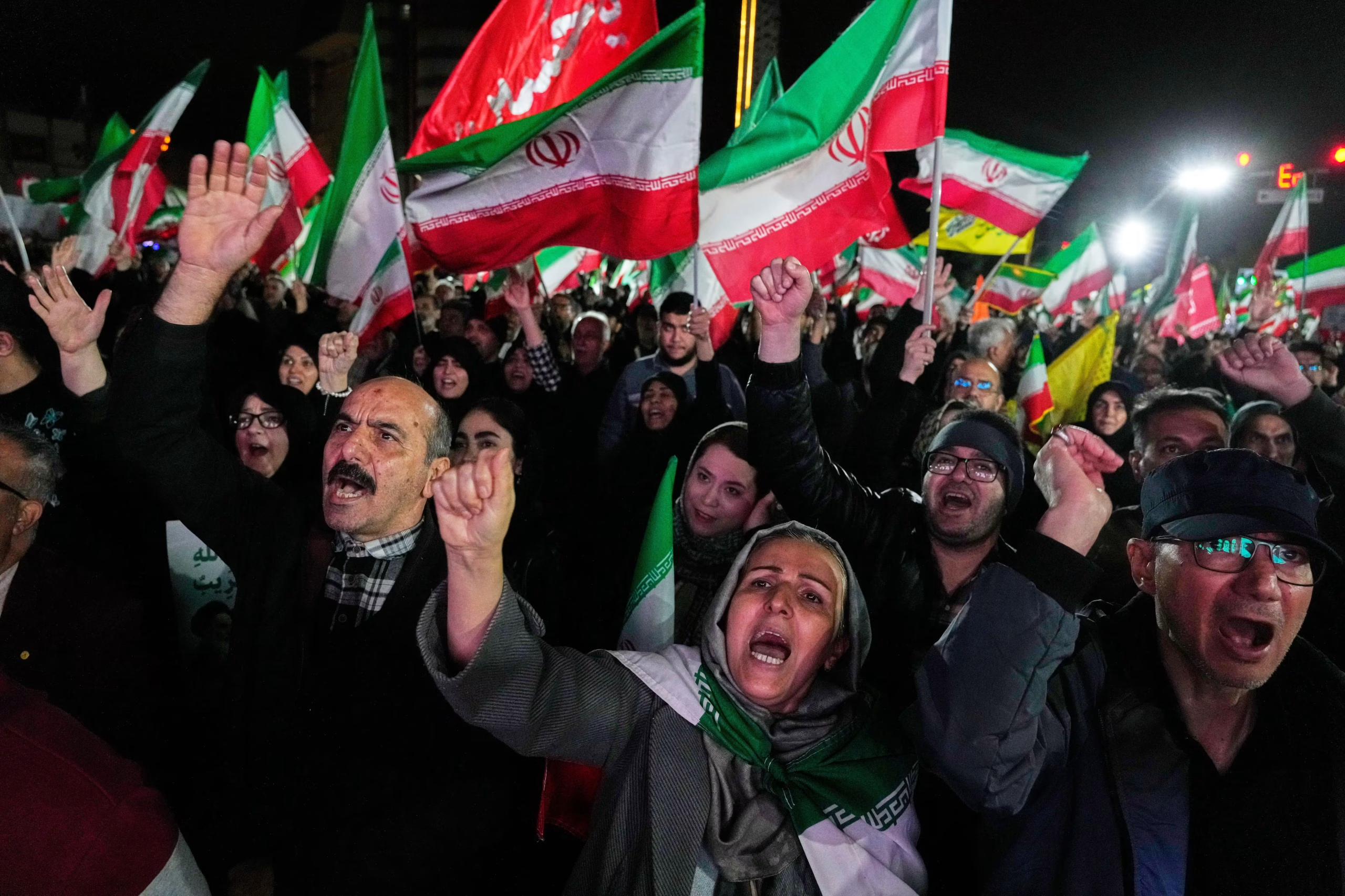
As the United States waits for Tehran’s latest answer through intermediaries, Iran officials and state-linked media are making one point increasingly clear: control over the Strait of Hormuz has become more important than ever in Iran’s strategic thinking.
Foreign Ministry spokesperson Esmaeil Baghaei said on Saturday that Iran was still reviewing Washington’s latest proposal and made clear that Tehran would not shape its decisions around American deadlines or expected timelines. His remarks reflected a broader message from Iranian authorities that they are moving on their own terms and do not feel pressured to respond according to Donald Trump’s schedule.
Iranian officials compare Hormuz to a weapon of enormous power
Some figures inside Iran have gone much further, arguing that control of the strait is now so important that it rivals the country’s contentious nuclear programme in strategic value. Mohamad Mokhber, a senior adviser to the late Supreme Leader Ayatollah Ali Khamenei and a former vice president, said the waterway represents a capability on the level of an atomic bomb because a single decision affecting it can shake the entire global economy.
Mokhber said Iran would not give up the control it believes it has gained through the war. He added that Tehran now intends to change the governing regime of the strait either through international channels or through domestic legislation passed by Iran’s hardline-dominated parliament. That language signals that Hormuz is no longer being treated only as a tactical point of leverage, but as a central pillar of national doctrine.
Current First Vice President Mohammad Reza Aref also tied Iran’s position on Hormuz directly to sanctions pressure. He argued that Tehran’s control over the waterway would help it confront American efforts to squeeze oil sales and weaken the economy. In his words, the latest actions by Trump and Iran’s other enemies have reinforced Tehran’s rights and view over the strait.
State media frames Hormuz as a point Iran cannot afford to lose
Iranian state-linked messaging has gone beyond policy language and moved into historical and ideological symbolism. A host on state television described the Strait of Hormuz as Iran’s equivalent of the Uhud pass, referring to a key moment in early Islamic history when a strategic position was lost and the battle turned. He warned that if Iran abandons this pass, it risks setting the stage for its own defeat.
The same message has reportedly appeared in texts attributed to Mojtaba Khamenei since he succeeded his father as supreme leader. According to the report, those messages have also emphasised the need to maintain control over the waterway. Together, these signals suggest that Iran’s leadership wants both domestic and foreign audiences to understand that the strait is not a secondary issue in the talks. It is being presented as a core national asset that will not be surrendered easily.
Older policy themes are being revived in a new wartime context
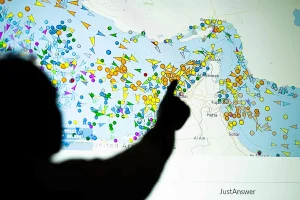
Iranian officials are also trying to show that this posture did not suddenly emerge from the latest war. State-linked outlets recently circulated an old speech by former President Akbar Hashemi Rafsanjani in which he said Iran had long maintained that if the Persian Gulf became unusable for Iran, then it would become unusable for others as well.
That line now appears to be resurfacing as part of Tehran’s effort to remind the world that Hormuz has always been tied to Iranian deterrence thinking. The difference now is that this doctrine is being stressed amid active fire exchanges between the IRGC and US warships, an American naval blockade of Iranian ports, and Washington’s consideration of further Project Freedom operations, even while insisting the ceasefire still holds.
Internal debate over talks with Washington is getting sharper
The report also shows that Iran’s internal debate over negotiations with the United States is becoming more intense. Hardliners, strengthened by the war, are strongly opposed to major concessions on Iran’s nuclear programme, missile arsenal or other key issues. Some say nuclear enrichment and even the removal of highly enriched material from bombed sites should not be discussed at all.
Ali Khezrian, a member of parliament’s national security commission, said Iran had not entered into any real nuclear negotiations and accused the Trump administration of using claims about a possible agreement to cover what he described as battlefield failures. Another analyst close to the establishment argued on state television that it would be fantasy to believe a deal with Washington could end sanctions and unlock development, and said Tehran should instead move even closer to China.
Foreign Minister Abbas Araghchi, who recently held high-level meetings in China, is also facing criticism from inside Iran because of his role in trying to move negotiations forward. Some hardline lawmakers have even called for him to be removed from the process altogether, especially those who view any return to a deal resembling the 2015 nuclear agreement as too costly or dangerous.
Hormuz is becoming central to both diplomacy and confrontation
The article makes clear that the Strait of Hormuz is no longer being treated by Tehran as just one issue among many. It is being elevated to the centre of both Iran’s negotiating posture and its strategic self-image.
That is why Iranian officials are talking about it in such dramatic terms. In their view, whoever controls Hormuz holds leverage not only over shipping and energy markets, but over the wider balance of pressure between Iran and the United States. As talks continue without a breakthrough, Tehran appears determined to show that the strait is not merely a bargaining chip. It is one of the strongest cards it believes it holds.