


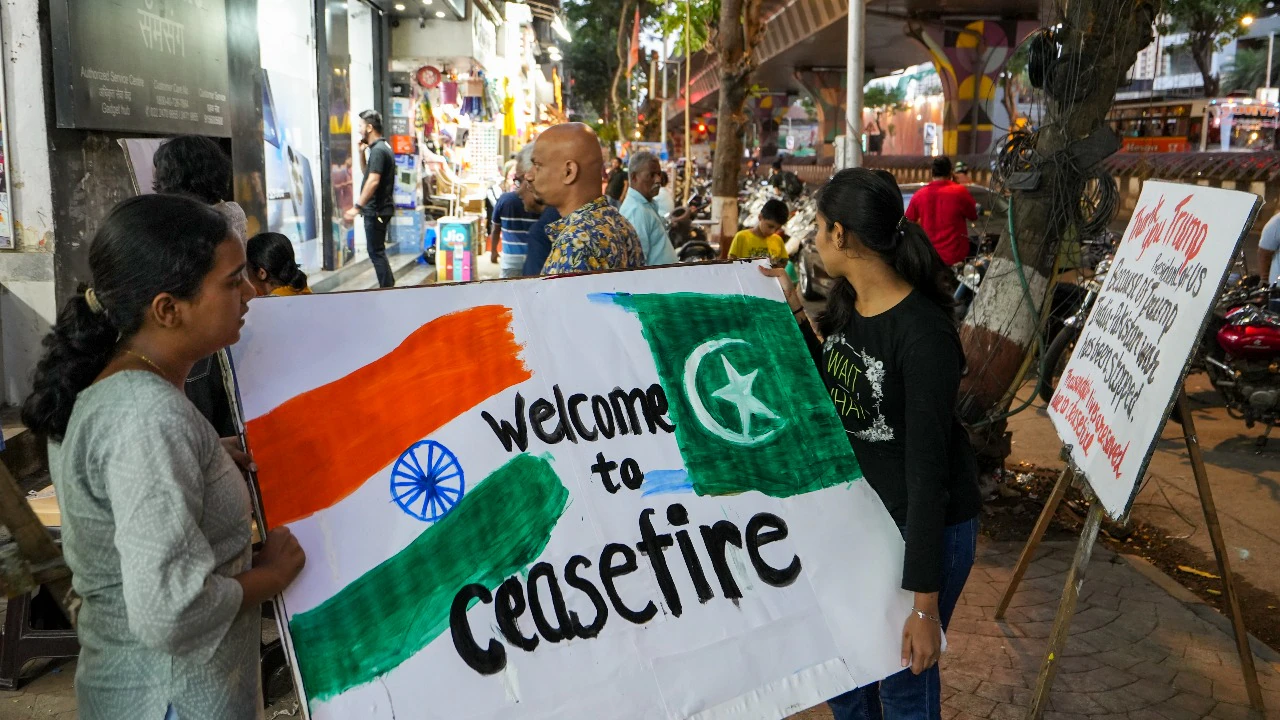
One year after the brief but intense military conflict between India and Pakistan, both countries are still presenting the war as a success. In Pakistan, public spaces in major cities were filled with banners and posters praising the country’s military leadership. Ceremonies and official events were held to mark what Islamabad describes as a major defence achievement.
In Rawalpindi, the Pakistan Air Force held a ceremony highlighting its role during the aerial clashes with India. In Lahore, a government-backed concert celebrated what Pakistan calls the “Day of the Battle of Truth.” These events reflected Islamabad’s official narrative that its armed forces successfully defended the country during the four-day conflict.
India has also maintained its own victory narrative. Prime Minister Narendra Modi marked the anniversary of Operation Sindoor, India’s May 2025 military campaign against Pakistan, by changing his profile picture on X and encouraging citizens to do the same. He praised India’s armed forces for their courage, precision, and determination in what New Delhi described as an operation against terrorism.
Public Claims and Unanswered Questions
Both governments have used official briefings to reinforce their versions of the conflict. Indian military officials said India struck Pakistani airfields and destroyed several aircraft. On the other side, Pakistan’s military said it had defeated a much larger opponent and warned that it remained prepared for any future challenge.
However, analysts argue that the public celebrations hide a more complicated reality. Behind the claims of victory, both India and Pakistan still face difficult questions about what the conflict exposed. The war may have ended quickly, but the weaknesses revealed during those four days remain important for both countries.
Experts say neither side achieved a clean or complete victory. Instead, the conflict produced a mix of military gains, diplomatic consequences, and unresolved vulnerabilities.
How the Conflict Began
The crisis began after gunmen attacked tourists in Pahalgam, in Indian-administered Kashmir, on April 22, 2025, killing 26 civilians. India blamed Pakistan for the attack, while Islamabad denied the accusation.
On May 7, 2025, India launched Operation Sindoor, striking multiple locations in Pakistan and Pakistan-administered Kashmir. New Delhi said the strikes targeted militant infrastructure. Pakistan, however, said civilians were hit and responded with its own operation, called Bunyan al-Marsoos.
The fighting lasted four days before a ceasefire was announced on May 10, 2025. Yet, the way the war ended has remained politically sensitive, with both sides continuing to frame the outcome in their own favour.
Pakistan’s Gains in the Conflict
Pakistan’s strongest claim of success came from the aerial battle at the beginning of the conflict. Pakistani J-10C fighter jets, built by China, reportedly shot down Indian aircraft, including Rafales, during the early phase of the fighting.
India later acknowledged losing aircraft, though it did not provide full details. Indian officials framed the losses as part of combat, while Pakistan treated them as proof of its air force’s effectiveness.
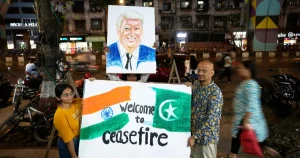
Pakistan also gained a diplomatic advantage after accepting former US President Donald Trump’s claim that he helped broker the ceasefire. Islamabad later nominated Trump for the Nobel Peace Prize. Over the following year, Pakistan’s diplomatic profile grew further, especially as it played a mediating role in regional tensions involving the United States and Iran.
India’s Military Gains
India also points to significant achievements. Its BrahMos missiles struck several Pakistani airbases, including Nur Khan in Rawalpindi and Bholari in Sindh. India also used Israeli-made drones that reportedly reached areas near Karachi and Lahore.
New Delhi also suspended its participation in the Indus Waters Treaty shortly after the Pahalgam attack. This move added a major non-military dimension to the conflict and created long-term pressure on Pakistan.
Satellite imagery released by Western companies showed damage at Pakistani military sites. However, similar public imagery of Indian sites allegedly hit by Pakistan was not released, making independent assessment of damage on both sides difficult.
This imbalance has contributed to competing narratives. Pakistan highlights Indian aircraft losses, while India points to deep strikes on Pakistani military infrastructure.
Pakistan’s Military Weaknesses Remain
Over the past year, Pakistan has moved to strengthen its military capabilities. Its armed forces announced the operationalisation of the Army Rocket Force Command, designed to improve conventional missile decision-making and long-range strike options.
Pakistan has also introduced or discussed new missile systems, including the Fatah-III, Fatah-IV, and Fatah-V. Analysts say these systems could give Pakistan more credible conventional strike options in a future conflict.
Still, experts warn that new missiles alone will not solve Pakistan’s biggest vulnerability: air defence. During the 2025 conflict, Pakistan’s Chinese-supplied HQ-9B air defence system failed to intercept India’s BrahMos missiles. This raised serious concerns about Pakistan’s ability to protect key military sites from high-speed standoff weapons.
Analysts believe Pakistan will need more than new weapons. It must also improve hardened aircraft shelters, runway repair capacity, and dispersal strategies to prevent its airbases from being disabled in a future crisis.
The End of Geographic Safety
The conflict also showed that distance no longer guarantees protection. Indian strikes reached Rawalpindi, Bholari, and other areas deep inside Pakistan. Analysts say this proves that long-range missiles, drones, cyber tools, and satellite-guided weapons have reduced the value of geography as strategic depth.
For Pakistan, this creates a major doctrinal challenge. It must prepare for the possibility that future conflicts could involve strikes far beyond border areas. At the same time, Pakistan’s defence spending remains much smaller than India’s.
Islamabad increased its military budget after the war, but India’s defence budget still remains many times larger. This gap raises questions about whether Pakistan can keep pace in a long-term arms competition.
India’s Quieter Review
India has been less open about its own battlefield losses. Indian officials have acknowledged aircraft losses but have not provided full details. Analysts say this has allowed New Delhi to maintain a strong public narrative while avoiding deeper public scrutiny.
Some experts argue that India’s limited disclosure may be justified for operational reasons, especially because New Delhi says Operation Sindoor remains only paused, not formally concluded. Others say a democracy should be more transparent, especially when the conflict involved serious military risks.
India also faced diplomatic discomfort after Pakistan publicly embraced Trump’s ceasefire claims, while New Delhi insisted the ceasefire was arranged bilaterally. This contrast gave Pakistan an opportunity to shape part of the international narrative.
Diplomacy Remains Frozen
Despite the ceasefire, the root causes of the conflict remain unresolved. India continues to demand credible action against anti-India militant groups. Pakistan denies supporting such groups and maintains that India uses the issue to justify aggression.
Analysts warn that the lack of reliable communication channels increases the risk of another crisis. With both countries armed with nuclear weapons, even a limited conflict can escalate quickly.
India’s current doctrine appears to treat major attacks as acts of war, while Pakistan is preparing stronger conventional response options. This creates a dangerous environment where each side may feel pressure to respond quickly and forcefully.
The Indus Waters Treaty Becomes a Flashpoint
One of the most serious long-term issues is water. India suspended the Indus Waters Treaty on April 23, 2025, and has not restored it. The treaty is crucial for Pakistan because it supports one of the world’s largest irrigation systems and supplies most of the country’s agricultural water.
Experts say the suspension is not an immediate water crisis, but it is politically and strategically significant. Some legal analysts argue India has no basis under the treaty to place it in “abeyance.” They also say India remains obligated to share water-related data.
Others argue that Pakistan’s internal water problems may be even more urgent than India’s actions. Poor canal maintenance, outdated farming methods, unsuitable crop choices, and limited storage capacity all make Pakistan vulnerable.
Climate change adds another layer of risk. If regional temperatures continue rising, glaciers that feed major river systems could shrink sharply, creating a deeper long-term water security challenge.
Lessons Still Unlearned
A year after the war, India and Pakistan have both claimed success, but the deeper lessons remain unsettled. Pakistan demonstrated early air combat strength but exposed major air defence weaknesses. India showed long-range strike capability but faced questions over aircraft losses and diplomatic messaging.
Both countries also learned that future conflicts may move faster, reach deeper, and carry higher risks than before. Missiles, drones, cyber systems, and satellite-guided weapons have changed the battlefield.
For analysts, the biggest concern is not simply who won or lost in 2025. The bigger issue is whether either country has built enough diplomatic space to prevent the next crisis from becoming more dangerous.
Conclusion
One year after the India-Pakistan conflict, both governments continue to celebrate their own versions of victory. Pakistan points to air combat success and diplomatic gains, while India highlights deep strikes and its campaign against militant infrastructure.
Yet the conflict also revealed serious weaknesses on both sides. Pakistan’s air defence gaps, India’s limited transparency, the unresolved Kashmir dispute, and the suspension of the Indus Waters Treaty all continue to shape regional tensions.
The war may have lasted only four days, but its consequences are still unfolding. Without stronger communication channels and quiet diplomacy, experts warn that the next crisis between India and Pakistan could escalate far more quickly.