


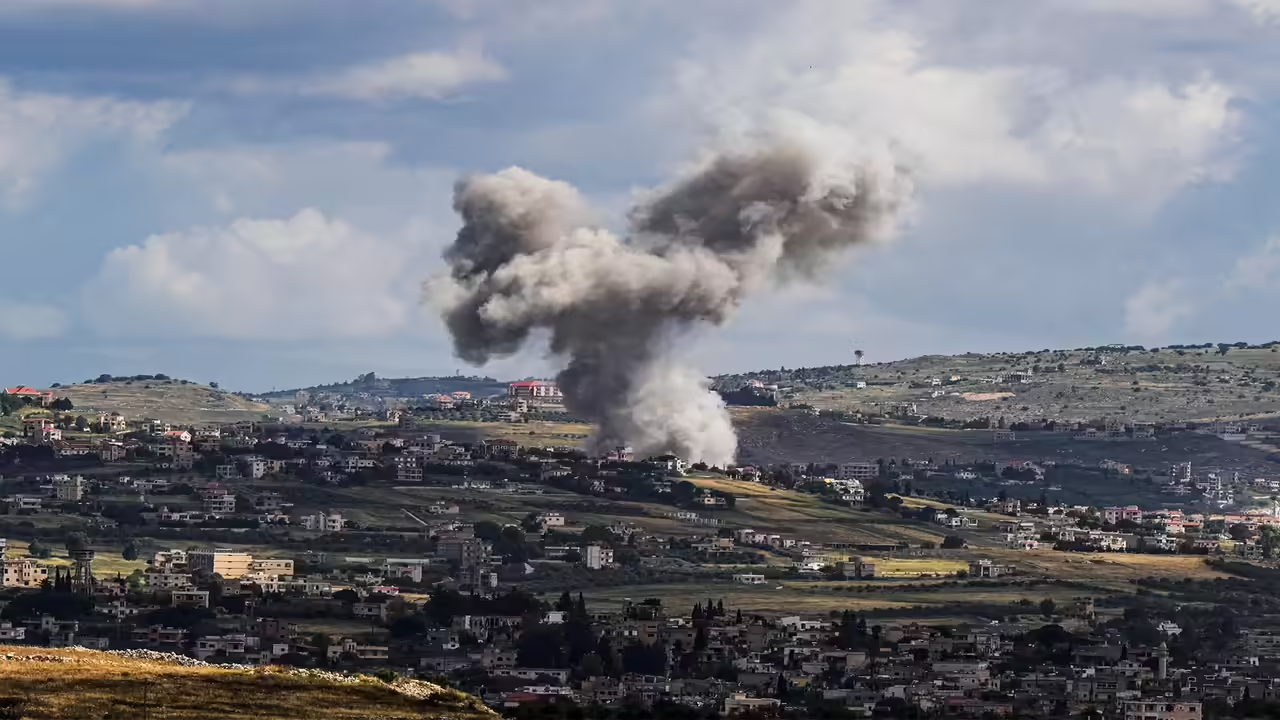
Israeli forces have struck the Qasmiyeh Bridge, a strategic crossing that connects southern Lebanon with the rest of the country, in what Lebanese President Joseph Aoun described as a possible prelude to a ground invasion.
The attack took place on Sunday and targeted one of the most important transport links in the south, along with other civilian infrastructure. The strike followed orders from Israeli Defence Minister Israel Katz, who instructed the military to destroy all crossings over the Litani River as well as homes located near the Lebanese-Israeli border.
The bombing of the bridge marks a major escalation in Israel’s military campaign against Hezbollah. That campaign resumed on March 2 after the Lebanese armed group launched rockets into Israel, saying the attack was in response to the Israeli-US killing of Iran’s Supreme Leader, Ali Khamenei.
President Aoun said the assault on the bridge appeared aimed at cutting off the southern Litani area from the rest of Lebanon. According to him, the strikes were part of what he described as suspicious efforts to create a buffer zone along the border, reinforce the reality of Israeli occupation, and expand Israeli control inside Lebanese territory.
Earlier, Katz said Israel’s policy of striking Litani River crossings allegedly used for what he called “terrorist activity,” as well as targeting homes in front-line villages, was based on the same model used in Beit Hanoun and Rafah in Gaza. In those areas, Israeli forces created buffer zones by demolishing buildings near the border during the war on Palestinians in the enclave.
Later on Sunday, Israel’s army chief signaled that the military campaign against Hezbollah would continue for an extended period. In a statement, Lieutenant General Eyal Zamir said the operation had only begun and would be prolonged.
“We are now preparing to advance the targeted ground operations and strikes according to an organised plan,” Zamir said.
The Lebanese government has already banned Hezbollah’s military activity and stated that it wants to enter direct talks with Israel. Earlier this month, Katz warned Beirut that the country could face serious infrastructure damage and territorial losses unless Hezbollah was disarmed in line with the 2024 ceasefire agreement that ended a year of cross-border clashes.
Concerns Over Civilian Impact
Human rights groups have raised alarms over the consequences of attacking homes and vital infrastructure in southern Lebanon. Ramzi Kaiss, a Lebanon researcher at Human Rights Watch, told Reuters that the widespread destruction of houses in the south could amount to wanton destruction, which is considered a war crime under international law.
He also stressed that international humanitarian law requires military actors to weigh the harm caused to civilians when targeting infrastructure such as bridges, even if such sites are claimed to have military value.
Kaiss warned that if all bridges south of the Litani River were destroyed, the region could become cut off from the rest of the country, placing civilians at severe risk.
“If all these bridges are struck, and the region that is south of the Litani becomes isolated from the rest of the country, then the civilian harm is going to be so immense that you have a humanitarian catastrophe as people still living in the south won’t be able to access food, medicine and other basic needs,” he said.
Rising Toll Amid Fragile Ceasefire
Lebanon’s Health Ministry said four people were killed on Sunday in two separate strikes in the south. The ministry added that 1,029 people had been killed and more than one million displaced in nearly three weeks of conflict.
The fighting erupted during what had been described as a fragile ceasefire between Israel and Hezbollah, one that Lebanese officials say Israel had repeatedly violated.
On the Israeli side, the military said one civilian was killed in his car near the Lebanese border after what it called a “launch” from Lebanese territory. It marked the first Israeli civilian death linked to cross-border fire from Lebanon in the current conflict. Two Israeli soldiers have also been killed in combat in southern Lebanon.
International Concern Grows
Diplomatic concern over a broader escalation is also mounting. French Foreign Minister Jean-Noel Barrot met Israeli Foreign Minister Gideon Saar in Jerusalem on Friday and said France had expressed serious reservations about any ground operation of significant scale or duration.
The latest developments have intensified fears that cross-border hostilities could evolve into a wider and more destructive phase of war, with civilians and critical infrastructure increasingly caught in the middle.