


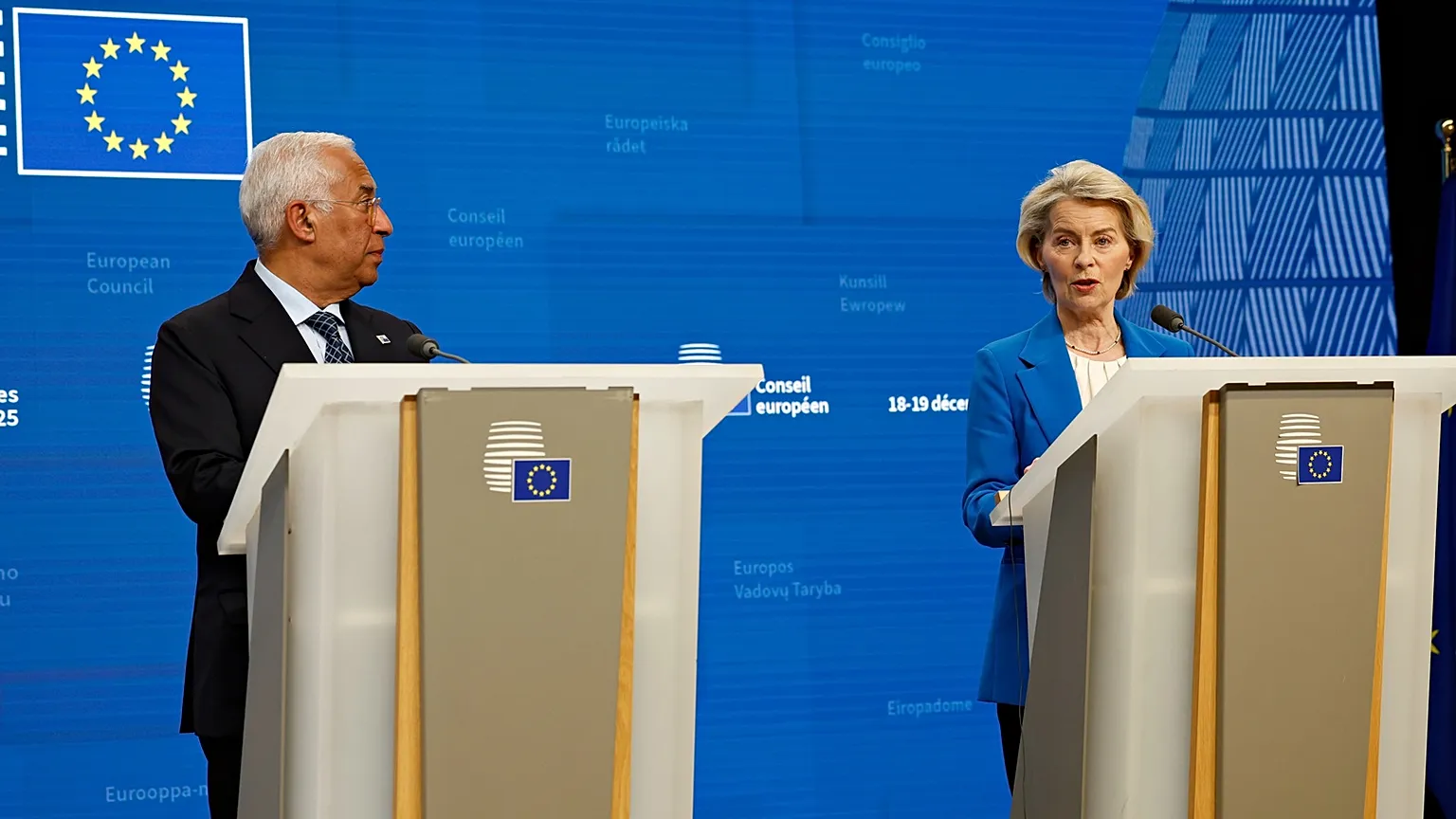
European Union leaders agreed on Friday to borrow money to lend €90 billion ($105 billion) to Ukraine over the next two years, choosing this route instead of using frozen Russian assets amid political and legal divisions within the bloc.
The decision allows the EU to continue financing Ukraine’s defence against Russia while avoiding disputes over an unprecedented proposal to fund Kyiv directly with Russian sovereign assets.
EU summit chair Antonio Costa confirmed the agreement after lengthy overnight talks in Brussels.
“Today we approved a decision to provide €90 billion to Ukraine,” Costa said. “As a matter of urgency, this will be done through a loan backed by the EU budget.”
Russian Asset Plan Put on Hold
EU leaders also instructed the European Commission to keep exploring a so-called reparations loan linked to immobilised Russian assets. However, that option was deemed unworkable for now, largely due to objections from Belgium, where most of the frozen assets are held.
Around €210 billion in Russian central bank assets remain frozen in the EU, with roughly €185 billion located in Belgium. Leaders agreed the assets will stay frozen until Russia pays war reparations to Ukraine. If that happens, Ukraine could eventually use the funds to repay the EU loan.
German Chancellor Friedrich Merz welcomed the outcome, saying it strengthened Ukraine while maintaining pressure on Moscow.
“This is good news for Ukraine and bad news for Russia,” he said.
Unanimity Hurdle Overcome
EU borrowing initially appeared unlikely because it requires unanimous approval, and Hungary’s Prime Minister Viktor Orban, who is seen as close to Moscow, had opposed the plan. However, Hungary, along with Slovakia and the Czech Republic, agreed not to block the deal as long as it carried no direct financial impact on them.
As a result, Hungary was able to avoid participation while allowing the rest of the bloc to move forward—an outcome diplomats described as a political win for Orban.
High Stakes for Ukraine and Europe
EU officials stressed that securing funding was critical. Without additional financial support, Ukraine is expected to run out of money by the second quarter of next year, raising fears it could lose the war—an outcome the EU believes would increase the risk of Russian aggression toward Europe.
Belgian Prime Minister Bart De Wever said concerns over legal and financial exposure made the Russian asset plan too risky at this stage.
“There were simply too many unanswered questions,” he said. “So we moved to Plan B. Rationality prevailed, and the EU stayed united.”
Pressure to Show Unity
Several leaders said the summit was also about demonstrating European resolve after U.S. President Donald Trump recently criticised the EU as being “weak.”
EU foreign policy chief Kaja Kallas said failure was not an option.
“We simply cannot afford to fail,” she said.
Ukrainian President Volodymyr Zelenskiy, who joined the summit, renewed his call for the full use of frozen Russian assets, calling it the most morally justified response to Russian aggression.
For now, however, EU leaders have opted for a €90 billion loan backed by the EU budget, preserving unity while keeping the Russian asset option on the table for the future.