


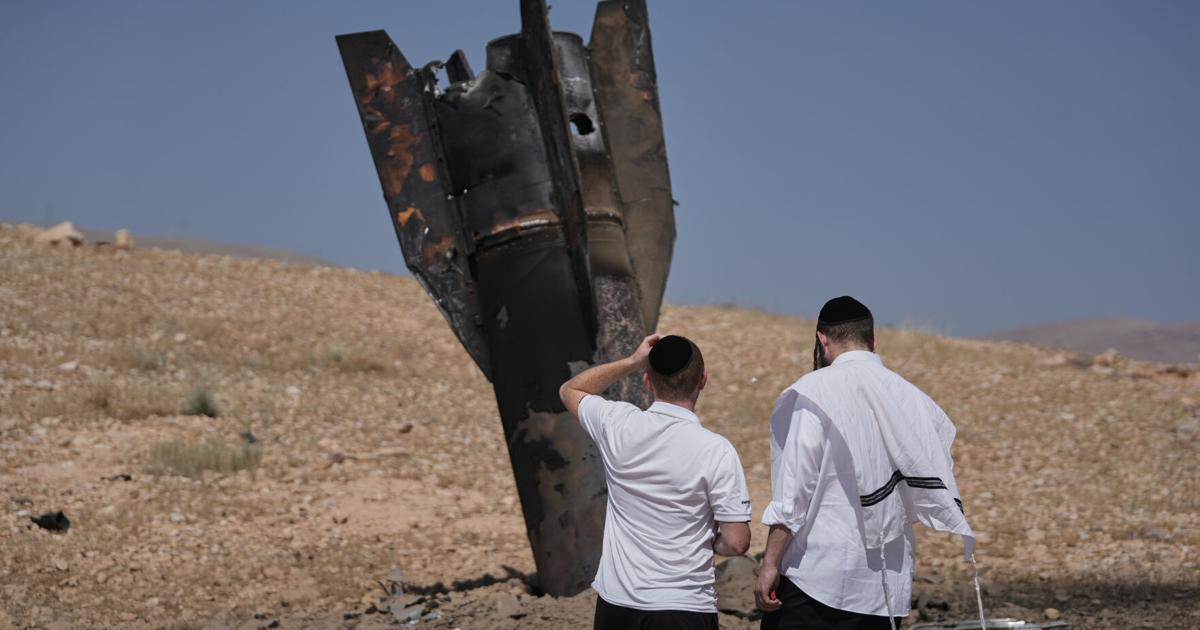
Iran and Israel exchanged fresh missile and air attacks on Monday, putting the fragile ceasefire under its heaviest pressure in weeks.
The ceasefire, which had been in place since April 8, now appears increasingly unstable as both sides accuse each other of escalation. The renewed attacks came as the United States-Israel war on Iran entered its 101st day.
Explosions Reported Across Iran
Iran’s IRNA news agency reported that several explosions were heard in major cities, including Tehran, Isfahan, and Tabriz.
The Israeli military said it had targeted military sites in western and central Iran.
In southwestern Iran, a security official in Khuzestan told Fars news agency that Israeli forces attacked the Karun Petrochemical Company in Mahshahr. Israel later confirmed striking the petrochemical facility.
Authorities in the Mahshahr Petrochemical Special Economic Zone said workers were evacuated after the attack.
Iran Denies Saudi Base Attack
Iran also denied reports that it had targeted the Al-Kharj airbase in Saudi Arabia.
Iran’s IRIB broadcaster cited a military official as saying Tehran had not fired any shots toward the base.
Meanwhile, the Iranian Red Crescent said it was ready to respond to any emergency caused by Israel’s latest attacks.
Israel Holds Security Meeting
In Israel, Prime Minister Benjamin Netanyahu was expected to hold a security cabinet meeting as tensions with Iran continued to rise.
The Israeli military issued several alerts on Sunday and Monday after waves of missiles were launched from Iran toward Israeli territory.
Iran’s Islamic Revolutionary Guard Corps said it had attacked Israel’s Nevatim and Tel Nof airbases. The IRGC said the strikes were a response to Israeli attacks on radar sites inside Iran.
Israeli media also reported that a missile fired from Yemen had been intercepted.
US Issues Regional Alert
The US State Department issued a security alert for American citizens in Jordan after reports of projectiles in the country’s airspace.
Those projectiles were believed to be missiles connected to the Iran-Israel exchange.
In Washington, Democratic Senator Chris Murphy criticised Israel’s latest attack on Iran. He said the strike increased pressure on US President Donald Trump, especially after reports that Trump had urged Netanyahu not to retaliate following Iranian missile fire toward northern Israel.
Explosions Heard in Beirut
Explosions were also heard in Lebanon’s capital, Beirut, early on Monday. Reports suggested the sounds were likely caused by rocket interceptions.
The latest escalation followed Israeli attacks on Beirut’s suburbs on Sunday. Iran described those strikes as a red line and said its own attack on northern Israel was a response to the strikes near Beirut.
Diplomatic Efforts Continue
Israel defended its attacks on Iran. Israeli ambassador to the US Yechiel Leiter said no country would accept missile attacks launched against it.
Canada’s Foreign Ministry expressed concern over the renewed fighting, warning that the escalation could damage ongoing negotiations and weaken chances for peace.
Regional diplomacy also continued. Saudi Foreign Minister Prince Faisal bin Farhan spoke by phone with Qatar’s Prime Minister and Foreign Minister Sheikh Mohammed bin Abdulrahman bin Jassim Al Thani.
The Qatari foreign minister also held talks with Iranian Foreign Minister Abbas Araghchi. Their discussion focused on mediation efforts between Iran and the United States, as well as the latest developments in Lebanon.
Conflict Enters a Dangerous Stage
The latest exchange shows how quickly the ceasefire could unravel. Iran says Israeli attacks in Lebanon and inside Iranian territory forced it to respond, while Israel argues that it is acting against threats from Tehran.
With missiles fired, military sites targeted, and regional countries watching closely, the war has entered another dangerous phase.
The coming days may determine whether diplomacy can still contain the conflict or whether the fragile ceasefire will collapse completely.