


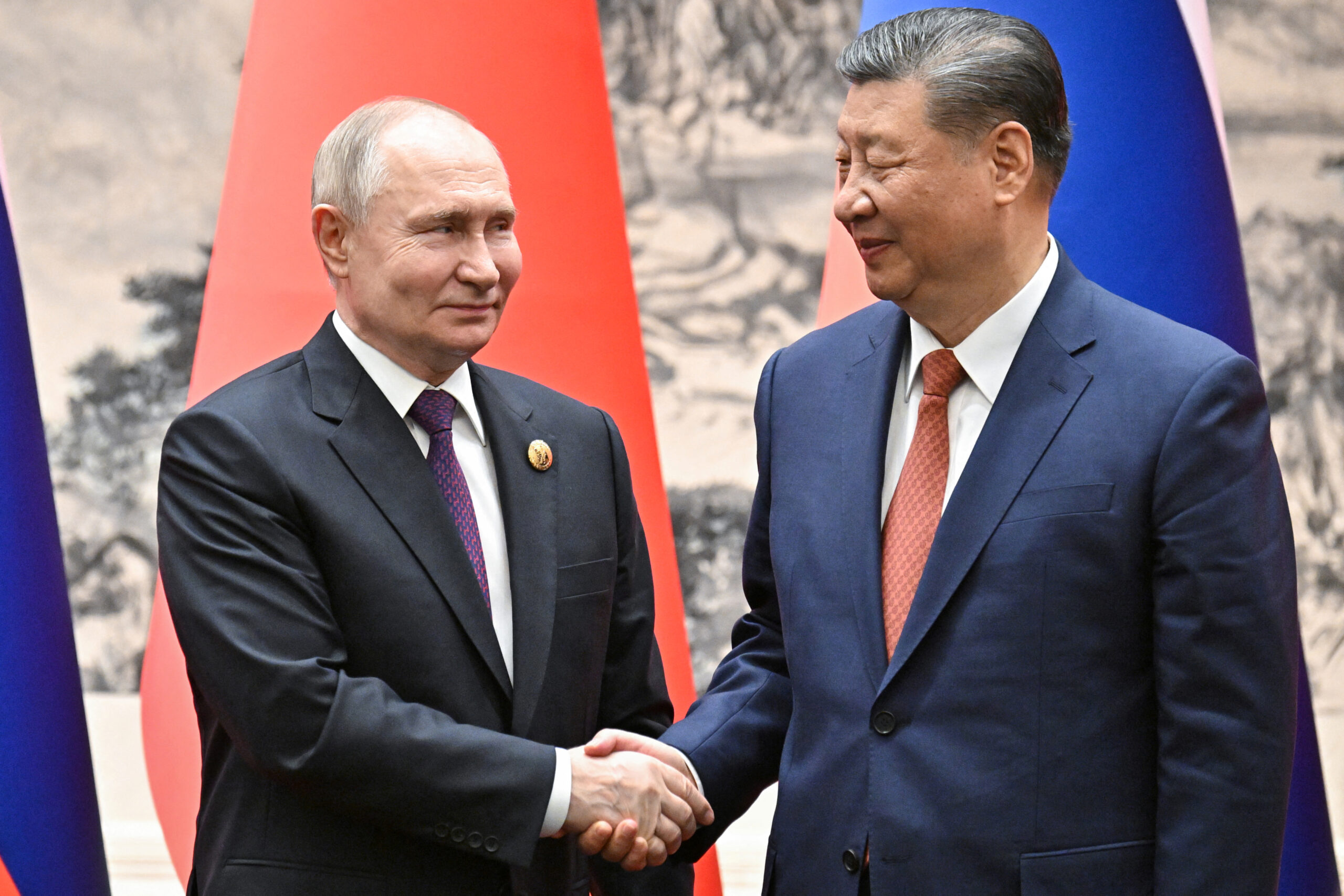
Russian President Vladimir Putin arrived in China for a two-day visit focused on talks with Chinese President Xi Jinping. The meeting comes at a sensitive moment, as Moscow and Beijing continue to deepen their partnership amid war, Western sanctions, and growing divisions in the global order.
The visit also marks the 25th anniversary of the 2001 Treaty of Good-Neighborliness and Friendly Cooperation, an agreement that helped rebuild relations between Russia and China after decades of suspicion and rivalry. Putin’s arrival came only days after United States President Donald Trump visited Beijing for his own meeting with Xi, placing China at the center of major diplomatic activity.
Russia and China Move Closer Amid Global Tensions
Analysts say Trump’s unpredictable foreign policy has pushed Russia and China closer together. Both countries have difficult relations with Washington, and both see value in strengthening their cooperation at a time when global politics are becoming more unstable.
The meeting also takes place against the backdrop of the war in Ukraine, tensions involving Iran, and disruption in the Strait of Hormuz. These issues have affected global energy markets and increased China’s concern over the safety of its oil and gas supplies.
For Beijing, Russia offers a more secure land-based energy route. For Moscow, China provides an important economic partner at a time when Western markets remain largely closed.
A Complicated History Turns Into Strategic Cooperation
China and Russia were once close ideological partners, but their relationship later became tense during the Cold War. Border disputes and political differences created deep mistrust between the two powers.
Today, that relationship looks very different. The long border between the two countries has become a route for trade, energy, and strategic cooperation. Xi and Putin have also worked to build a strong personal relationship, often describing each other as friends.
Their ties have grown stronger since Russia’s invasion of Ukraine in 2022. Western sanctions forced Moscow to look more toward China for trade, technology, and diplomatic support.
Why Russia Needs China
China has become a crucial economic partner for Russia. Trade between the two countries more than doubled between 2020 and 2024, reaching $237bn. This growth has helped Russia keep parts of its economy moving despite heavy pressure from Western sanctions.
However, the relationship is not equal. China is Russia’s largest trading partner, but Russia makes up only a small share of China’s total international trade. This gives Beijing more influence in negotiations.
Russia also relies heavily on Chinese manufacturing and technology. Many sanctioned technology imports used by Russian industries reportedly come through China, including items with military or dual-use purposes.
Energy is another major part of the relationship. With much of Europe reducing its dependence on Russian energy, China has become one of Moscow’s most important buyers of oil and gas. This gives Russia a vital source of income, while allowing China to negotiate favorable prices.
Why China Still Needs Russia
Even though China holds more leverage, it still needs Russia. One of the main reasons is energy security. China depends heavily on imported fuel, much of it transported through sea routes that can be affected by conflict or political tension.
The crisis around the Strait of Hormuz has made this concern more urgent. If shipping routes become unsafe, China needs alternative sources of energy that do not rely entirely on maritime trade.
This is why the proposed Power of Siberia 2 pipeline is important. If completed, the project could send large amounts of Russian gas to China through Mongolia, strengthening energy links between the two countries.
A Partnership Beyond Energy
Russia is also valuable to China as a geopolitical partner. Both countries are permanent members of the United Nations Security Council, and they often take similar positions against US-led policies.
While China has avoided forming a formal military alliance with Russia, the two countries have increased joint military exercises. These drills allow Beijing and Moscow to show strategic unity without creating a binding defence pact.
Analysts say this flexibility may be one of the reasons the partnership has lasted. It is not based only on ideology or opposition to the West, but also on shared economic, political, and security interests.
Beijing Sends a Broader Message
By hosting Trump and Putin within a short period, Xi is showing that China wants to be seen as a central player in global diplomacy. Beijing is presenting itself as a power that can talk to rival sides while protecting its own interests.
Putin’s visit may not produce a major surprise, but it underlines an important reality: Russia and China continue to need each other. Russia needs China for trade, technology, and diplomatic breathing room. China needs Russia for energy security and strategic support.
As global tensions rise, the relationship between Moscow and Beijing is likely to remain one of the most important partnerships shaping world politics.