


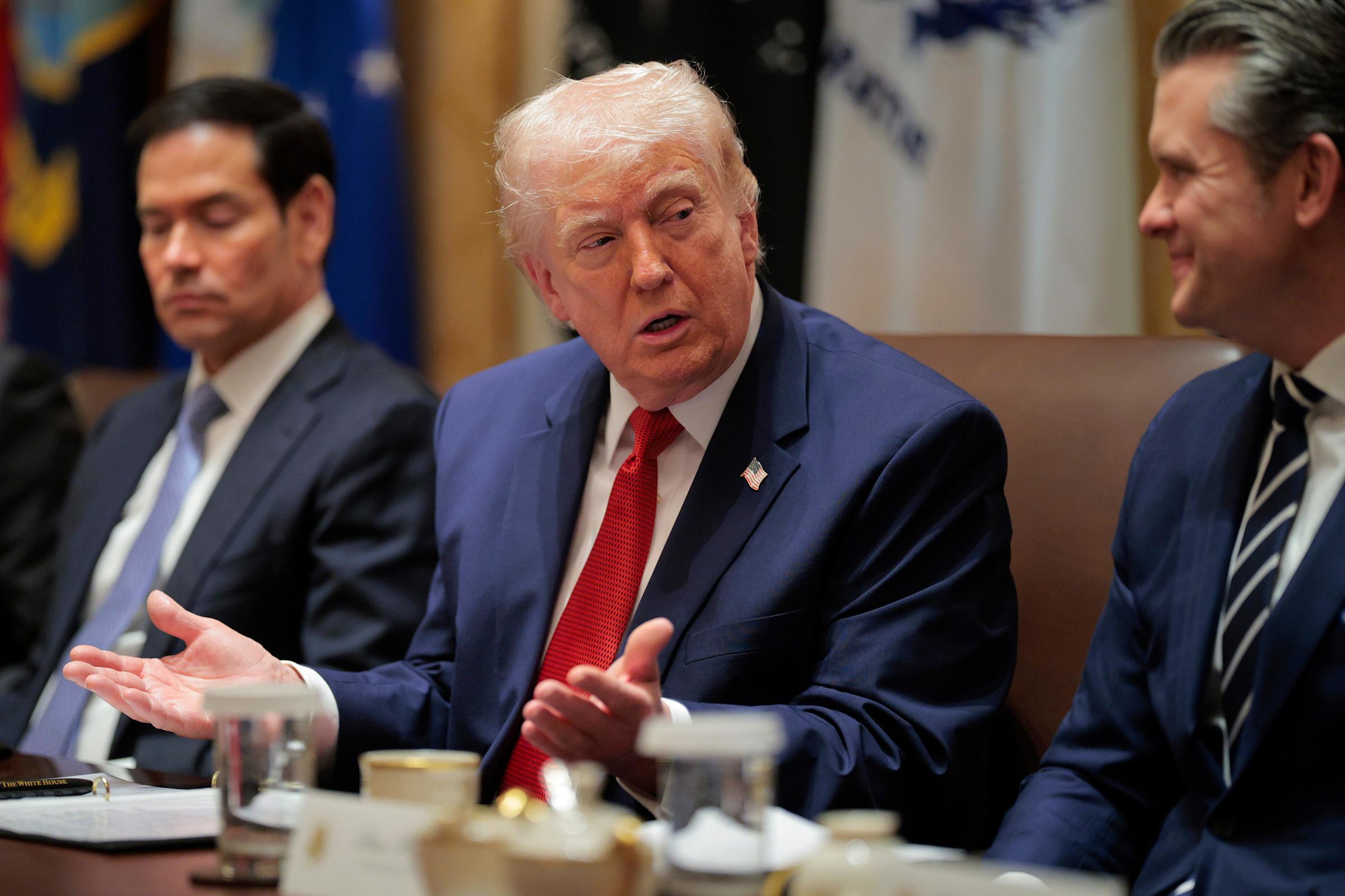
Senior officials from the United States and Iran have arrived in Islamabad, Pakistan, for high-level ceasefire talks, opening a new diplomatic phase in the conflict even as violence continues across several parts of the Middle East.
Iran’s delegation is being led by parliamentary speaker Mohammad Bagher Ghalibaf and Foreign Minister Abbas Araghchi. The US team is headed by Vice President JD Vance, joined by special envoy Steve Witkoff and Jared Kushner. Ahead of the talks, Vance said Washington was ready to extend an open hand if Iran negotiated in good faith, suggesting there may still be room for diplomacy after weeks of military escalation.
But while negotiators gather in Pakistan, the situation on the ground remains highly unstable. Lebanon’s Ministry of Public Health said at least 357 people were killed in Israeli attacks on Wednesday, and warned that the number could rise further as more victims are identified. The contrast between diplomatic language and the continuing human toll has underlined how fragile any potential agreement remains.
Iran Enters Talks With Deep Distrust
Iranian officials have made it clear that they are approaching the negotiations with caution and suspicion. Ghalibaf said the United States must recognise Iran’s rights if it genuinely wants an agreement, while also stressing that Tehran has come to Islamabad in good faith.
Foreign Minister Abbas Araghchi took an even harder line, saying Iran enters the negotiations in complete distrust of the United States. His remarks reflected a broader message from Tehran that while talks are possible, confidence between the two sides remains extremely low.
Iran’s First Vice President Mohammad Reza Aref also weighed in before negotiations began, saying the outcome would depend entirely on Washington’s priorities. According to him, a deal is achievable only if the US focuses on what he called its America First interests rather than an Israel First agenda.
The Iranian delegation has also added a symbolic message to its visit. The 71-member team has adopted the name Minab 168, in reference to 168 schoolgirls and teachers killed by US strikes on a primary school at the start of the conflict. The size of the delegation and its naming choice suggest Iran is treating the talks as politically serious as well as emotionally charged.
Trump Presses for Results as Hormuz Remains Central
From Washington, President Donald Trump has continued to sharpen his message. He said Iran has no cards going into the negotiations and warned that US warships are being reloaded and could strike again if diplomacy fails.
Trump also said the Strait of Hormuz would be reopened fairly soon, with or without Iran’s cooperation, pledging that Washington would open up the Gulf amid ongoing disruption to global energy supplies. The waterway remains central to the talks because of its importance to global oil and gas shipments.
The economic pressure is also growing inside the United States. According to the report, consumer prices have climbed to a two-year high, adding urgency to the administration’s effort to secure a quick outcome. Former US ambassador Douglas Silliman said Trump is likely seeking a fast diplomatic victory, with the reopening of Hormuz seen as a top priority.
Lebanon Remains a Major Flashpoint
Even as the US and Iran meet in Islamabad, Lebanon continues to be one of the war’s most dangerous fronts. Lebanon’s presidency said a meeting would take place at the US Department of State on Tuesday to discuss a ceasefire and the possible start of negotiations between Lebanon and Israel under American sponsorship.
Still, the violence has not eased. Iran’s parliamentary speaker demanded a ceasefire in Lebanon as part of the wider diplomatic effort, while JD Vance reportedly warned Tehran not to play Washington during the talks. At the same time, Israeli operations in Lebanon continued, along with an expanding ground offensive.
The Israeli military said Hezbollah fired around 30 projectiles into Israel, some of which caused damage, while air raid sirens sounded across northern Israel. Lebanon’s Health Ministry said at least 10 people were killed by Israeli forces on Saturday alone. Since early March, nearly 2,000 people have reportedly been killed in Israeli air strikes and ground attacks in Lebanon, with thousands more wounded.
Wider Regional Fallout Deepens Humanitarian Concerns
The impact of the war is also being felt beyond Iran and Lebanon. In Gaza, an Israeli air strike killed at least six people and injured several more at the Bureij refugee camp in the central part of the territory, according to the Gaza Health Ministry.
In Jerusalem, more than 100,000 worshippers attended the first Friday prayers at Al-Aqsa Mosque since its reopening following the US-Iran truce, according to the Islamic authority overseeing the holy site. The gathering marked a significant moment after a period of disruption tied to the conflict.
Meanwhile, Turkey’s President Recep Tayyip Erdogan criticised a new Israeli law allowing military courts in the occupied West Bank to impose the death penalty on Palestinian prisoners convicted of terrorism, comparing it to some of history’s darkest policies.
Lebanon is also facing a worsening humanitarian crisis. The World Food Programme said the country is now dealing with serious food insecurity, with rising prices and broken supply chains linked to the ongoing Israeli offensive. The UN Refugee Agency added that shelters are severely overcrowded and nearly half of Lebanon’s public schools are now being used as reception centres for displaced people. More than 1.2 million people have been forced to flee.
Fragile Talks Begin Under the Shadow of War
Day 43 of the conflict has opened with diplomacy, but not with calm. The talks in Islamabad may offer a possible path away from further escalation, yet the war continues to expand its human, military and economic cost across the region.
Iran says it wants its rights recognised. The United States says it is open to a deal, but is still ready to strike. Lebanon remains under fire, and humanitarian conditions in several areas are worsening quickly.
For now, the negotiations in Pakistan are taking place under the shadow of active war, rising distrust and the urgent question of whether diplomacy can move fast enough to stop the violence.