


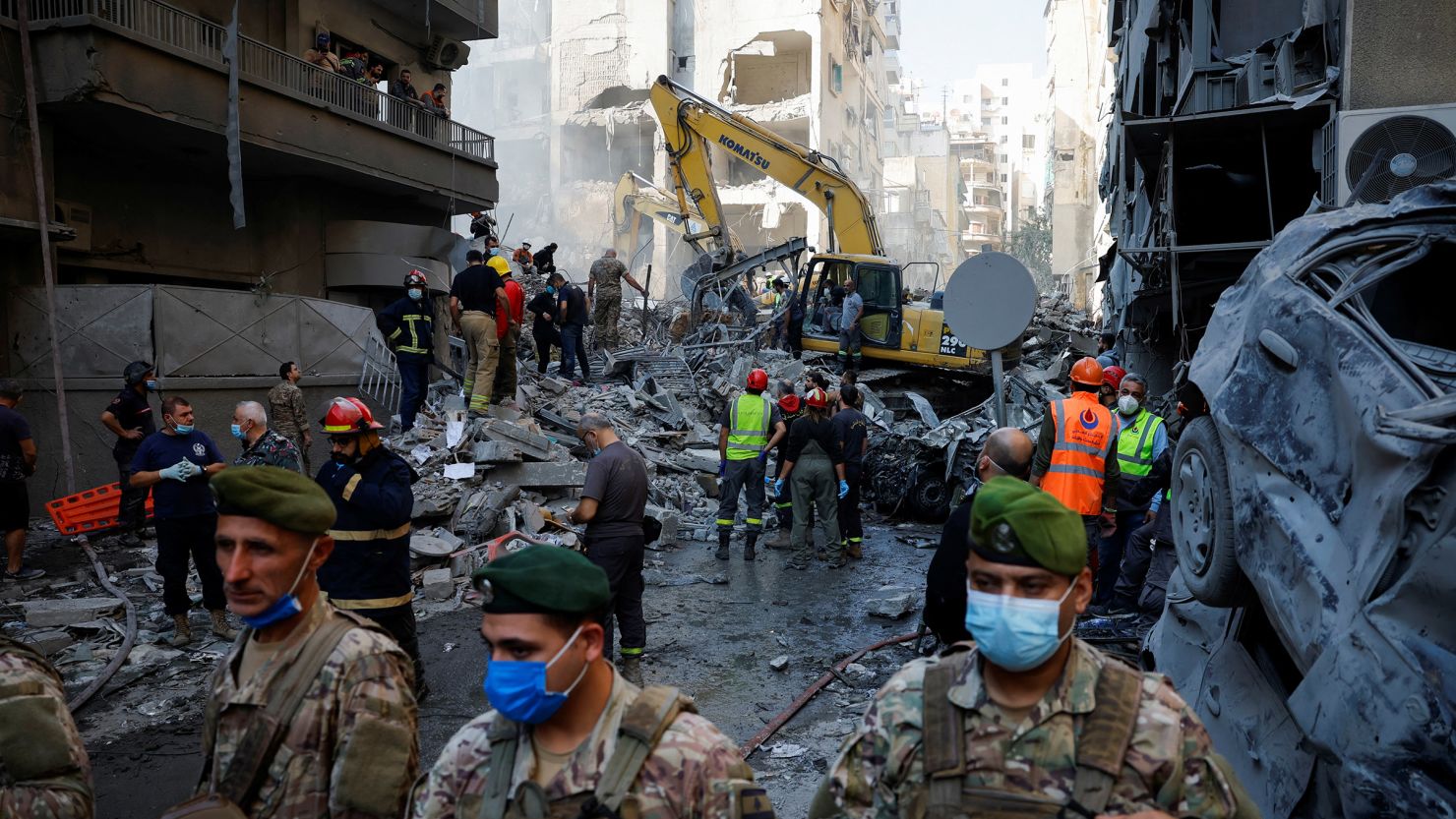
Four weeks into the United States-Israeli war on Iran, civilians in Lebanon are once again paying a heavy price, with the country facing a second large-scale Israeli assault in less than two years. The continuing attacks, combined with mass displacement and worsening economic strain, are leaving much of the population exhausted, anxious and uncertain about what comes next.
Around a quarter of Lebanon’s population has been displaced following Israeli evacuation orders affecting the south of the country and Beirut’s southern suburbs, known as Dahiyeh. For many families, the renewed upheaval has brought frustration, fear and fatigue. Even people who have not been forced from their homes are facing the pressure of continued strikes, higher fuel costs, slowing business activity and the absence of any clear path to an end to the conflict.
One displaced resident, Samiha, a Palestinian teacher who had been living near Tyre before moving to Beirut, said her family was more prepared this time because they had already endured a previous Israeli campaign. Even so, she said the situation remained deeply uncertain, with no indication of how long it would continue or whether a solution was near.
Vulnerable Communities Face the Hardest Burden
Israel stepped up its campaign in Lebanon again on March 2 after Hezbollah responded to earlier Israeli attacks, saying it was retaliating for the killing of Iranian Supreme Leader Ayatollah Ali Khamenei. This happened despite a ceasefire that had officially been in place since November 27, 2024, although the United Nations had recorded more than 10,000 Israeli ceasefire violations and hundreds of Lebanese deaths during that period.
After Hezbollah’s response, Israel expanded its attacks on southern Lebanon and announced plans to occupy the south. Evacuation orders were issued for parts of southern Lebanon, Dahiyeh and several villages in the Bekaa Valley, triggering what Lebanese authorities describe as a displacement crisis affecting at least 1.2 million people. Israel has also said it intends to establish what it calls a security zone in southern Lebanon while continuing to destroy villages along the border.
Aid workers say the heaviest burden has fallen on those already most at risk, including migrant workers, Syrians, foreign nationals, people with chronic illness, cancer patients on dialysis, diabetics who cannot safely store insulin, and displaced families with little or no access to basic services. Volunteer Rena Ayoubi, who has helped organise assistance near Beirut’s waterfront, said these groups have emerged as some of the most vulnerable in the current crisis.
A Humanitarian Crisis Growing Faster Than Before
Humanitarian workers say the current emergency is not only severe, but unfolding on a scale and at a speed that surpasses the crisis of 2024. Anandita Philipose, the Lebanon representative for the United Nations Population Fund, said the number of people affected, the mass evacuation orders and the targeting of civilian infrastructure mark a significant escalation.
She noted that women are among those facing specific dangers, as many have been uprooted from homes, health clinics and support systems they rely on during pregnancy and childbirth. She stressed that essential needs such as reproductive care do not stop during war, even when services are disrupted by displacement and bombardment.
According to Lebanon’s Ministry of Public Health, the latest Israeli campaign has killed 1,094 people and injured another 3,119 in just over three weeks. The dead include 81 women and 121 children. Aid groups have warned that children are again being caught in the violence despite the protections they are supposed to receive under international humanitarian law. World Vision’s Lebanon director, Heidi Diedrich, said the continuing escalation could have consequences for children that last for weeks or months.
Deepening Psychological Trauma
Beyond the physical destruction, the conflict is also intensifying a national mental health crisis. At the National Lifeline 1564 centre in Beirut, volunteers working under the supervision of clinical psychologists answer calls from people seeking emotional support and help during moments of extreme distress. The hotline is a joint initiative between Lebanon’s National Mental Health Programme and the nonprofit organisation Embrace.
Jad Chamoun, operations manager for the service, said people in Lebanon have been living through unbroken hardship for the past two years. Even during periods officially described as ceasefires, many remained displaced and continued to experience instability. Before the latest escalation on March 2, around 64,000 people were already displaced, according to the International Organization for Migration. A March 2025 report from Lebanon’s National Mental Health Programme found that three in five people in the country screened positive for depression, anxiety or post-traumatic stress disorder.
Chamoun said the current conditions amount to a form of continuous trauma, with people living through one crisis after another. Since 2019, Lebanon has endured a devastating economic collapse, the COVID-19 pandemic, the Beirut port explosion, mass emigration and now two major Israeli military campaigns in quick succession.
The emotional toll is reflected in the hotline’s workload. Chamoun said the service received about 30 calls a day during Israel’s 2024 attacks, but now handles close to 50 daily. Even so, he warned that the full psychological impact often peaks months after a conflict ends, when people are no longer operating purely in survival mode.
A Population Near Its Limit
For many in Lebanon, the accumulation of war, economic hardship and repeated displacement has pushed daily life close to collapse. Volunteers, health workers and aid organisations continue trying to reach as many people as possible, but many are still slipping through the gaps.
Chamoun said the work often means simply staying with people in their pain and helping them endure moments of darkness that have become all too common. His comments reflect a wider reality across Lebanon, where the burden of repeated conflict is leaving entire communities near, or beyond, their breaking point.