


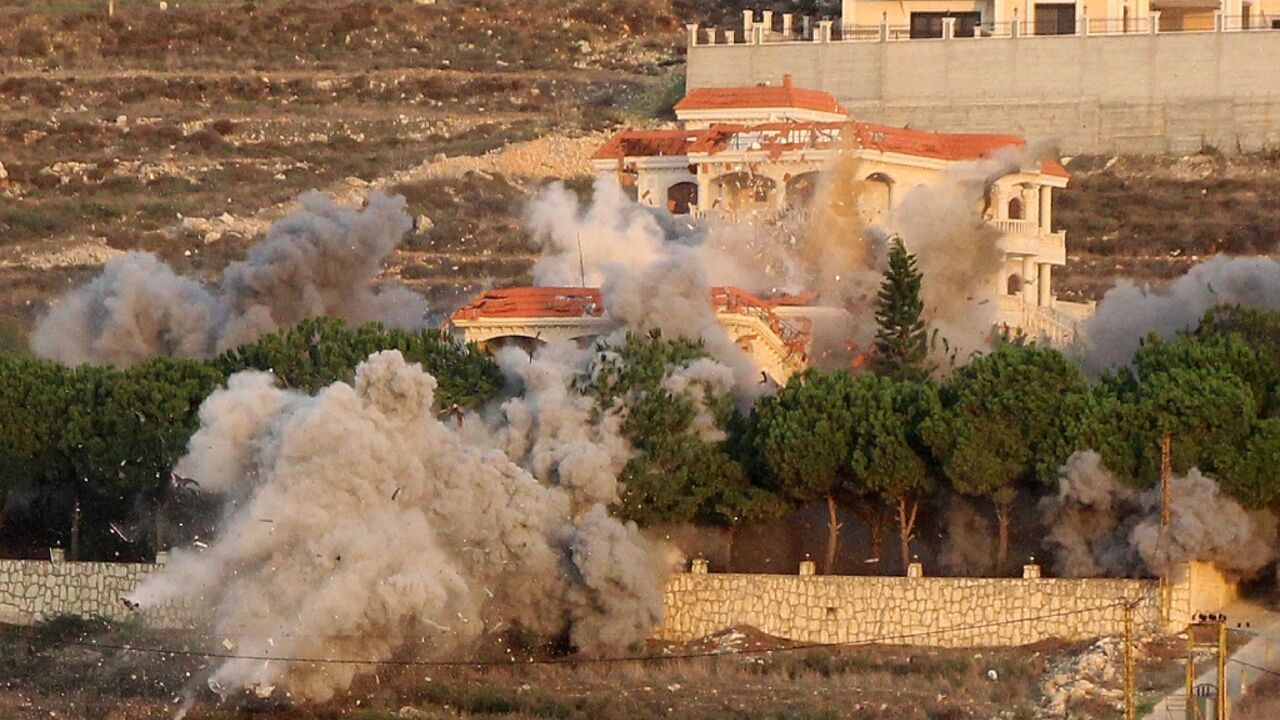
Israel forces launched a new series of attacks across southern and eastern Lebanon on Tuesday, targeting areas linked to Hezbollah as the wider regional conflict continued to spread. Two air strikes hit the southern city of Tyre shortly after the Israeli military warned residents in Tyre and Sidon to leave areas near potential targets.
The latest strikes came as fighting between Israel and Hezbollah intensified following the killing of Iran’s Supreme Leader Ali Khamenei in joint US-Israeli attacks last week. Since then, clashes have expanded in eastern Lebanon, while Israeli operations have reached multiple parts of the country, including Beirut.
Reports point to wider Israeli push in the south
According to reports from Lebanon, Israeli aircraft also carried out overnight attacks on several towns, including Almajadel, Chaqra, Srifa and parts of the Bekaa Valley. Heavy strikes were also reported near Ansariya and on the outskirts of Bint Jbeil and Ainatha. Local reporting said four people were killed in the Bint Jbeil district.
There are also growing reports that Israel wants to widen its presence in southern Lebanon by expanding the buffer zone along the border. At the same time, Hezbollah says it has managed to push back Israeli advances on several fronts.
Priest killed in southern village
Lebanese media also reported that Maronite Catholic priest Father Pierre al-Rahi was killed in Qlayaa after Israeli tank fire struck a house where residents had gathered to help wounded people. Catholic and regional outlets separately reported his death and said he had remained in the village despite the danger.
His killing added to the sense of fear in southern Lebanon, where many civilians remain caught between repeated air strikes, shelling and ground clashes.
Hezbollah steps up its response
As Israeli attacks continued, Hezbollah also increased its counterattacks. Israeli emergency services said at least 16 people were injured in a missile strike on central Israel. Hezbollah said it had targeted the Givaa drone control base near Safad, fired rockets at Yiftah barracks near the border and ambushed Israeli troops on the outskirts of Khiam, where it said three Merkava tanks were hit.
Israel also said it had struck about 30 sites tied to Al-Qard al-Hasan, a financial association it says is linked to Hezbollah. The group had been targeted before, and rights groups previously said such attacks should be investigated if civilian objects were hit without proof of military use.
International concern grows over Lebanon’s stability
The European Union has urged both sides to step back from further escalation. EU foreign policy chief Kaja Kallas called for a return to the November 2024 ceasefire and warned that Lebanon risks sliding deeper into chaos if the fighting continues. Reuters also quoted her separately saying Israel should halt operations in Lebanon and that the conflict risks destabilising an already fragile situation.
Lebanese President Joseph Aoun has meanwhile accused Hezbollah of dragging the country towards collapse, while also signalling Beirut’s readiness for direct negotiations with Israel, according to the report you shared.
Death toll continues to climb
The violence has taken a heavy toll. Reporting tied to the current escalation says at least 486 people have been killed in Israeli attacks on Lebanon since last week, while AP separately reported Lebanon’s death toll in the broader spillover from the Iran war had reached at least 397 by Sunday, showing the rapidly worsening scale of the crisis.
The new wave of attacks underlines how quickly Lebanon is being pulled deeper into a conflict that is no longer confined to Iran and Israel, with civilians once again bearing much of the cost.