


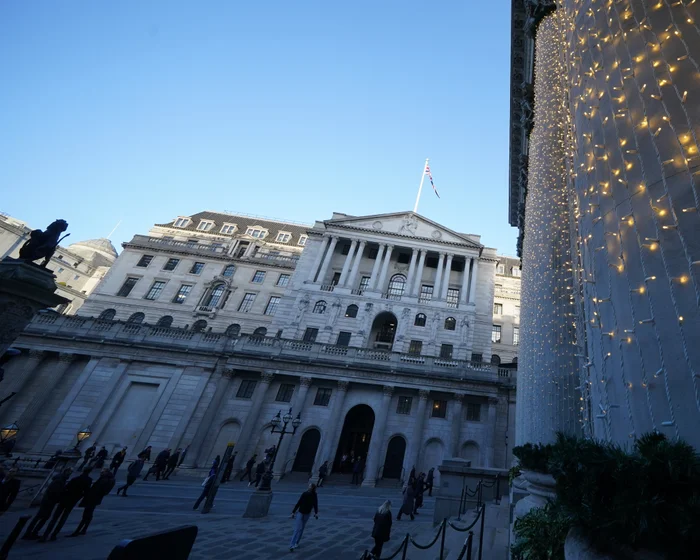
The Bank of England (BoE) lowered its key interest rate on Thursday following a closely split vote, while warning that future rate cuts could proceed more slowly amid persistent inflation risks.
Five members of the Monetary Policy Committee (MPC) voted to reduce the benchmark rate by 25 basis points to 3.75%, down from 4.0%, marking the fourth rate cut this year. The remaining four members preferred to keep rates unchanged, citing concerns that inflation may remain stubbornly high.
The decision followed a sharper-than-expected fall in inflation earlier this week, alongside new BoE forecasts showing economic growth is likely to stall toward the end of 2025.
Close Vote Reflects Inflation Concerns
BoE Governor Andrew Bailey cast the decisive vote in favor of the cut, shifting his earlier position and tipping the balance on the committee.
“We still believe rates are moving on a gradual downward path,” Bailey said in a statement. “But with each cut, the decision on how much further we go becomes more finely balanced.”
Bailey noted that while there are early signs of a cooling labor market, inflation expectations have not fallen significantly. This remains a key concern for policymakers, especially as Britain’s inflation rate is still the highest among Group of Seven (G7) economies.
Analysts surveyed by Reuters had largely anticipated a narrow 5–4 vote in favor of a cut.
Several MPC members who voted against the move expressed caution. Deputy Governor Clare Lombardelli said recent data only showed limited easing in inflation pressures, while Chief Economist Huw Pill warned that the greater risk is inflation staying too high rather than falling too low.
Slowing Economy Shapes Outlook
The quarter-point reduction brings the Bank Rate to its lowest level in nearly three years, though it remains almost double the European Central Bank’s policy rate.
Inflation fell unexpectedly to 3.2%, according to data released on Wednesday, but the BoE said price pressures remain elevated in part due to last year’s tax increases on employers. While inflation is now expected to return closer to target in the near term, policymakers warned that risks remain on both sides.
Recent figures also point to a softening economy. Data released earlier this week showed the highest unemployment rate since 2021 and a slowdown in private sector wage growth.
The BoE now expects zero economic growth in the final quarter of 2025, a downgrade from its previous forecast of 0.3%. Britain’s economy has already contracted slightly, shrinking by 0.1% in the three months to October, as many businesses delayed investment decisions ahead of the government’s late-November budget.
The central bank said recent budget measures are expected to reduce inflation by around 0.5 percentage points in 2026, before pushing it slightly higher in subsequent years. Those measures are also expected to add up to 0.2 percentage points to economic output in 2026 and 2027.
Globally, other major central banks are nearing the end of their easing cycles. The U.S. Federal Reserve has signaled just one more rate cut in 2026, while the European Central Bank is widely expected to hold rates steady later on Thursday.