


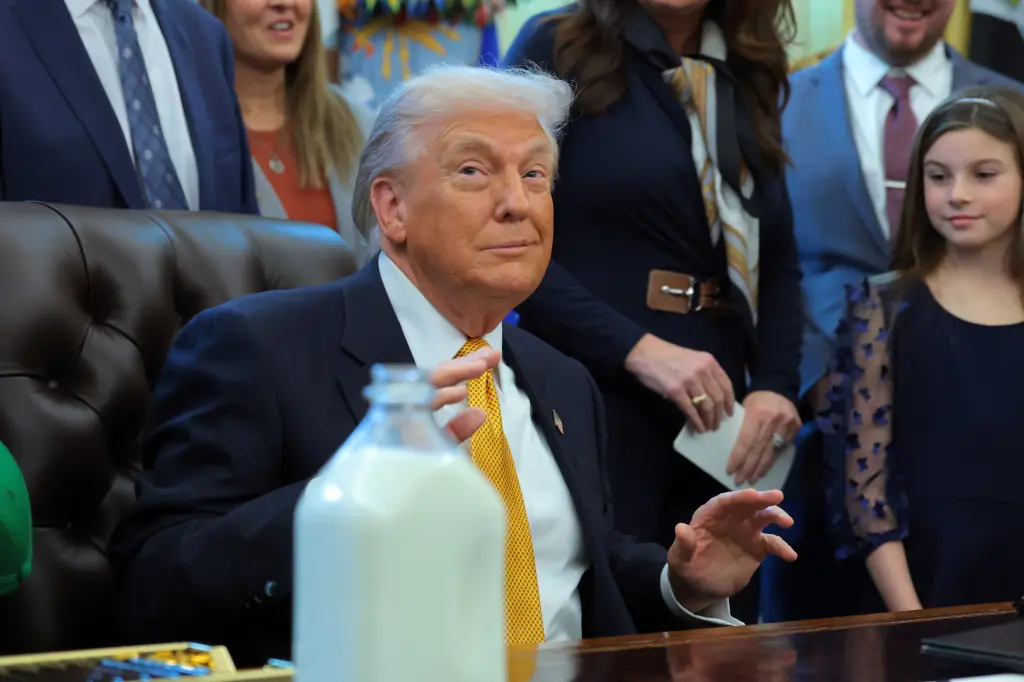
Donald Trump said he has received assurances that the killing of antigovernment protesters in Iran has come to an end, while Iranian officials denied that executions are planned, signalling a possible easing of tensions after days of heightened rhetoric.
Speaking to reporters on Wednesday, Trump said he had been told that the violence against protesters had stopped and that any planned executions had been halted. His remarks suggested a more cautious tone after earlier warnings of possible US military action against Iran.
The comments came just hours after the United States began withdrawing some personnel from an airbase in Qatar, amid growing concerns over a potential escalation between Washington and Tehran.
Iran Denies Plans for Executions
Iranian Foreign Minister Abbas Araghchi reinforced that message in an interview with Fox News, saying there was “no plan” to execute antigovernment protesters.
“Hanging is out of the question,” Araghchi said, adding that the situation inside Iran was now under control following days of unrest.
Trump told reporters he had spoken with what he described as “very important sources on the other side” and said Washington would closely monitor developments. While he did not rule out military action, he said the US administration had received what he called a “very good statement” from Iran.
Analysts See Possible De-escalation
Reporting from Washington, DC, Al Jazeera correspondent Mike Hanna said Trump’s remarks appeared to reflect a softening of tone after days of aggressive warnings.
Analysts cautioned, however, that the shift may be tactical. Sina Toossi, a senior non-resident fellow at the Center for International Policy, said Trump’s claims could provide a way to step back from military confrontation without appearing weak.
“He has an aversion to getting drawn into long, open-ended conflicts,” Toossi said, adding that Trump has a history of pairing threats with negotiation when dealing with Iran.
Barbara Slavin, a distinguished fellow at the Stimson Center, said Trump was likely weighing his options carefully. She noted that while the president may seek a quick show of strength, he has little appetite for a prolonged conflict in the Middle East.
Regional Fears Persist
Earlier on Wednesday, Britain and the United States pulled some personnel from Al Udeid Air Base in Qatar after a senior Iranian official warned that Tehran could target US bases if attacked. Several countries have since issued advisories to protect their citizens in the region.
Iran has said it is prepared to respond forcefully to any intervention. The commander of the Islamic Revolutionary Guard Corps, Mohammad Pakpour, said Iran was ready to respond “decisively” to what he described as enemy miscalculations, accusing both the US and Israel of fuelling unrest.
Human Rights Concerns Remain
Despite official assurances, human rights groups continue to raise alarms. Amnesty International said it had reviewed evidence pointing to mass unlawful killings over the past week, including against peaceful protesters and bystanders.
Iranian state media has acknowledged a high death toll but blamed “armed and terrorist groups” for the violence. Opposition activists and rights organisations dispute official figures, saying thousands of protesters may have been killed. Those numbers have not been independently verified.
The unrest began in December with demonstrations over economic hardship, including a falling currency and rising living costs, before spreading into broader antigovernment protests. Iran is currently experiencing a near-total telecommunications blackout, according to monitoring group NetBlocks.
While Trump’s comments suggest a potential pause in escalation, uncertainty remains as the situation inside Iran and across the region continues to evolve.