


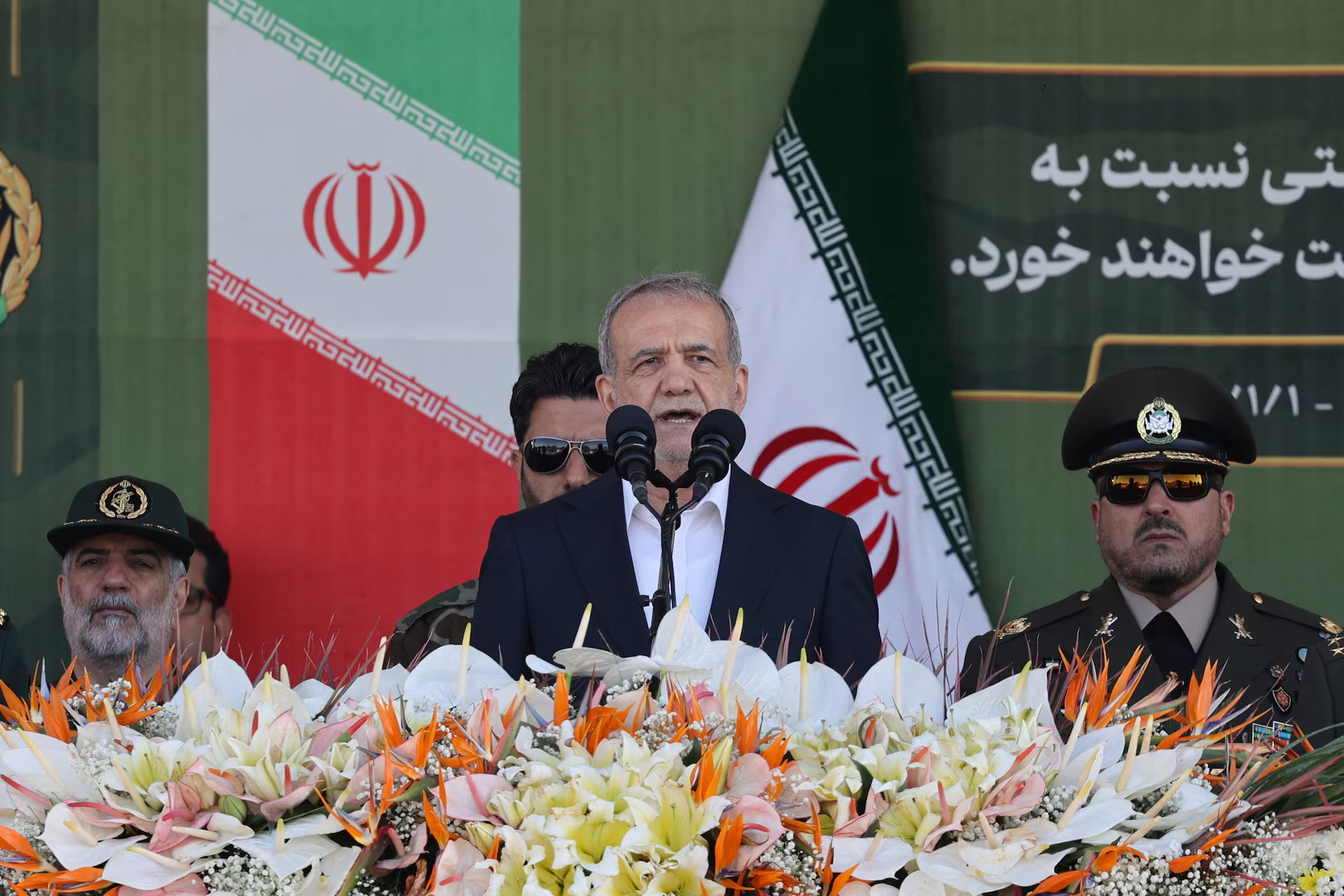
Iranian President Masoud Pezeshkian called for national solidarity while expressing willingness to continue nuclear negotiations during a large ceremony in Tehran marking the 47th anniversary of the 1979 Islamic Revolution.
Crowds filled Tehran’s Azadi Square and other cities across the country as Iran commemorated the founding of the Islamic Republic at a time of mounting external pressure and internal strain.
The anniversary comes as tensions with the United States persist following recent rounds of discussions over Iran’s nuclear programme. US President Donald Trump has continued to warn of possible military action if Tehran does not meet Washington’s demands, which include limits on uranium enrichment and missile development. Reports suggest the US is considering deploying another aircraft carrier group to the region.
Call for Solidarity in Face of ‘External Conspiracies’
Addressing supporters, Pezeshkian emphasised unity against what he described as foreign efforts to destabilise Iran.
“We stand together in solidarity against conspiracies targeting our nation,” he told the crowd, adding that the unity of Iranians unsettles their adversaries.
He stressed that the country must remain united despite the pressures it faces.
On the nuclear issue, Pezeshkian reiterated that Iran does not seek nuclear weapons and is open to verification mechanisms. However, he said deep mistrust built by the US and European countries has hindered progress in negotiations.
“At the same time, we remain determined to pursue dialogue aimed at peace and regional stability,” he said.
Acknowledging Public Grievances
The president also addressed domestic unrest that followed protests earlier this year, which began over rising living costs and currency depreciation before expanding into broader criticism of the government.
Pezeshkian apologised for governmental shortcomings and pledged efforts to address public concerns.
“We are prepared to hear the people’s voices. We serve the people and do not wish to confront them,” he said.
He attributed part of the unrest to what he described as hostile propaganda by Iran’s opponents but acknowledged the need to repair social divisions.
Iran ‘Open to Fair Deal’
Speaking to Al Jazeera, analyst Ali Akbar Dareini from Tehran’s Centre for Strategic Studies interpreted the speech as a signal that Iran remains open to a balanced agreement with Washington.
He said Tehran would resist demands that undermine its sovereignty but appeared willing to continue negotiations under equitable terms.
Al Jazeera correspondent Resul Serdar, reporting from Tehran, described the anniversary as taking place at a pivotal moment, with strong public calls for change while authorities sought to demonstrate continued popular backing.
Supreme Leader Ali Khamenei had earlier encouraged citizens to participate in the commemorations, which were attended by senior political, military and religious officials.
Symbolic Displays and Regional Diplomacy
The anniversary events featured strong anti-US and anti-Israel imagery, including the burning of American and Israeli flags. Iranian media showed symbolic coffins draped in US flags, alongside displays of missiles and wreckage from Israeli drones reportedly downed during last year’s brief conflict.
Participants carried portraits of Khamenei and Ruhollah Khomeini, as well as Iranian and Palestinian flags.
Meanwhile, diplomatic activity continues. Iran’s security chief Ali Larijani recently travelled to Oman for talks with Sultan Haitham bin Tariq Al Said and later to Qatar for meetings expected with Emir Tamim bin Hamad Al Thani. Qatar has played a mediating role in previous negotiations.
The diplomatic push coincides with upcoming meetings in Washington, where Israeli Prime Minister Benjamin Netanyahu is scheduled to meet Trump and US Secretary of State Marco Rubio to discuss concerns over a potential deal with Iran.
A Critical Moment for Iran
The anniversary celebrations unfolded against a backdrop of economic hardship, political division and international tension. While the government showcased public mobilisation and national solidarity, underlying challenges — both domestic and geopolitical — remain central to Iran’s current trajectory.