


Every night around 8pm, Karim* secures the door of his small hostel room at East West Medical College on the outskirts of Dhaka. Any knock is met with hesitation. He listens carefully, opening the door only if he recognises the voice outside. Beyond the campus, Karim avoids crowded tea stalls and markets. His limited grasp of Bangla and a noticeable Indian accent make him anxious. These days, he tries to hide his nationality whenever possible.
Karim arrived in Bangladesh from India’s Haryana state in April 2024 after failing to secure a government medical seat back home. At first, life in Dhaka felt welcoming. He socialised with classmates, explored the city on weekends, and found relief from academic pressure through simple outings.
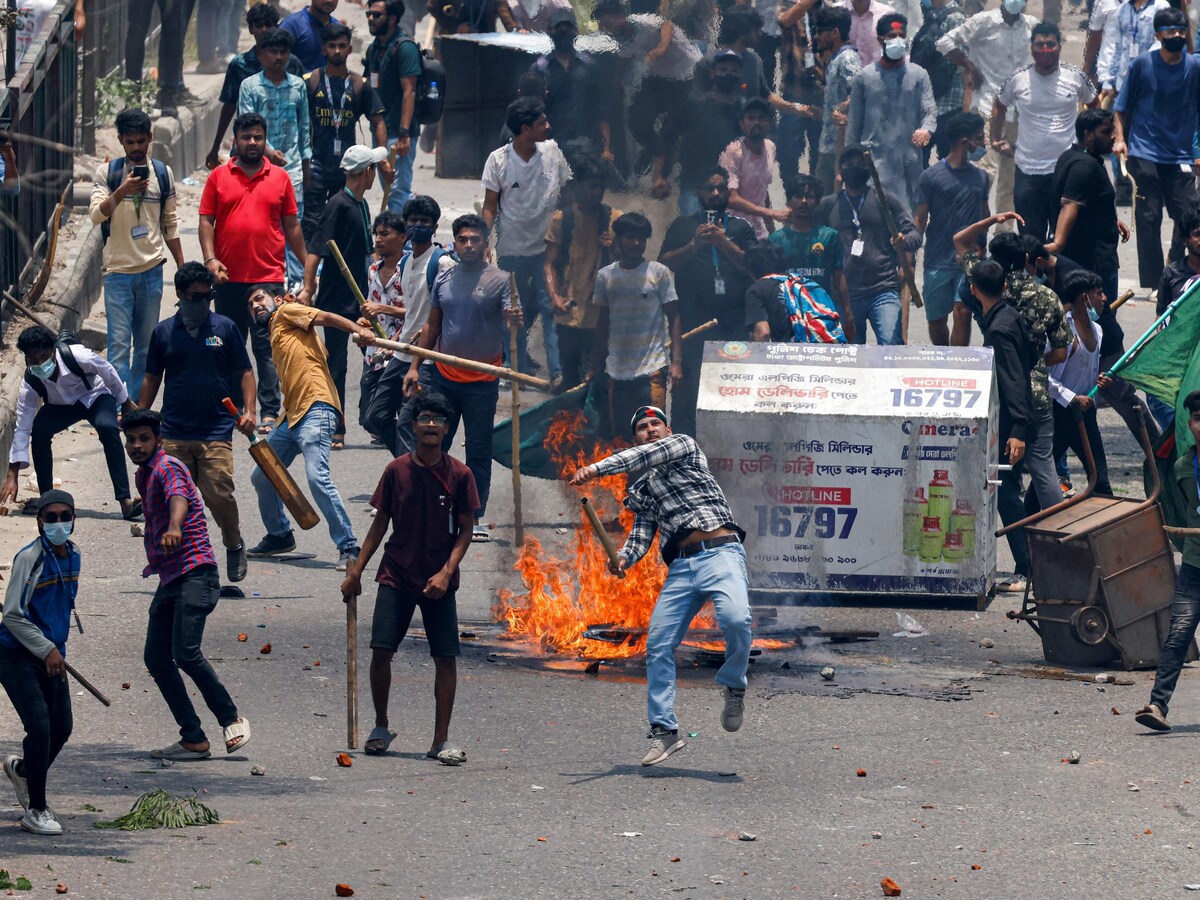
That sense of normalcy vanished in July 2024, when protests erupted against then-prime minister Sheikh Hasina. As demonstrations spread and security tightened, Karim began confining himself to his room, fearing the streets were no longer safe.
College authorities advised Indian students to remain on campus. Months later, those restrictions remain in place. “The city that once felt like home now feels hostile,” Karim said.
A Community on Edge
Karim is one of more than 9,000 Indian medical students currently studying in Bangladesh. Many say they feel increasingly vulnerable as anti-India sentiment has grown, particularly after Hasina sought exile in New Delhi following her removal from power in August 2024.
Hasina, long viewed as a close ally of India, was later sentenced to death in absentia by a tribunal in Dhaka for killings linked to the 2024 crackdown. India’s refusal to extradite her, despite requests from the interim government led by Muhammad Yunus, has fuelled public anger toward New Delhi.
That tension spilled over into student life in December, when an Indian student from East West Medical College was assaulted by local attackers who stole his phone and wallet. CCTV footage of the incident circulated rapidly among students, triggering widespread fear.
“The entire community is shaken,” said Vaibhav, an Indian intern at Dhaka National Medical College who requested anonymity. “We fear for our safety every day.”
Hiding Identity to Stay Safe
Vaibhav said he once moved freely across Dhaka without concern. Now, he avoids public places and speaks cautiously even inside the hospital where he works. “One wrong word can make you a target,” he said.
Although not politically active, he closely follows the news, gauging daily risks. “Every night we sleep not knowing what the next day will bring,” he added.
Why Bangladesh Attracted Indian Students
Each year, more than two million Indian students compete for fewer than 60,000 government medical seats. High fees at private colleges—often exceeding $150,000—push many families to look abroad.
Bangladesh has long been a popular alternative, with lower tuition costs and geographic proximity. Karim’s family spent nearly all their savings to send him there.
Initially, the decision seemed justified. But protests, internet shutdowns, and violence soon disrupted daily life. During the 2024 unrest, Karim spent two nights at Dhaka airport trying to leave as flights filled up. He eventually returned to India temporarily, only to come back months later to a changed campus environment marked by delays and insecurity.
Political Violence Rekindles Fear
After a brief period of calm, tensions flared again in December following the killing of Sharif Osman Hadi, a prominent student leader known for anti-India views. Police said the suspects fled into India, sparking protests and further hostility.
Visa services were briefly suspended, and reports of violence against minorities added to unease. Indian Hindu students, in particular, say they feel exposed. Vaibhav recalled an examination where he felt his treatment changed once his nationality and religion became known.
While the Bangladeshi government insists that law and order remains largely stable, student groups paint a different picture.
Calls for Intervention
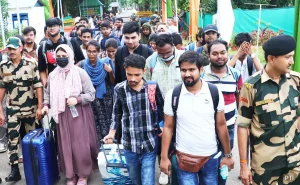
Jitendra Singh, president of the All India Medical Students’ Association (AIMSA), said the organisation has received hundreds of distress messages. AIMSA has urged Indian Prime Minister Narendra Modi and the foreign ministry to prioritise student safety and consider evacuation if risks escalate.
Degrees on Hold
Ongoing unrest has also disrupted academic timelines. Mohammad, a student from Indian-administered Kashmir, expected to graduate in 2024 but remains stuck due to repeated postponements.
“First COVID, then protests—now we’re just waiting,” he said. The uncertainty has weighed heavily on students’ mental health, with many reporting chronic anxiety and sleepless nights.
Colleges have tightened curfews, some as early as 8pm. Karim says hostels now feel more like confinement than refuge.
“Earlier, this place felt like a second home,” he said. “Now it feels like a jail.”
“I wish I had never come here.”
*Karim is a pseudonym used to protect the student’s identity.