


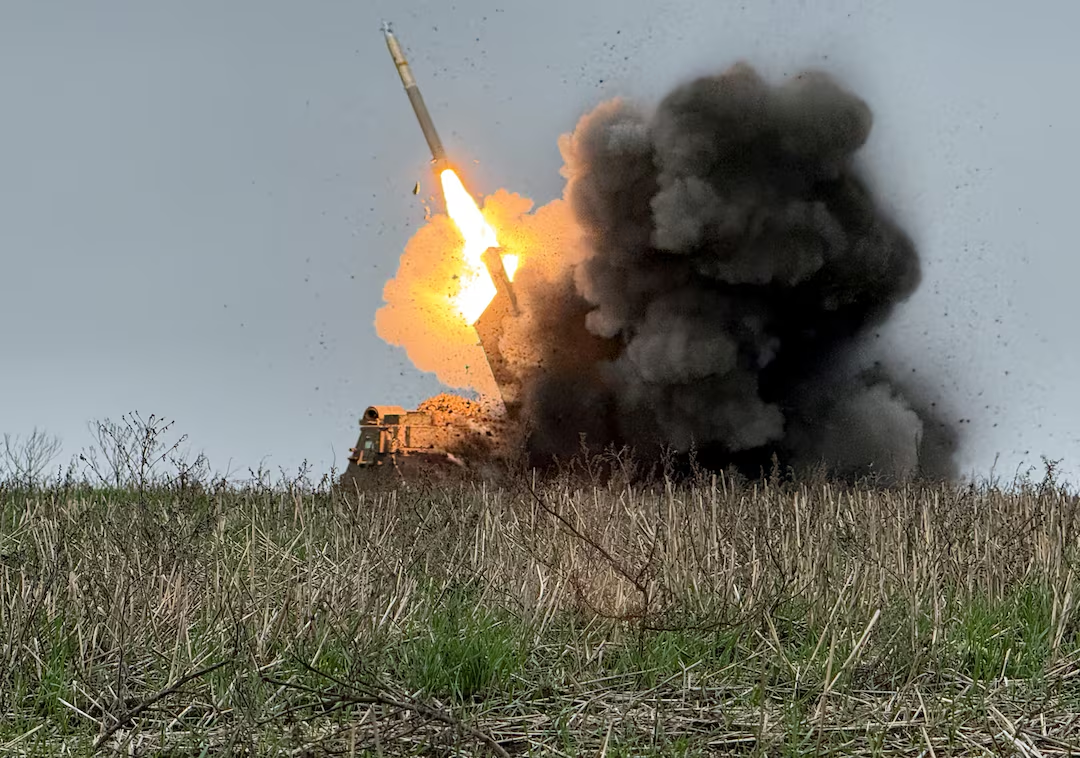
European Union leaders are set to decide at a summit in Brussels on Thursday whether to use frozen Russian assets to provide billions of euros in financial support to Ukraine, a move seen as a major test of the bloc’s unity and resolve.
The EU views Russia’s war in Ukraine as a direct threat to its own security and says continued financial backing for Kyiv is essential to sustain Ukraine’s war effort.
“We cannot afford to fail. We must show strength,” said EU foreign policy chief Kaja Kallas, adding that leaders are prepared to remain at the summit as long as necessary to reach an agreement.
A Critical Choice for Europe
The European Commission has proposed using frozen assets belonging to Russia’s central bank—most of which are held at Belgium-based clearing house Euroclear—as collateral for a large loan to Ukraine.
However, the plan has raised serious concerns, particularly from Belgium, which fears legal challenges and financial risks. Other countries, including Italy, have also expressed reservations.
Polish Prime Minister Donald Tusk urged swift action, framing the decision as a stark choice.
“Europe faces a simple decision: money now or blood later. This is not just about Ukraine—it’s about Europe,” he said.
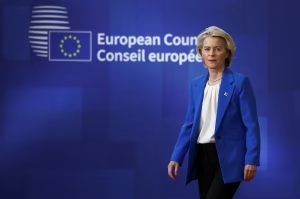
European Commission President Ursula von der Leyen said she would not leave the summit without an agreement on how to finance Ukraine for the next two years.
Ukrainian President Volodymyr Zelenskiy was expected to attend the summit in person, underscoring the urgency from Kyiv’s perspective.
Belgium Seeks Legal and Financial Safeguards
Belgian Prime Minister Bart De Wever told parliament that Belgium has yet to receive sufficient guarantees to protect it from potential legal claims and liquidity risks tied to the plan. He noted that negotiations were still ongoing.
Russia’s central bank has condemned the EU proposal as illegal and has warned it will take all available steps to defend its interests. This week, it filed a lawsuit in Moscow seeking $230 billion in damages from Euroclear.
The stakes are high. EU officials warn that without additional funding, Ukraine could run out of money by the second quarter of next year, potentially turning the tide of the war in Russia’s favor—an outcome the EU fears could increase the risk of Russian aggression closer to its borders.
Kallas said the chances of reaching an agreement were “50-50,” while German Chancellor Friedrich Merz expressed optimism that a deal was still possible. Swedish Prime Minister Ulf Kristersson described the summit as the most important since Russia’s invasion of Ukraine began.
Few Viable Alternatives
Diplomats say options other than using frozen Russian assets are limited. One alternative—EU-wide borrowing backed by the bloc’s budget—would require unanimous approval from all 27 member states, which appears unlikely as Hungary has already indicated it would veto such a move.
Another option would involve individual countries raising funds themselves, but this would increase national debt levels and fail to provide Ukraine with long-term financial certainty.
As a result, many diplomats say using Russian assets is effectively “the only realistic option” to secure large-scale funding without placing immediate strain on EU governments’ finances.
To move forward, EU leaders must reassure Belgium that it will not bear the financial burden alone if Russia succeeds in legal action. Talks at the summit are expected to focus on defining risk-sharing guarantees that are acceptable to all parties.
Despite the divisions, EU officials remain confident that a financing solution for Ukraine will ultimately be reached.