


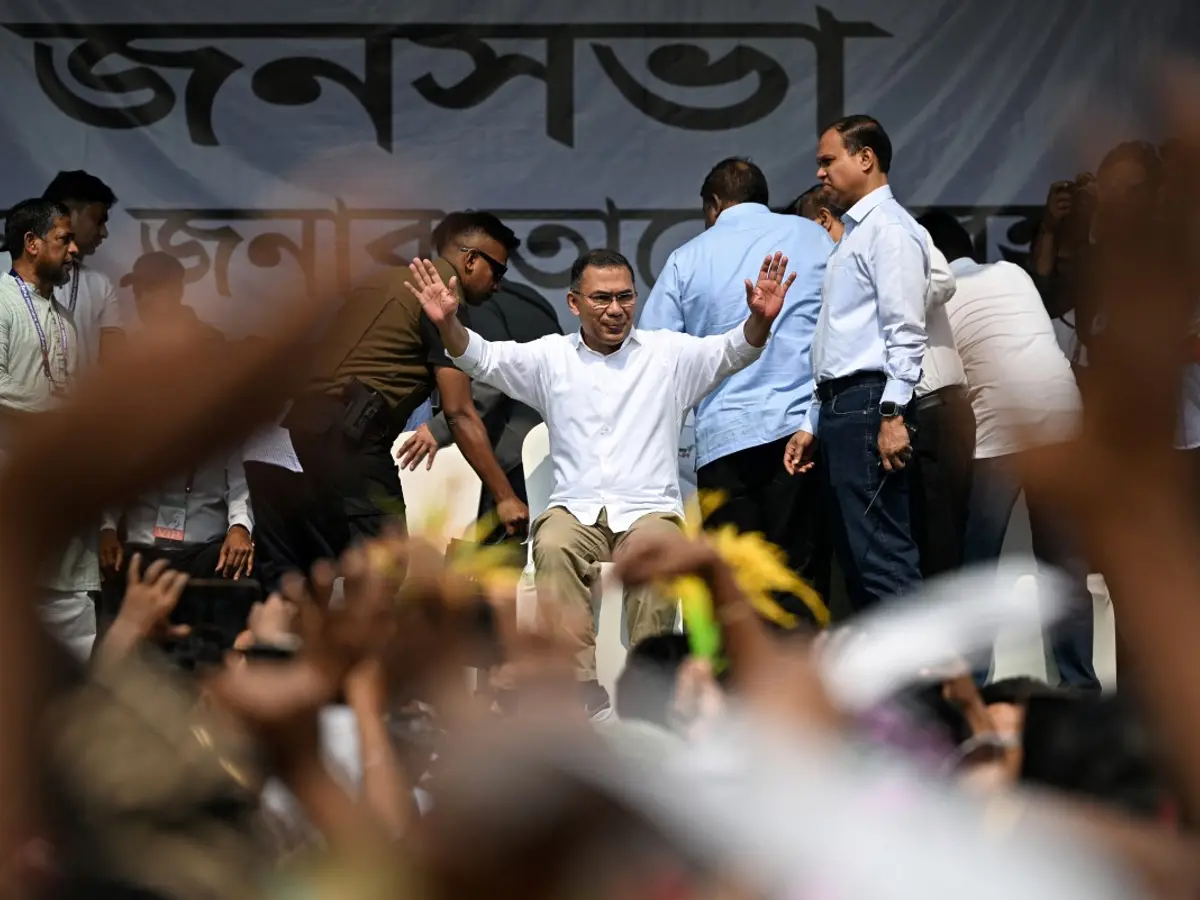
Bangladesh recent parliamentary election was accompanied by a national referendum on sweeping constitutional reforms, a vote that has now emerged as a major political flashpoint following the country’s 2024 uprising and the removal of former Prime Minister Sheikh Hasina from power.
The referendum approved the July National Charter with 60.26 percent support, endorsing a broad roadmap for governance reforms. However, the result has revealed growing divisions between the election-winning Bangladesh Nationalist Party (BNP), led by Tarique Rahman, and opposition groups, particularly Jamaat-e-Islami and its allies.
Tensions intensified when newly elected BNP lawmakers refused to take an additional oath to implement the charter as part of a proposed Constitution Reform Council, raising uncertainty about the future of the reform process.
Background: From Protests to Political Transition
The referendum’s roots lie in the mass student protests that began in July 2024 against Bangladesh’s job quota system, which reserved a significant portion of public sector positions for descendants of freedom fighters from the 1971 independence war. Demonstrators argued the system entrenched political privilege and limited equal opportunity.
As protests escalated, the government under Sheikh Hasina launched a crackdown that, according to the International Crimes Tribunal (ICT), left nearly 1,400 people dead and over 20,000 injured. The tribunal later found Hasina guilty of crimes against humanity and sentenced her to death. She subsequently went into exile in India after being ousted from office.
Following her departure, the Awami League, which had governed for 15 years, was banned from political activity. The recent election marked the first national vote since the uprising and political transition.
The July National Charter Explained
After the change in leadership, Nobel laureate Muhammad Yunus assumed the role of interim caretaker leader in August 2024. His administration drafted the July National Charter 2025, a comprehensive reform framework aimed at restructuring the country’s political and legal system.
The charter outlines more than 80 proposed reforms, including increasing women’s political representation, introducing limits on prime ministerial terms, strengthening presidential authority, expanding fundamental rights, and safeguarding judicial independence. It also proposes the creation of a 100-member upper chamber to complement the existing 350-seat Jatiya Sangsad, Bangladesh’s unicameral parliament.
Although most political parties initially signed the charter, the BNP expressed reservations during the transitional period, particularly regarding structural reforms. The party later publicly supported a “yes” vote shortly before the referendum, stating it would adopt the charter if approved by voters.
Referendum Results Trigger Political Schism
Despite majority approval of the charter, divisions quickly surfaced during the swearing-in of newly elected members of parliament. Lawmakers were required to take two oaths: one to uphold the Constitution and another to respect and implement the July National Charter.
BNP MPs took the constitutional oath but declined to commit to the charter oath, drawing criticism from Jamaat-e-Islami and the National Citizen Party (NCP), a group formed by student leaders involved in the 2024 protests.
Under the implementation framework, only MPs who take both oaths are eligible to serve on the Constitution Reform Council, the body responsible for enacting the proposed amendments within 180 days. Since more than two-thirds of lawmakers did not take the second oath, the council has not yet been formed, leaving the reform timeline uncertain.
BNP’s Key Concerns Over Reform Mechanism
BNP leaders argue that the Constitution Reform Council has not yet been formally approved by parliament and therefore lacks legal legitimacy. Party officials have stated that lawmakers cannot be considered members of a body that is not yet constitutionally recognised.
Despite this stance, BNP representatives have reiterated their commitment to implementing the July National Charter in principle, describing it as a consensus political document agreed upon during the transitional period.
The central dispute appears to focus on the proposed upper chamber of parliament and the method of selecting its members. Bangladesh currently operates under a first-past-the-post (FPTP) electoral system, in which candidates with the most votes in each constituency win seats, often resulting in significant gaps between vote share and parliamentary representation.
Electoral System Debate at the Core
The July National Charter recommends that the upper house be filled using a proportional representation system, which would allocate seats based on overall vote share. Analysts say this approach could reduce the dominance of large parties in parliament.
The BNP, which won 212 seats in the recent election compared with 77 for the Jamaat-led alliance, is believed to favour maintaining an FPTP-based structure for the upper chamber, a model that would likely benefit parties with strong parliamentary majorities.
In contrast, Jamaat and the NCP support proportional representation, arguing it would produce a more balanced and inclusive legislature. Legal experts note that while most parties agree on the broader reform agenda, disagreements over the composition of the upper house remain a major obstacle.
What Happens Next?
With the Constitution Reform Council still unformed, the implementation of the charter’s amendments remains in limbo. The coming weeks will be critical as political leaders negotiate how to establish the council and reconcile competing visions for the reform process.
Observers warn that the referendum, intended as a unifying step after the 2024 uprising, has instead highlighted deeper political fault lines. How Bangladesh resolves the dispute over constitutional reforms and institutional restructuring could shape the country’s democratic trajectory and governance framework in the years ahead.