


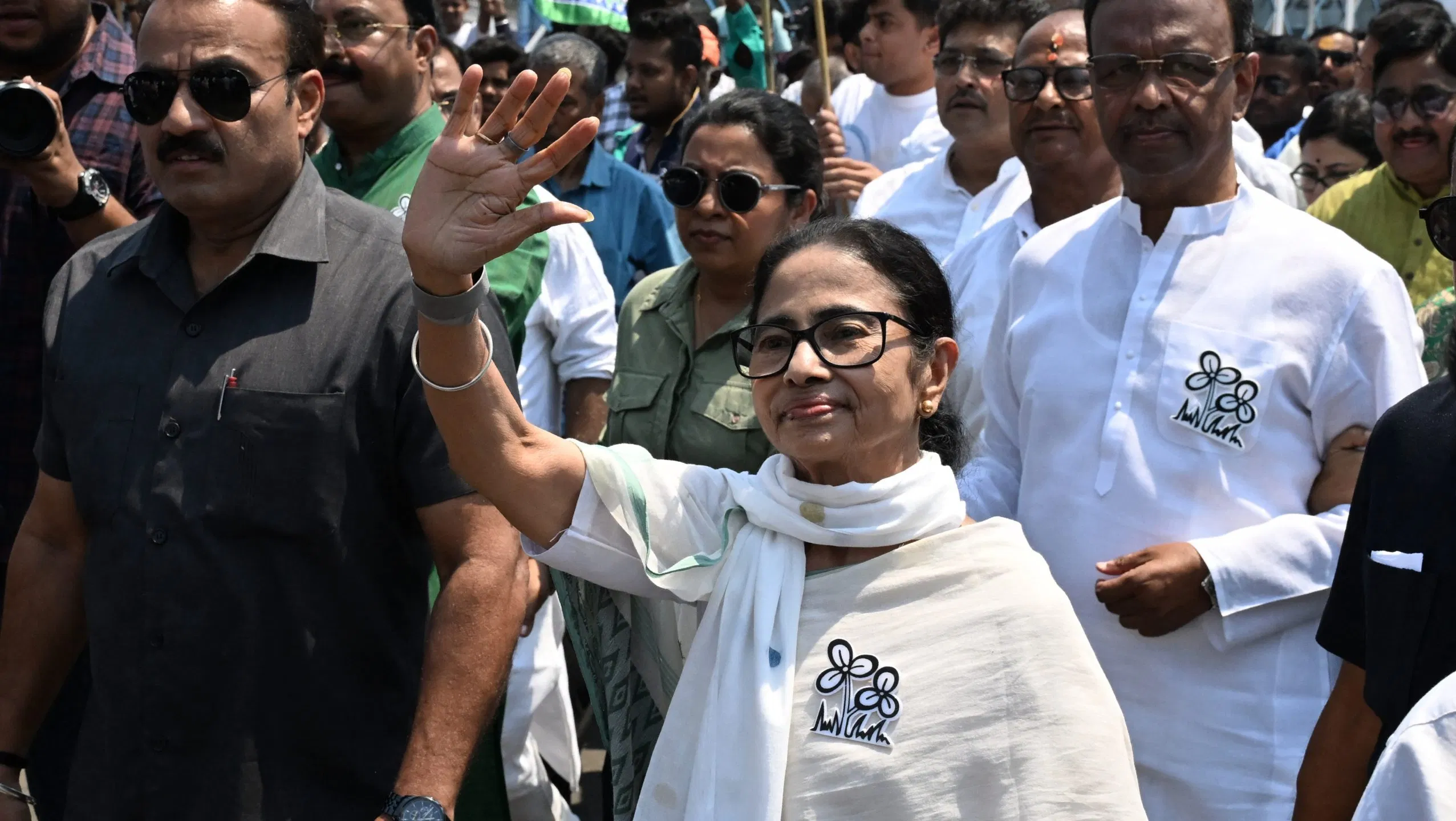
For the first time in its history, Prime Minister Narendra Modi Bharatiya Janata Party has captured power in West Bengal, breaking the long hold of Mamata Banerjee and her All India Trinamool Congress in one of India’s most politically symbolic states. The result marks a major shift not only for Bengal, but for national politics as well, with analysts describing it as one of the most consequential election outcomes in India this year.
Among the voters who reflected that change was Seema Das, a domestic worker in New Delhi who travelled for two days to return to her village in Bengal to cast her vote. She had always supported Banerjee’s party in the past, but this time said she was persuaded by family members that the chief minister had become too focused on Muslim voters. That sentiment echoed a message the BJP has pushed for years against the TMC, accusing it of favouring minorities in the name of pluralism. For a long time, that strategy did not succeed in Bengal. This time, it did.
A dramatic reversal in a state the BJP had never won
West Bengal, home to more than 90 million people, had long been one of the few major states where the BJP remained unable to take power, even as it expanded across much of India. But early results from the state election show a dramatic turnaround. By late afternoon on counting day, the BJP had either won or was leading in 200 out of 294 seats. In the previous election in 2021, its best performance had been just 77 seats. Banerjee’s TMC, by contrast, had dropped to 87 seats won or leading.
The outcome stood out even more because of what was happening elsewhere. Other state and regional results showed a mixed political picture across India, with opposition parties performing strongly in places such as Kerala and actor C Joseph Vijay delivering a surprise in Tamil Nadu. Yet analysts said Bengal was by far the biggest prize and the result that mattered most politically. It gave the BJP a first breakthrough in a state it had never governed and handed Modi a major symbolic and strategic victory.
Mamata Banerjee’s long dominance met growing voter fatigue
Banerjee founded the TMC in 1998 after breaking away from the Congress party, frustrated by its failure to directly challenge the communist forces that had ruled Bengal since 1977. In 2011, she ended that long left rule and went on to become one of the country’s most recognisable regional leaders. Since Modi became prime minister in 2014, she also emerged as one of the strongest national critics of the BJP, especially through her defence of Bengal’s Muslims and her opposition to Hindu majoritarian politics.
But over time, frustration with the TMC government appears to have grown. Analysts quoted in the report said Banerjee remained personally popular, yet many voters had become unhappy with the wider TMC machinery and its role in daily life. Rahul Verma of Shiv Nadar University said there was clear anti-incumbency against the ruling structure, and that without that dissatisfaction the BJP would not have achieved such a sweeping result. Political analyst Praveen Rai similarly argued that the TMC failed to offer voters anything new and did not fully grasp the scale of resentment over economic deprivation and unmet aspirations.

Record turnout and a sharper BJP strategy changed the contest
Nearly 68.2 million people voted in the election, with turnout reaching about 92.93 percent, a record high for the state. Analysts said that high participation did not simply reflect enthusiasm, but also the intensity of the political struggle. According to Verma, the BJP ran a more disciplined and better-managed campaign this time, finding a corridor through which it could convert anti-incumbency into a real victory.
Neelanjan Sircar of the Centre for Policy Research said his team found a major urban-rural gap in voter behaviour during pre-election research. He argued that urban men in Bengal were especially polarised, and that this helped the BJP because the Muslim population is disproportionately rural. In that context, polarisation produced a bigger electoral payoff for the BJP than many observers had previously believed possible.
Hindu consolidation became central to the BJP’s message
The BJP did not hide the fact that it was appealing strongly to Hindu identity. Suvendu Adhikari, the BJP’s state leader and a possible chief minister candidate, openly spoke of Hindu consolidation in the vote. He thanked Hindu Sanatanis for supporting the party and described the TMC as pro-Muslim. While he also claimed that many Muslims had shifted away from Banerjee, the report noted that this could not yet be verified until fuller vote data are released by the Election Commission.
For the BJP, the Bengal win is also deeply symbolic because Shyama Prasad Mukherjee, founder of the Bharatiya Jana Sangh, the party’s ideological predecessor, came from the state. That gives the victory a meaning beyond the seat tally. It allows the BJP to present the result as both a political conquest and a historical homecoming.
Voter roll revision and security deployment also shaped the backdrop
Before the election, the Election Commission carried out a controversial Special Intensive Revision of voter rolls in Bengal. The exercise removed more than nine million people, nearly 12 percent of the state’s 76 million voters, from the voting list. According to the report, nearly six million were marked absent or deceased, while another three million were unable to vote because their cases could not be heard in time. Banerjee’s TMC and other opposition parties accused the Election Commission of favouring the BJP, and rights groups argued that Muslims were disproportionately disenfranchised.
At the same time, the federal government deployed 2,400 companies of paramilitary troops to Bengal, a record for such provincial elections. The official explanation was that the force was needed to ensure peaceful voting. But the TMC and other opposition groups said the heavy presence intimidated voters and may have altered the atmosphere on the ground. Analysts said the voter revision and security deployment mattered, but also agreed that these factors alone could not explain such a decisive BJP victory. The result, they said, came from a combination of structural anti-incumbency, sharper BJP organisation and religious polarisation.
A victory with consequences far beyond Bengal
The loss is a serious blow to Banerjee’s standing as a national challenger to Modi. Analysts said it reduces the political weight not only of the TMC, but also of the wider opposition camp. After the BJP fell short of a parliamentary majority in the 2024 national elections, Monday’s state results help restore momentum to Modi’s leadership and strengthen the party’s image of national dominance. Praveen Rai described the Bengal win as helping offset the earlier setback and extending the BJP’s hegemonic power in Indian politics.
Banerjee, however, signalled quickly that she would not accept defeat quietly. In her first reaction during the counting process, she urged party workers not to leave the booths and accused central forces of being used to suppress the TMC and seize control. She told supporters not to be afraid and said they would fight like tiger cubs. Analysts quoted in the report suggested that Bengal’s political drama is far from over. But one fact is already clear: Modi’s BJP has achieved what once seemed out of reach and won West Bengal for the first time.