


Speaking after reports of escalating youth violence, including the killing of 21-year-old former Israeli soldier Yemanu Binyamin Zalka, Israel National Security Minister Itamar Ben-Gvir struck a forceful tone. He promised a sweeping operation, calling it a total war on violence and vowing to restore safety to the streets.
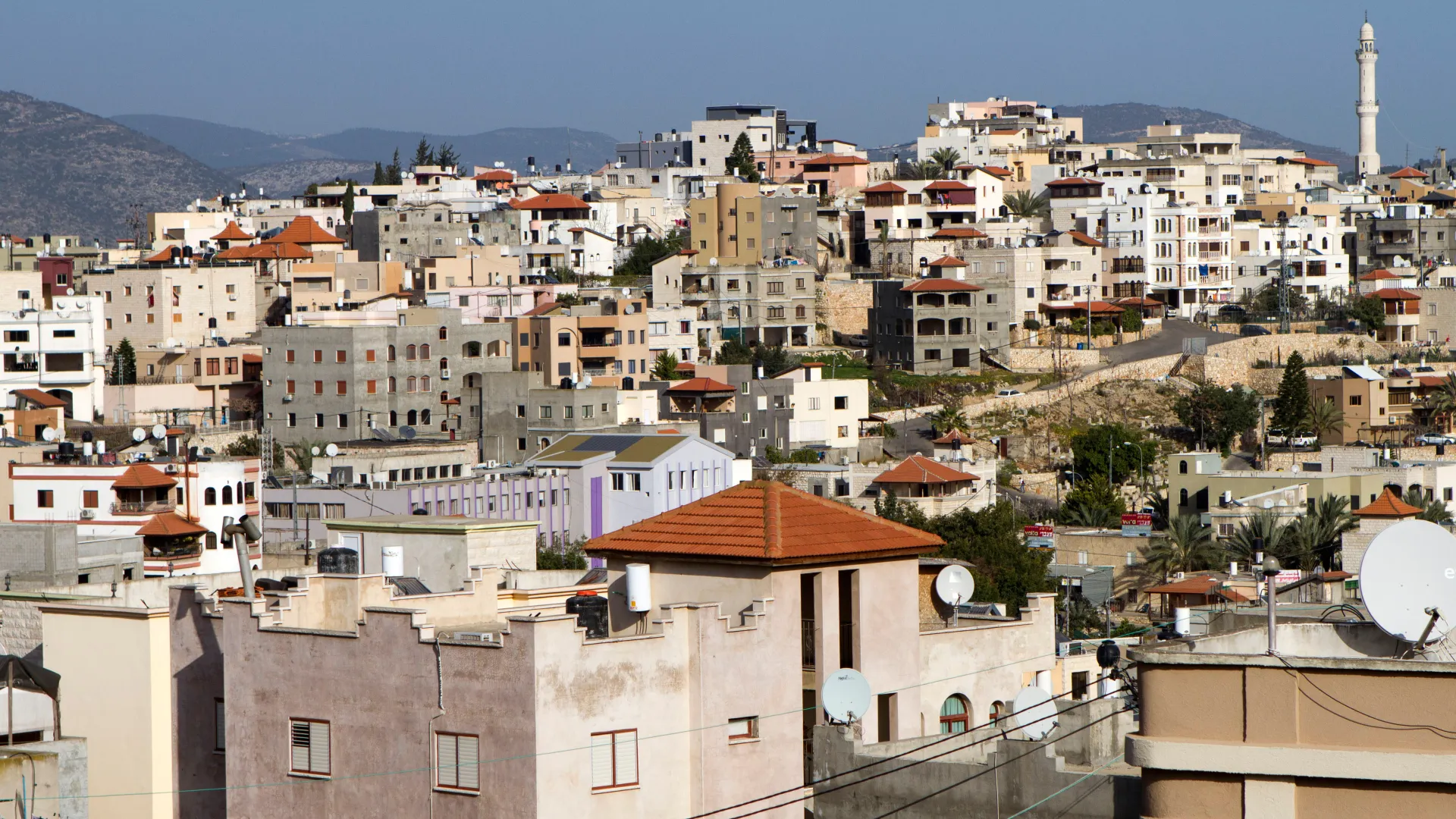
Critics say that decisive language stands in sharp contrast to the government’s response to the ongoing wave of deadly violence in Palestinian towns and villages inside Israel. There, almost 100 people have already been killed, and according to Israel’s own finance ministry, the broader cost to the country may reach as much as $6.7bn each year. For many observers, the difference in urgency has reinforced long-running accusations that Palestinian communities are being policed differently and treated as less deserving of protection.
Accusations of Unequal Enforcement Grow Under Current Government
Claims of two-tier policing in Israel are not new, but critics say the situation has worsened under Prime Minister Benjamin Netanyahu’s current government and under Ben-Gvir, the far-right minister responsible for the police.
Data cited in the report suggest violence in Palestinian communities has risen sharply in recent years. According to Haaretz, the murder rate in those communities climbed from 4.9 per 100,000 in 2020 to 11 per 100,000, placing it on the level of countries such as Sudan and Iraq. In contrast, the murder rate in Jewish Israeli society stood at about 0.6 per 100,000.
Critics argue that this increase cannot be explained only by broader social conditions. They say the current administration, which includes figures such as Ben-Gvir and Finance Minister Bezalel Smotrich, has helped create an environment in which violence in Palestinian communities is tolerated rather than seriously addressed.
Palestinian Communities Say the State Shows Hostility, Not Protection
Palestinian lawmaker Aida Touma-Suleiman said the lack of policing in Palestinian towns is not simply neglect, but a sign of a deeper hostile attitude. She argued that the police do not see themselves as there to serve Arab neighbourhoods and instead approach them mainly through punishment and enforcement.
The physical absence of policing is often cited as evidence of that imbalance. While police stations are common in Jewish-majority areas, the report says there are only about 10 in Palestinian-majority ones. Critics say this contributes to a sense that the state is largely missing when communities need safety, but highly present when it comes to control.
That perception has only deepened with recent government decisions. One of the most controversial was the approval of a $68.5m cut to an economic development programme for Palestinian communities, with the money redirected to more policing. Critics said more funding for security may be needed, but objected strongly to taking it from programmes meant to tackle the root causes of crime, including lack of housing, weak infrastructure and economic marginalisation.
Poverty and Underinvestment Feed the Crisis
Palestinian citizens of Israel make up about 21 percent of the population, but they have long described life in towns and villages marked by chronic underinvestment and weak state support. Many are descendants of Palestinians who remained after the creation of Israel in 1948, an event Palestinians refer to as the Nakba.
According to the report, poverty remains deeply entrenched. Official data from 2024 show that 37.6 percent of Palestinian households in Israel live below the poverty line. Analysts also say unemployment has worsened since access to work in the occupied West Bank was cut off after the Hamas-led attack on October 7 and the start of Israel’s war on Gaza in 2023.
In that environment, local criminal networks have expanded their reach. Some now operate in ways described as similar to mafia-style organisations. Critics say these groups have been allowed to grow with little meaningful interference from the state, despite the escalating danger they pose to residents.
Analysts Say Crime Is Being Used to Reinforce Anti-Arab Narratives
Professor Daniel Bar-Tal of Tel Aviv University said the government’s approach goes beyond passivity. He argued that some within the state benefit politically from allowing violence in Palestinian communities to continue, because it helps reinforce the claim that crime is simply part of Arab culture.
He also alleged that there has been some level of state complicity, including reliance on criminal networks as sources of local information. According to him, reports from residents about gang activity have often been dismissed rather than properly acted upon. In his view, this reflects a system in which insecurity in Palestinian areas is not seen as a crisis demanding urgent action.
Ben-Gvir has rejected accusations of racism in the past, saying he opposes only those who harm Jews. But critics say his record and rhetoric show a broader hostility towards Palestinians, including those who hold Israeli citizenship.
Ben-Gvir Faces Wider Criticism Over His Role
While Ben-Gvir has long drawn anger from Palestinian citizens and rights groups, the report notes that criticism of his performance is increasingly entering the Israeli mainstream as crime rises more broadly.
Writers in Israel’s liberal media have accused him of focusing on publicity and political provocation while murder rates continue to climb. But criticism has not been limited to the press. Earlier this month, Israel’s High Court stepped into a dispute between Ben-Gvir and Attorney General Gali Baharav-Miara after she called for his removal over what she said were attempts to interfere politically in police work.
Political scientist Ori Goldberg argued that Ben-Gvir’s real role is not to ensure effective policing, but to punish Palestinians, including those inside Israel. In his view, the lack of security, combined with discriminatory planning and unequal access to healthcare, reflects a broader system of structural inequality.
For critics, the contrast remains stark: fast promises of action when Jewish Israelis are attacked, but continued neglect and rising bloodshed in Palestinian communities. That gap, they say, is not accidental. It is the clearest sign of a system that protects some citizens far more fully than others.