


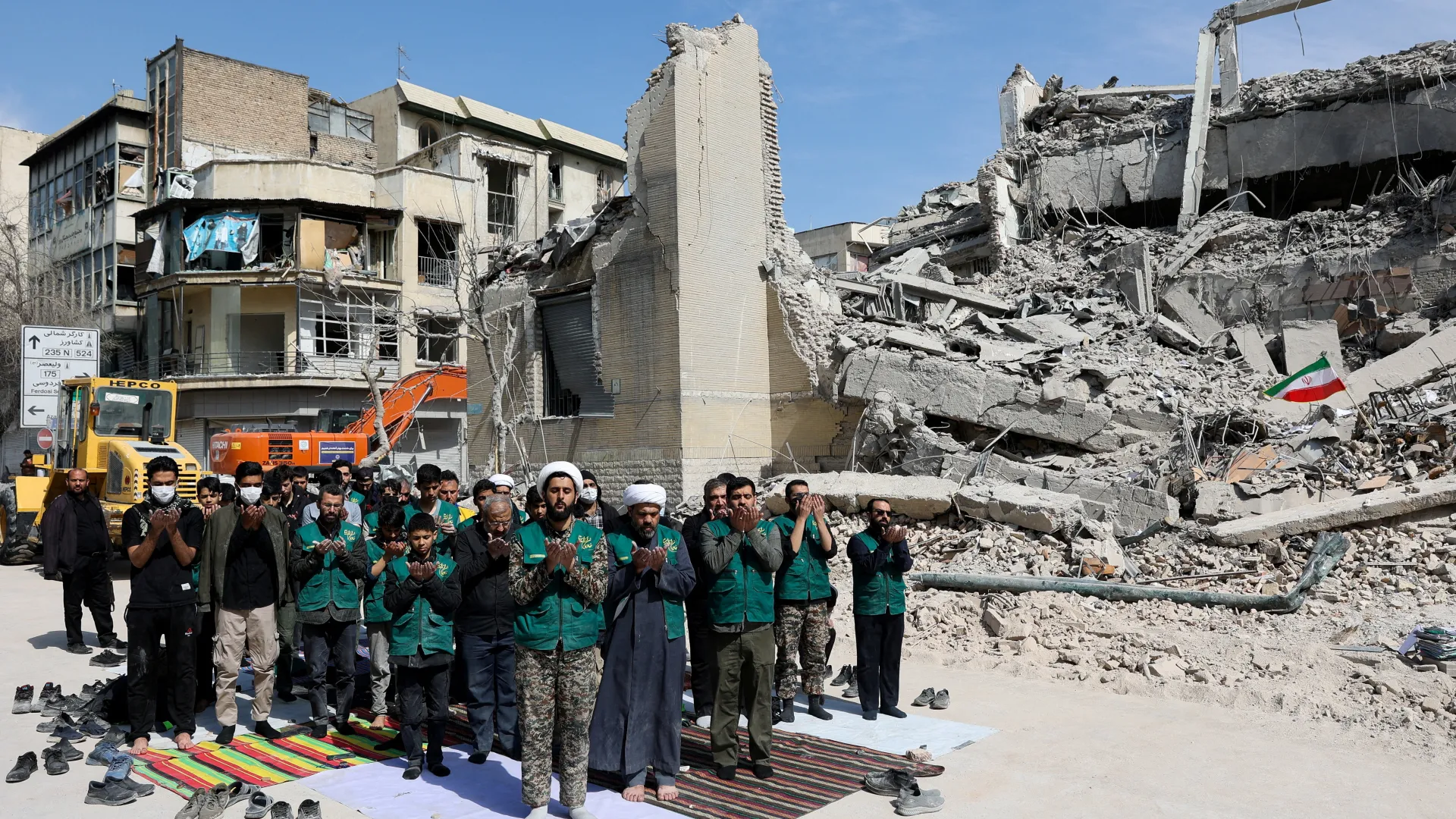
“The war might last weeks, so my family and I will only leave if it gets too bad. For now, life goes on,” said Sepehr, a resident of eastern Tehran, speaking anonymously for security reasons. He described booming explosions as a daily reality in his area, with smoke rising into the distance and windows shaking. Similar scenes are playing out across Tehran, a city of nearly 10 million people, as waves of U.S. and Israel missile attacks have struck at all hours since the war began on Saturday morning. The conflict has killed more than 1,000 people, according to the account.
Infrastructure Hit, but No Widespread Outages Reported
Iranian officials said on Thursday that some water and electricity facilities were damaged by incoming projectiles and asked the public to conserve resources. Despite this, no large-scale outages have been reported so far.
In Tehran, residents say the streets are noticeably quieter and less congested than usual, and many businesses have shut their doors. Even so, basic goods remain largely accessible—either in person or through online orders—at least for now.
Essentials Available, but Prices “Break People’s Backs”
Marjan, who lives in a western neighborhood, said she goes out briefly when the bombing appears to pause.
“When the bombing runs seem finished for a while, I go for a short walk once during the day to get some essentials from the local shops,” she said. “There are usually queues for bread… and there are queues at some petrol stations.”
She added that most items are still on shelves, though some are becoming harder to find. “Either way, the prices are breaking people’s backs,” she said.
Inflation Already Surging Before War Began
Two days before the war started, separate reports from the Statistical Centre of Iran (SCI) and the Central Bank painted a grim picture of household finances for Iran’s roughly 90 million people.
The SCI put annual inflation for the month of Bahman (ending February 19) at 68.1%, while the Central Bank put it at 62.2%—among the highest levels recorded since the period before the 1979 revolution, fueling fears of worsening instability.
Food inflation, according to the SCI, reached 105% by the end of last month, including sharp increases across staples and household necessities:
-
Cooking oil: 207%
-
Red meat: 117%
-
Eggs and dairy: 108%
-
Fruits: 113%
-
Bread and corn: 142%
Medicine Concerns Grow as Market Faces Shortages
First Vice President Mohammad Reza Aref said on Wednesday that authorities were concerned about ensuring sufficient medicine and medical equipment, but claimed conditions were “good” at present.
That reassurance comes as the medicine market has been in turmoil in recent weeks, with prices surging and some drugs—such as antidepressants—reportedly in short supply in Tehran and other cities. In some cases, residents say only domestically produced alternatives are available, while foreign-made medicines have become scarce.
The government continues to provide a modest cash subsidy for essential goods and has expanded the list of items available under the scheme to include baby diapers, another product that has reportedly more than doubled in price in recent months. Officials also say provincial authorities have been empowered to import essentials with less bureaucracy to maintain supply if the war drags on.
Currency Weakness and Market Turmoil
Iran’s economy—already strained by corruption, mismanagement, and years of U.S. and U.N. sanctions—has effectively stalled again as the war intensifies.
Before the conflict, the Iranian rial was trading around 1.66 million per U.S. dollar, near a record low. As the situation deteriorated, the stock market fell sharply while assets like gold climbed as people sought safer stores of value.
“Orwellian” Internet Restrictions Enter Sixth Day
As strikes continue, Iranian authorities have kept access to the global internet heavily restricted for a sixth day, pushing people toward state-run media and official messaging services.
Residents and observers say these channels largely amplify official statements and reports of attacks by the Islamic Revolutionary Guard Corps (IRGC), while offering limited coverage of damage in civilian areas and avoiding broader discussion of sensitive targets hit.
Journalist Milad Alavi wrote on X that it took six hours and dozens of VPN and proxy configurations to get a single message out, claiming most fixed and mobile connections were effectively disconnected from the global internet.
International internet monitors reported connectivity collapsing minutes after downtown Tehran was bombed on Saturday morning, with access dropping to below 1% of prior levels (which were already limited) and staying there, according to the account. NetBlocks also reported that an “increasingly Orwellian environment” was emerging, citing claims that telecommunications operators warned users against trying to reach the global internet and threatened legal action.
With access largely limited to a government-controlled intranet, comment sections on a small number of local news sites became one of the few remaining places for public expression—until at least one major tech site, Zoomit, reportedly shut its comments after critical posts, following a judiciary order.
Black Market for Connections Spreads, No End Date Given
Authorities have repeatedly urged citizens to report suspicious activity, including sightings of U.S. and Israeli aircraft, through security hotlines. Meanwhile, as during earlier conflicts and past protest-related shutdowns, a black market for limited internet access has reportedly emerged.
Two people told Al Jazeera they obtained small data-capped proxy connections from vendors inside Iran—slow and extremely expensive—while avoiding details due to security concerns.
As U.S. and Israeli officials encourage Iranians to remain vigilant and push for political change at a later date, Iranian authorities have not announced when the internet restrictions will be lifted.