


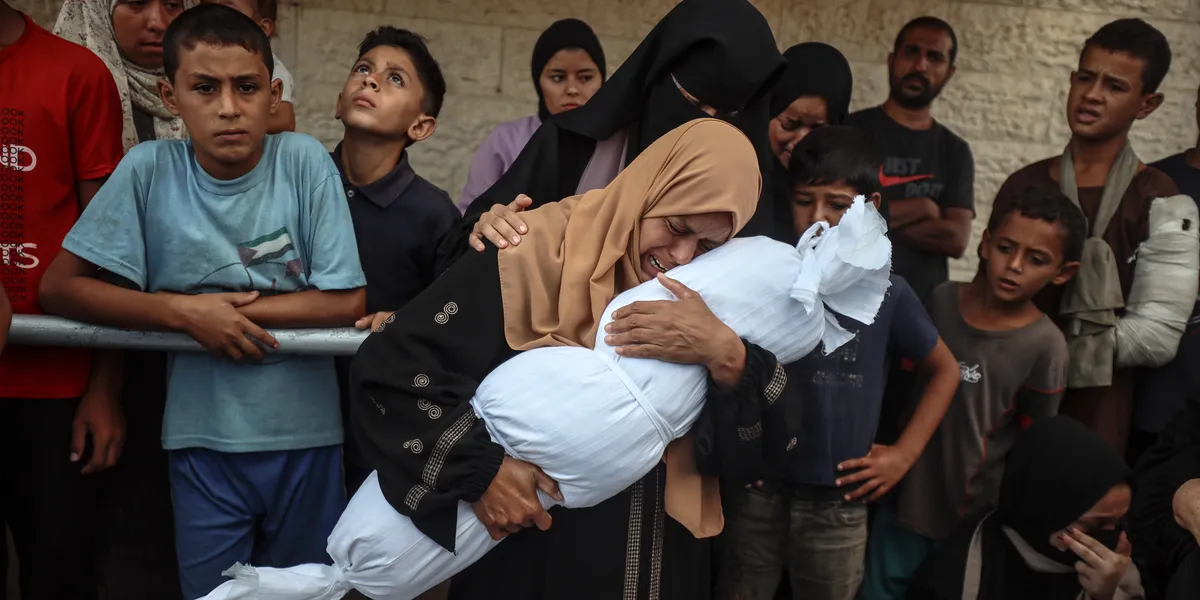
Since the war in Gaza began in October 2023, the conflict has carried a heavy human and economic toll, with vast financial resources and military manpower deployed while the Palestinian territory has suffered widespread destruction and institutional collapse.
According to available data, more than 72,000 Palestinians have been killed during the war, including large numbers of women and children. Some independent researchers suggest the death toll may exceed 75,000, indicating that official figures could underestimate the full scale of casualties.
For those who survived, the humanitarian impact has extended beyond direct violence. Periods of severe food shortages, particularly during the siege of northern Gaza in late 2024 and the famine conditions reported in 2025, have been linked by international observers to policies that restricted access to food and essential supplies. Images of malnutrition and starvation, especially among children, became widely reported during those months.
Overall Financial Cost of the War
The economic burden of the war has been substantial. The Bank of Israel has estimated the total economic cost at approximately 352 billion shekels (around $112bn). This includes about 243 billion shekels in direct defence spending, 33 billion shekels allocated to property compensation, 57 billion shekels in civilian expenditures, and roughly 19 billion shekels in interest payments.
Earlier estimates focusing specifically on the Gaza campaign suggested costs of around 150 billion shekels (approximately $48bn) by early 2025, with daily military expenses averaging about 300 million shekels ($96m). Analysts note that each aspect of military operations — from fuel and equipment to rations and munitions — contributes to the rapidly rising financial burden.
Spending on Weapons and Military Operations
Precise figures for munitions expenditure remain difficult to verify, as detailed breakdowns of military budgets are rarely made public. However, some estimates suggest that hundreds of billions of shekels have been allocated to military procurement and weapons stockpiles since the war began, including purchases from domestic arms manufacturers.
Comparisons with other regional conflicts provide partial insight into costs. Estimates during related military operations indicated that missile defence systems and interceptors can cost hundreds of thousands to several million dollars per unit, with high usage rates significantly increasing overall expenses.
In addition, large-scale operations and long-term strategic planning — including complex military campaigns and technological initiatives — have reportedly added further strain on national spending.
Impact on Israel’s Economy and Workforce
Beyond direct military spending, the war has had a major impact on Israel’s broader economy, particularly due to the mobilisation of reservists and the diversion of labour away from civilian industries.
Out of roughly 465,000 reservists, more than 300,000 were reportedly deployed during the first year of the war, alongside about 170,000 active-duty personnel. Maintaining such a large force has carried significant financial implications, both in operational costs and in lost economic productivity.
Israel’s treasury estimates that approximately 70 billion shekels (around $22.3bn) has been spent on reserve forces alone, while the cost of sustaining the standing army in 2025 was projected at over 15 billion shekels ($4.9bn). The Bank of Israel has also noted that each month of reservist service results in notable losses in national production.
Some economic projections suggest that, over the next decade, the cumulative financial burden of ongoing military engagements could reach at least 500 billion shekels (about $159bn), depending on future security developments and defence spending levels.
US Financial Support and Regional Costs
The United States, Israel’s primary ally, has also committed significant financial resources in support of the war effort. According to research from Brown University’s Costs of War project, US military aid to Israel since October 2023 has totalled about $21.7bn.
Additional US expenditures tied to regional military operations — including activities in Yemen, Iran, and the wider Middle East — are estimated to range between $9.65bn and $12.07bn. Combined, total US spending connected to the conflict and related operations could exceed $30bn.
Reconstruction and Long-Term Human Consequences
The destruction of infrastructure across Gaza has created a massive reconstruction challenge. United Nations estimates indicate that rebuilding the territory, where a majority of buildings and essential systems have been damaged or destroyed, could cost around $70bn and take decades to complete.
International assessments also highlight severe long-term socioeconomic consequences for Gaza’s population, with widespread displacement, damaged healthcare systems, and limited access to clean water, sanitation, education, and housing. Reports describe the situation as one of extreme multidimensional poverty, extending beyond financial hardship to include the collapse of basic survival infrastructure.
As the war continues to reshape the region, the data illustrates not only the scale of financial expenditure but also the profound humanitarian and economic consequences, with long-term recovery expected to require sustained international assistance and significant rebuilding efforts.