


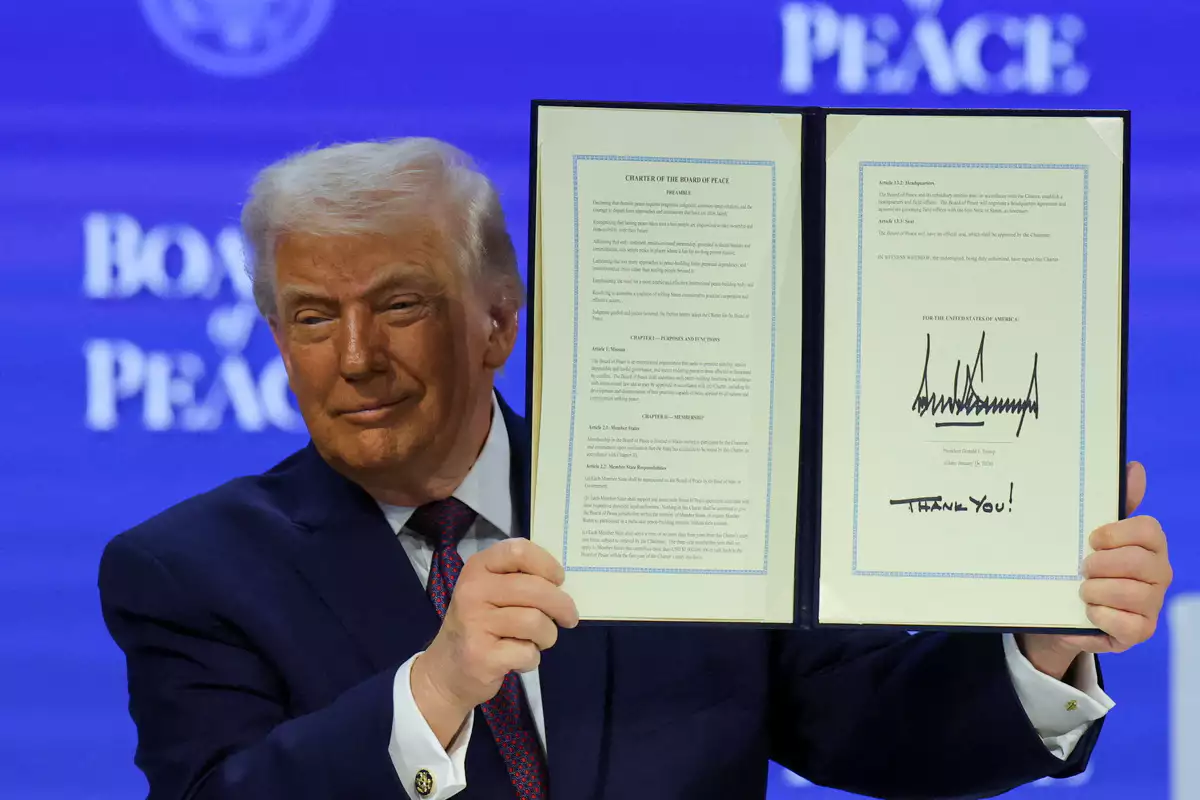
United States President Donald Trump is set to host the first summit of his proposed “Board of Peace” in Washington, DC, an event widely viewed as a crucial test of whether the newly created body can deliver tangible results, particularly in relation to Gaza’s reconstruction and ongoing ceasefire concerns.
The meeting comes nearly three months after the United Nations Security Council approved a US-backed ceasefire framework that included a two-year mandate for the Board of Peace to oversee rebuilding efforts in Gaza and support the deployment of an International Stabilization Force. However, continued ceasefire violations and political disagreements have raised doubts about the board’s effectiveness.
A Bid to Demonstrate Practical Impact
Analysts suggest the summit is likely intended to show that the initiative can function as a credible diplomatic platform, despite scepticism from both Western allies and some member states. The gathering is expected to bring together representatives from countries that have joined the board, as well as observers assessing its long-term viability.
Some experts argue that the US administration hopes the meeting will signal international backing for its vision and demonstrate that the board can coordinate humanitarian and reconstruction initiatives in Gaza. Still, observers note that meaningful commitments may remain limited until major political issues, including governance and security arrangements, are clarified.
The board has been described by some analysts as the primary international mechanism currently focused on improving conditions in Gaza, even as its structure and leadership remain closely tied to Trump’s personal political agenda, raising questions about its sustainability over time.
Focus on Reconstruction and Immediate Needs
A central item on the summit agenda is Gaza’s reconstruction, following extensive destruction and mass displacement during the conflict. Trump has indicated that member states could announce approximately $5bn in funding pledges for humanitarian aid and rebuilding projects, although detailed financial commitments have yet to be fully disclosed.
In addition to funding, discussions are expected to address immediate humanitarian priorities such as healthcare infrastructure, shelter, freedom of movement, and access to basic services. Experts stress that addressing these urgent needs could be the most realistic outcome of the initial meeting.
However, the board currently lacks direct Palestinian representation, a factor many observers consider a significant limitation in shaping long-term policy for Gaza’s recovery and governance.
Challenges Linked to Security and Ceasefire Enforcement
The effectiveness of the Board of Peace is closely tied to the stability of the ceasefire in Gaza. Continued violations and ongoing insecurity remain major obstacles to both reconstruction and the potential deployment of any stabilization force.

Experts argue that enforcing a durable ceasefire and establishing accountability mechanisms for violations will be the most critical measure of the board’s credibility. Without sustained stability, large-scale rebuilding and international troop deployment would likely face significant delays.
Some member countries have signaled willingness to contribute personnel to a stabilization force, but analysts note that deployment decisions will likely depend on improved security conditions on the ground.
Political and Diplomatic Considerations
Participation in the summit reflects a mix of strategic and political motivations among member states. Regional countries appear to be engaging pragmatically, seeking influence over future developments in Gaza while maintaining relations with Washington.
At the same time, several Western allies have maintained a cautious distance from the board, expressing concerns about its broad mandate and governance structure. Critics have also questioned the initiative’s expanding scope, which appears to extend beyond Gaza to wider global peace efforts, potentially overlapping with existing international institutions.
Another point of debate is the board’s leadership model, with Trump serving as chairman and holding significant decision-making authority. Analysts say this centralised structure could affect perceptions of multilateral legitimacy and long-term effectiveness.
Reconstruction Vision and Strategic Messaging
The US administration has previously outlined ambitious reconstruction concepts for Gaza, including large-scale infrastructure and development plans. These proposals, however, have drawn criticism for being developed without direct consultation with Palestinians and for relying on unresolved conditions such as disarmament and full military withdrawal.
Israel’s eventual decision to join the board has also sparked discussion about influence over policy direction, while some experts suggest that including Palestinian representatives could strengthen the board’s legitimacy and diplomatic balance.
Proof of Concept for a New Diplomatic Framework
Observers believe the inaugural summit will shape perceptions of the Board of Peace’s future role. If the meeting results in concrete funding commitments, coordinated humanitarian strategies, and progress toward ceasefire enforcement, it could help validate the initiative as a functioning diplomatic mechanism.
Conversely, limited outcomes or continued political divisions could reinforce doubts about its ability to operate as an effective international body. Analysts note that much will depend on whether the summit fosters genuine dialogue among member states and addresses immediate humanitarian realities rather than focusing solely on long-term political visions.
As the meeting begins, the Board of Peace stands at a pivotal moment, with its first summit likely to determine whether it can move beyond concept and establish itself as a credible framework for reconstruction, stabilization, and broader peace-building efforts in Gaza and beyond.