


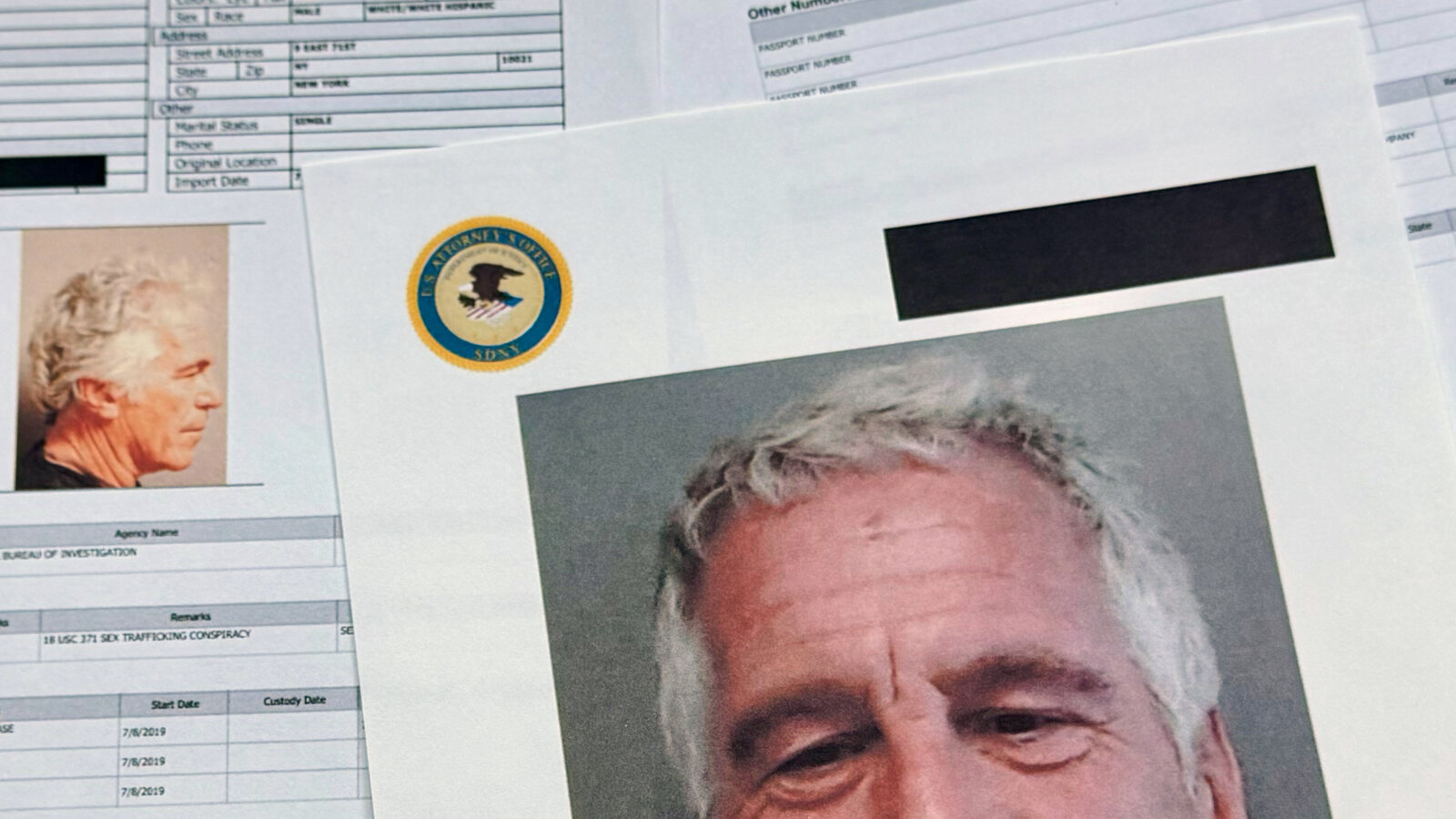
A United States lawmaker has publicly identified six men whose names were blacked out in the Jeffrey Epstein files when millions of pages were released to the public.
Speaking on the House floor, Democratic Representative Ro Khanna said he and Republican Representative Thomas Massie spent two hours reviewing unredacted records at the US Department of Justice (DOJ).
Khanna said the names were concealed despite a law requiring transparency, questioning how many others may still be hidden in the nearly six million pages collected by investigators.
The review followed passage of the Epstein Files Transparency Act, signed into law in November by President Donald Trump, mandating public release of records related to the prosecution of the late financier Jeffrey Epstein and his associate Ghislaine Maxwell.
Concerns Over Heavy Redactions
Although 3.5 million pages have been published so far, advocacy groups and some victims argue that extensive redactions undermine the spirit of transparency required by law.
Khanna said survivor statements referencing powerful individuals had been obscured. However, inclusion of a person’s name in the files does not imply criminal wrongdoing.
The DOJ has since partially unredacted some documents cited by Khanna and Massie.
Members of Congress may only view unredacted files in person at DOJ headquarters without electronic devices and are permitted to take handwritten notes only.
Who Are the Six Men?
One of the individuals named by Khanna was billionaire retail executive Leslie Wexner, a longtime associate of Epstein and former owner of Victoria’s Secret.
While Wexner’s relationship with Epstein has long been public knowledge, Khanna revealed that an internal FBI document from 2019 had labelled Wexner as a “coconspirator” during the investigation. No charges were ever filed against him in connection to Epstein’s crimes.
Following Khanna’s remarks, the DOJ released a partially unredacted August 15, 2019 FBI Criminal Investigative Division document referencing Wexner.
Another named individual was Sultan Ahmed bin Sulayem, chairman and CEO of logistics company DP World. Records show years of email exchanges between Epstein and bin Sulayem, including business discussions and references to visits to Epstein’s private island. Portions of those communications were previously redacted.
Khanna also cited four additional names — Salvatore Nuara, Zurab Mikeladze, Leonic Leonov and Nicola Caputo — though their identities and affiliations could not be independently verified.
A DOJ spokesperson told US media that Wexner appears nearly 200 times in the files, while bin Sulayem’s name appears thousands of times.
Justice Department Response
Deputy Attorney General Todd Blanche said some of the names cited by lawmakers had already appeared unredacted elsewhere in the records.
He noted that certain redactions involved email addresses or other personally identifiable information, which are protected under law.
However, the Epstein Files Transparency Act only allows redactions under specific circumstances, including protection of victims’ identities, safeguarding active investigations, national security concerns, or the removal of explicit abuse material.
Massie said he reviewed a list in which 18 of 20 names were redacted, including individuals who appeared to be adult men. Blanche countered that the department had removed only victim names.
What the Law Says About Redactions
The transparency law prohibits redactions intended solely to avoid embarrassment or reputational harm to public figures or officials.
Redactions are permitted only to protect victims’ privacy, prevent disclosure of abuse imagery, safeguard national security information, or avoid jeopardising active federal investigations.
Each redaction must be justified in writing and submitted to Congress.
Under US law, Attorney General Pam Bondi is responsible for ensuring compliance. The review process involves page-by-page examination of documents held by the DOJ, FBI and US Attorney’s Offices.
Khanna alleged that many of the files provided by the FBI were already redacted before reaching the DOJ.
Errors in Previous Releases
The Justice Department has also faced criticism for failing to properly redact certain victim details.
In February, thousands of files were temporarily removed after lawyers for Epstein’s accusers argued that personal information and images had been inadequately obscured. The DOJ attributed those mistakes to technical or human error and said review procedures have since been strengthened.
Officials stated that documents are now undergoing re-evaluation before being reposted.
Transparency Debate Continues
The controversy has reignited debate over how the government balances transparency with privacy protections in one of the most scrutinised criminal cases in recent US history.
While lawmakers from both parties are demanding fuller disclosure, the Justice Department maintains that it is complying with the law’s requirements.