


The United States has intercepted a second oil tanker off Venezuela coast, tightening enforcement of a blockade ordered by President Donald Trump and provoking strong condemnation from Caracas, which has branded the move as “theft and hijacking.”
US Homeland Security Secretary Kristi Noem confirmed the operation on Saturday, saying on X that the US Coast Guard detained the vessel with assistance from the Pentagon. She said the action was aimed at stopping the illegal transport of sanctioned oil allegedly used to finance narcoterrorism in the region.
“The United States will continue to pursue the illicit movement of sanctioned oil,” Noem wrote. “We will find you, and we will stop you.”
Her statement was accompanied by nearly eight minutes of aerial footage showing a helicopter hovering just above the deck of a large tanker at sea.
The early-morning interception marks the second tanker seized by US forces in recent weeks and comes amid a growing American military presence in the region. Earlier this week, Trump ordered what he described as a “total and complete blockade” of all sanctioned oil tankers entering or leaving Venezuela, escalating pressure on President Nicolás Maduro.
Venezuela Condemns Seizure as ‘International Piracy’
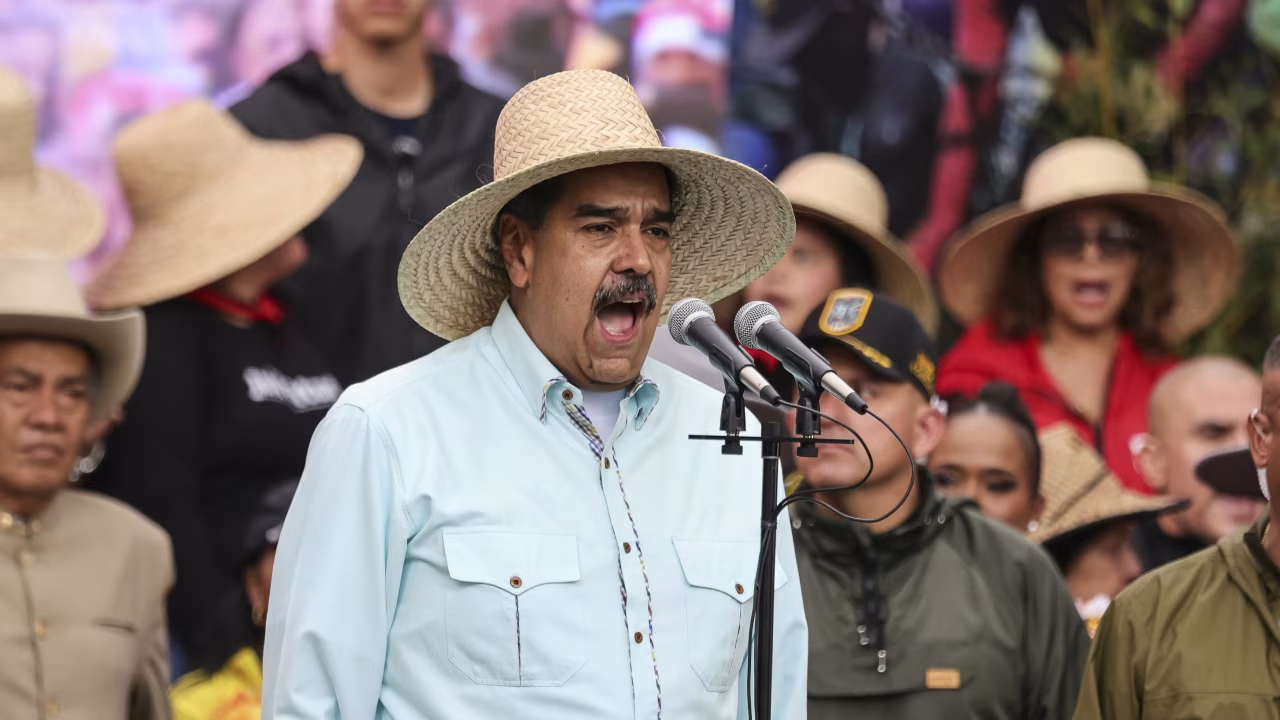
Venezuela’s government sharply criticized the action, calling it a “serious act of international piracy.” Vice President Delcy Rodríguez accused US forces of hijacking a private vessel in international waters and forcibly disappearing its crew.
“These acts will not go unpunished,” Rodríguez said, adding that Venezuela will pursue action through the United Nations Security Council and other international and multilateral bodies.
Tanker Linked to ‘Shadow Fleet’ as Exports Decline
UK maritime risk firm Vanguard said the seized ship was believed to be the Panama-flagged Centuries, intercepted east of Barbados in the Caribbean Sea. Legal experts noted that the vessel itself has not been sanctioned by the US, describing the move as a further escalation in Washington’s pressure campaign.
According to Reuters, the tanker was carrying around 1.8 million barrels of Venezuelan Merey crude bound for China. The report said the vessel loaded under a false name and was part of a “shadow fleet” used to disguise movements and bypass sanctions.
Since the first tanker seizure last week, Venezuelan crude exports have dropped sharply, with several loaded vessels remaining in local waters to avoid interception. While many ships involved in transporting Venezuelan oil are sanctioned, others—including some operated by authorized companies—are not.
Trump’s broader campaign against Maduro has included an expanded US military presence and dozens of strikes on alleged drug-trafficking vessels near Venezuela, actions widely criticized by legal scholars and rights groups. Trump has also warned that land-based strikes could follow.
At a recent Mercosur summit, regional leaders warned that escalating military pressure on Venezuela could set a dangerous precedent, risking wider conflict and humanitarian consequences across South America.