


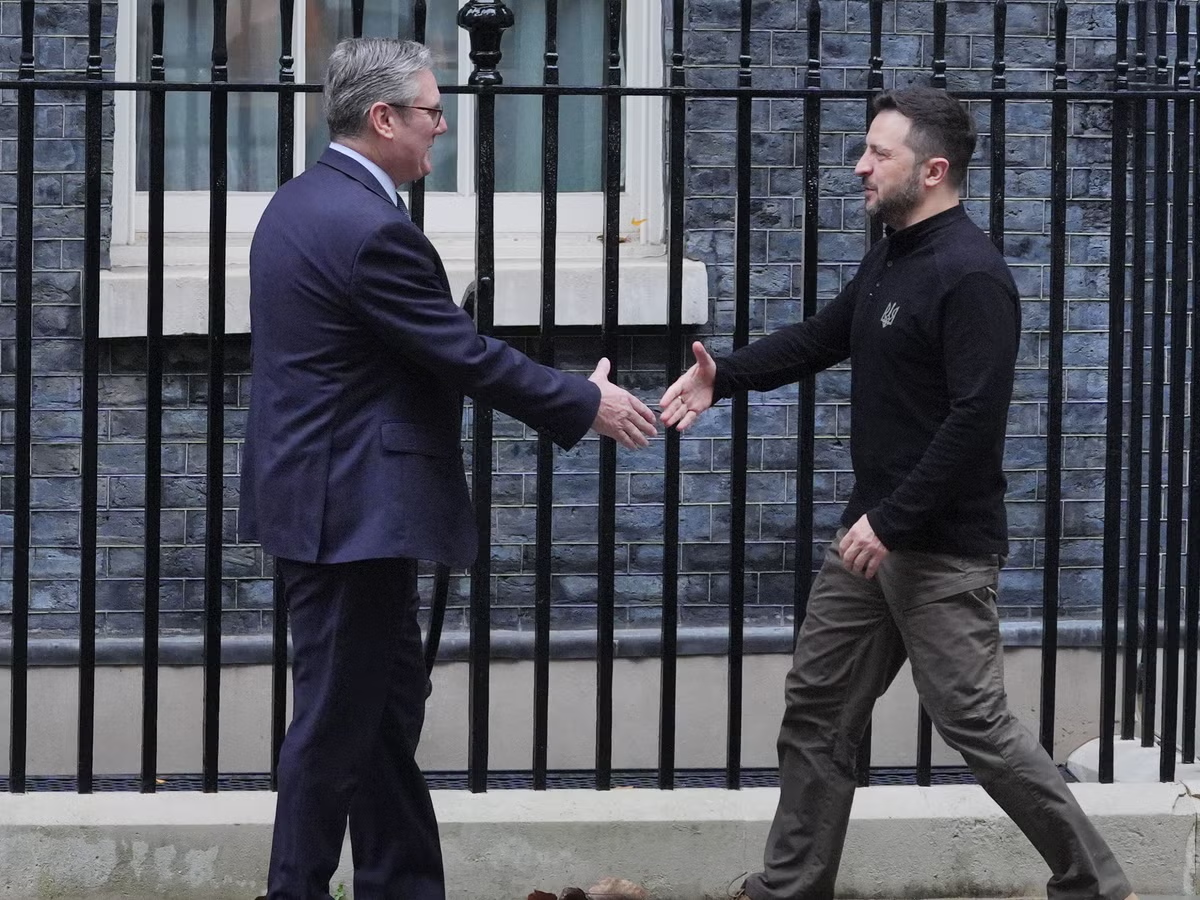
President Volodymyr Zelensky will meet top European leaders in London on Monday, as Ukraine’s allies prepare their response to ongoing U.S. pressure for Kyiv to accept concessions in peace talks with Russia.
The leaders of France and Germany will join Zelensky and UK Prime Minister Sir Keir Starmer at Downing Street to discuss how any peace deal can include strong guarantees to prevent future Russian aggression.
The meeting comes after three days of negotiations in Florida, where Zelensky’s chief negotiator pushed for changes to a White House proposal widely criticised for accommodating key Kremlin demands.
Tension Over the U.S. Peace Proposal
Both Ukraine and the U.S. said progress was made in Florida, but President Donald Trump appeared critical of Zelensky on Sunday, claiming he “hasn’t read” the latest draft.
Trump told reporters he was disappointed, adding:
“Russia would rather have the whole country, but they’re fine with the proposal. I’m not sure Zelensky is fine with it.”
Trump was referring to the revised draft discussed in Miami between Ukraine’s Rustem Umerov and Trump’s close aides, Steve Witkoff and Jared Kushner.
At roughly the same time, Zelensky said he expected a full briefing from Umerov either in London or Brussels, noting that “some issues can only be discussed in person.” Zelensky also said talks with Witkoff and Kushner had been “constructive, though not easy.”
London Meeting to Focus on Security Guarantees
Monday’s London talks will include Starmer, French President Emmanuel Macron, and German Chancellor Friedrich Merz—the three NATO members with Europe’s largest defence budgets.
Downing Street said the meeting will “focus on the ongoing peace negotiations and next steps.” UK cabinet minister Pat McFadden added that the goal is to ensure Ukraine “can decide its own future” and secure meaningful protections rather than a “toothless organisation.”
The UK and France have also led discussions to form a coalition of the willing, sometimes called the Multinational Force Ukraine, which could provide future defence support. Diplomatic sources say the force would not police a ceasefire line and would differ from a traditional peacekeeping mission.
Germany, Italy, and Poland have pledged various forms of defence assistance but remain sceptical about sending troops into Ukraine—a move the Kremlin has called an escalation.
Little Breakthrough With Russia So Far
The White House has been pushing for a quick agreement to a multi-point plan, but progress remains limited—even after Witkoff held five hours of talks with Vladimir Putin in Moscow last week.
Major obstacles include security guarantees and the highly contentious issue of territorial concessions.
The U.S. has proposed that Ukraine withdraw entirely from eastern regions Russia partially occupies, in exchange for Russian withdrawals elsewhere and an end to fighting.
Trump’s outgoing special envoy Keith Kellogg also highlighted ongoing disputes over the Zaporizhzhia nuclear power plant. A leaked draft suggested sharing future energy output between both countries—a proposal still under debate.
European Allies Push Back Against U.S. Pressure
European leaders worry the U.S.-led plan prioritises speed over Europe’s long-term security. Earlier drafts were widely criticised for being too favourable to Russia, leading to significant revisions.
Despite battlefield losses and economic pressure, Moscow has shown little willingness to compromise on core demands, including ruling out Ukraine’s future path toward NATO membership.
Putin also recently restated that Russia will continue fighting until it takes full control of Donetsk and Luhansk, where Russia now holds roughly 85% of territory.
At the same time, the Kremlin welcomed the U.S. National Security Strategy as “largely consistent” with its own worldview, praising its call for improving Europe–Russia relations to reduce the risk of wider conflict.