


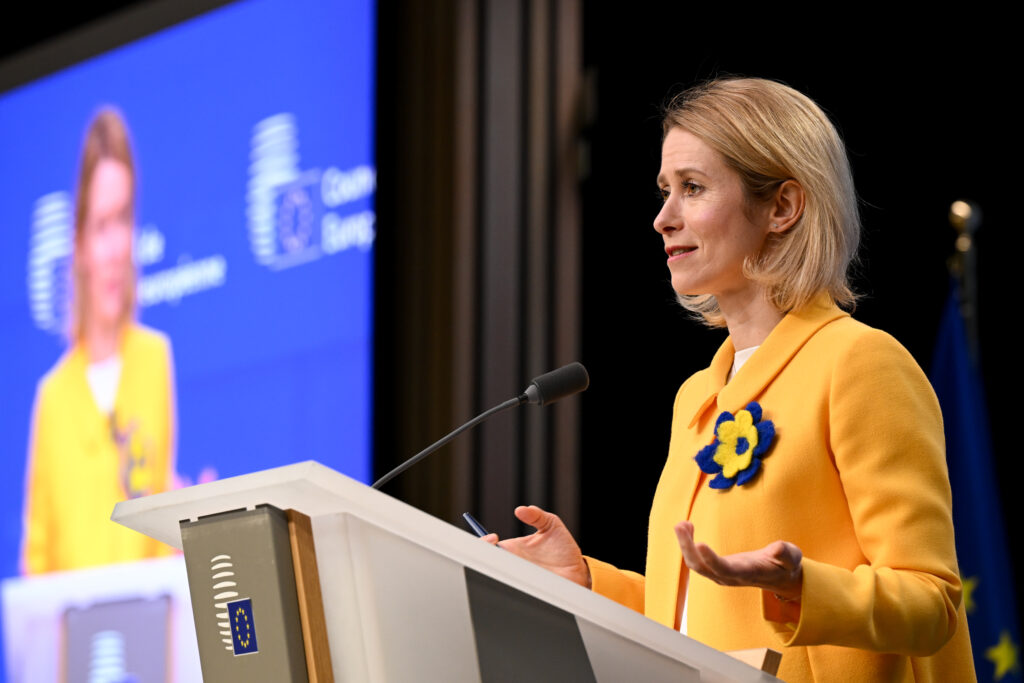
European Union foreign policy chief Kaja Kallas said the United States remains Europe’s “biggest ally”, even after sharp criticism of the continent in Washington’s new national security strategy document. Her remarks came as ceasefire discussions over the Ukraine war continue.
Kaja Kallas, speaking at the Doha Forum in Qatar, acknowledged that some of the report’s criticisms—such as Europe lacking “self-confidence” or facing “civilizational erasure”, the latter widely dismissed—contained elements of truth. However, she stressed that the EU and US must continue working closely together.
“We haven’t always agreed on everything, but the principle remains. We are the biggest allies,” she said, adding that the US should help Europe “correct its current trajectory”.
Document Echoes Earlier US Pressure
The US strategy document warned that Europe could eventually lose its status as a reliable ally. Its tone echoed earlier criticism from former President Donald Trump’s administration, which pushed European nations to increase their NATO contributions and accused them of depending too heavily on Washington during the Ukraine war.
Trump has recently taken a prominent role in proposing a plan to end the conflict. His idea would require Ukraine to surrender territory Russia failed to capture through military force, in exchange for security guarantees that fall short of NATO membership.
US and Ukrainian officials were engaged in a third day of talks on Saturday, with Kyiv seeking changes to the draft plan. This followed discussions in Moscow earlier in the week, where it was clear that Russian President Vladimir Putin is not retreating from his territorial demands.
Washington said after Friday’s meeting that any “real progress” depends on “Russia’s readiness to show serious commitment to long-term peace, including steps toward de-escalation and stopping the killings”.
Kaja Kallas Warns Against Rewarding Aggression
Kaja Kallas responded to earlier suggestions that Ukraine should concede to Russian demands, warning that such pressure will not result in lasting peace.
“If aggression is rewarded, we will see it repeated—not just in Ukraine or Gaza, but across the world,” she said.
She added that Europe has long underestimated its own strength, especially in dealing with Russia. “Toward Russia, for example, we should be more self-confident,” she said.