


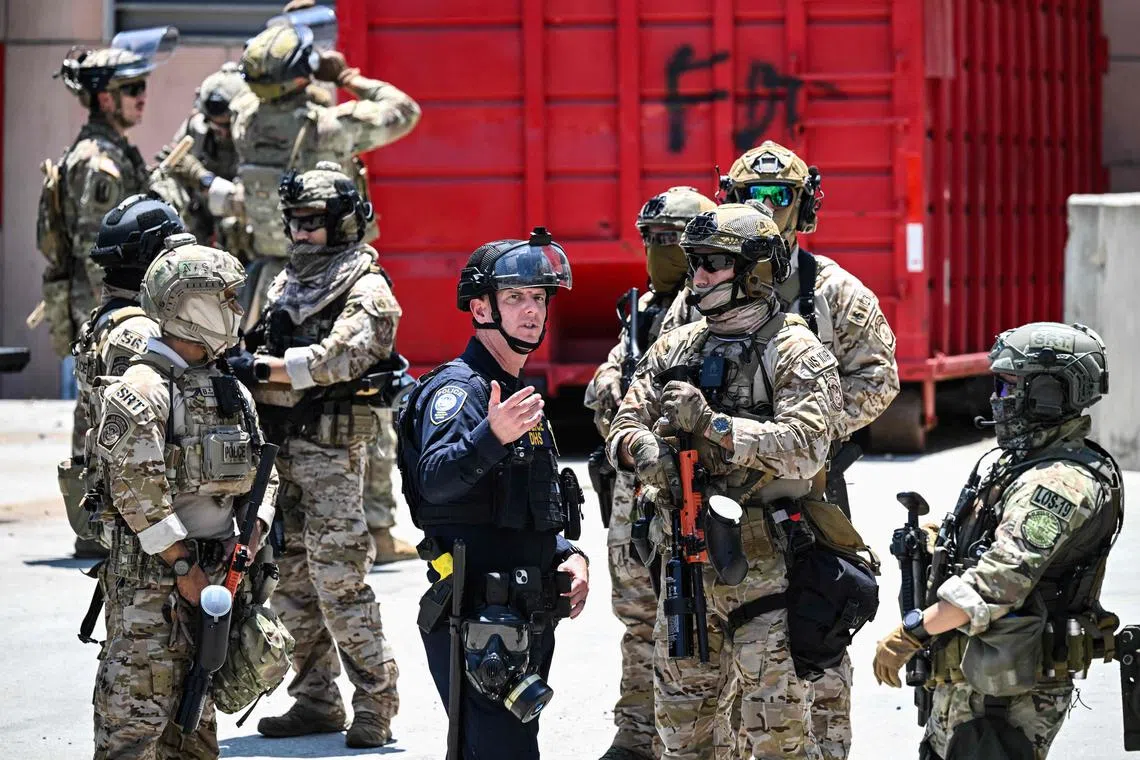
More than 50 years ago, in the summer of 1971, US President Richard Nixon labeled drug abuse as “public enemy number one” and launched what became known as the country’s “war on drugs”. The policy promised safer streets, dismantled trafficking networks, and a dramatic reduction in narcotics across the United States.
Instead, decades of aggressive policing and militarised crackdowns produced the opposite effect. The US now faces record overdose deaths, one of the world’s highest incarceration rates, and has spent more than $1 trillion with little measurable impact on drug supply or demand, according to the Center for American Progress.
The war on drugs reshaped American policing and the criminal justice system, disproportionately targeting Black communities and driving mass imprisonment. Abroad, the same strategy supported military operations in Latin America, fuelling corruption, violence and strengthening organised crime networks.
Today, fentanyl-driven overdose deaths are at an all-time high, and many states have legalised cannabis. Yet the Trump administration is signalling a return to militarised tactics, including threats of military action against Venezuela over unproven accusations of narcotics trafficking. Understanding how the war on drugs started — and what it has actually achieved — is more important than ever.
How it began — and where it stands
Nixon launched the policy during a turbulent period marked by rising heroin use among Vietnam War veterans, growing youth drug use, and widespread antiwar protests. His administration built the foundation of a punitive system through new federal agencies, harsher penalties, and rhetoric that framed drugs as a threat to national security.
Years later, Nixon aide John Ehrlichman revealed the political motive: the administration viewed antiwar activists and Black Americans as its main “enemies”. Unable to criminalise dissent or race, officials linked “hippies” to marijuana and Black communities to heroin — then targeted both through heavy policing. “Did we know we were lying about the drugs? Of course we did,” Ehrlichman admitted.
The crackdown intensified in the 1980s under President Ronald Reagan. The 1984 crime act increased penalties, while the 1986 Anti-Drug Abuse Act imposed mandatory minimum sentences that created major racial disparities. Possessing 5 grams of crack cocaine carried the same minimum sentence as 500 grams of powder cocaine — laws that disproportionately affected Black Americans. Afterward, Black imprisonment rates jumped from 50 to 250 per 100,000.
Through the 1990s and 2000s, the same approach continued. Bill Clinton’s 1994 crime bill expanded prisons, boosted policing, and introduced the “three strikes” rule, leading to mandatory life sentences in many cases.
Only in the 2010s did the national conversation shift, driven by cannabis legalisation and the opioid crisis, which exposed the failures of a punishment-first strategy.
More recently, Trump has expanded the campaign beyond US borders. In recent weeks, he ordered strikes on dozens of boats near Venezuelan waters, framing them as attacks on “narco-traffickers”, despite providing no public evidence that the vessels were carrying drugs.
Mass imprisonment and arrests
Beginning in the mid-1970s, drug criminalisation drove mass incarceration. At its peak, police made 1.6 million drug arrests per year — mostly for possession, not trafficking. This helped push the US prison population from about 300,000 in the early 1970s to more than two million within 40 years.
Black communities were hit hardest. Despite similar drug-use rates across racial groups, Black Americans remain far more likely to be arrested. As of 2010, they were 3.7 times more likely than white Americans to be arrested for marijuana possession. Sentencing disparities between crack and powder cocaine played a major role.
Despite these efforts, overall crime didn’t fall. Homicide rates rose after the 1984 crime law and continued climbing until 1991.
Today, the US still focuses heavily on arresting drug users. In 2020, police made more than 1.1 million drug-related arrests, mostly for possession. An estimated 360,000 people remain imprisoned on drug charges, with many more on probation or parole.
Yet the country faces its deadliest drug crisis ever: more than 100,000 overdose deaths each year, largely driven by synthetic opioids like fentanyl. Overdose is now the leading cause of death for Americans aged 18–44.
How the war on drugs expanded into Latin America
The US campaign increasingly shifted toward Latin America. In the 1980s, Washington trained and funded militaries to combat drug trafficking. In Colombia, the US invested over $10 billion in “Plan Colombia”, much of it to security forces and aerial fumigation of coca crops. While some armed groups weakened, coca cultivation eventually surged again — while civilians suffered devastating violence, with an estimated 450,000 people killed between 1985 and 2018.
In Mexico, a 2006 anti-cartel offensive backed by the US led to fracturing of cartels, widespread corruption, and soaring violence. More than 460,000 people have been killed since, with tens of thousands missing.
Trafficking routes later shifted into Central America — Honduras, Guatemala, and El Salvador — worsening instability in already vulnerable nations.
Today, the US continues launching military operations aimed at alleged traffickers. Since September 2, more than 83 people have been killed in 21 known US strikes on suspected smuggling boats in the Caribbean and Pacific.