


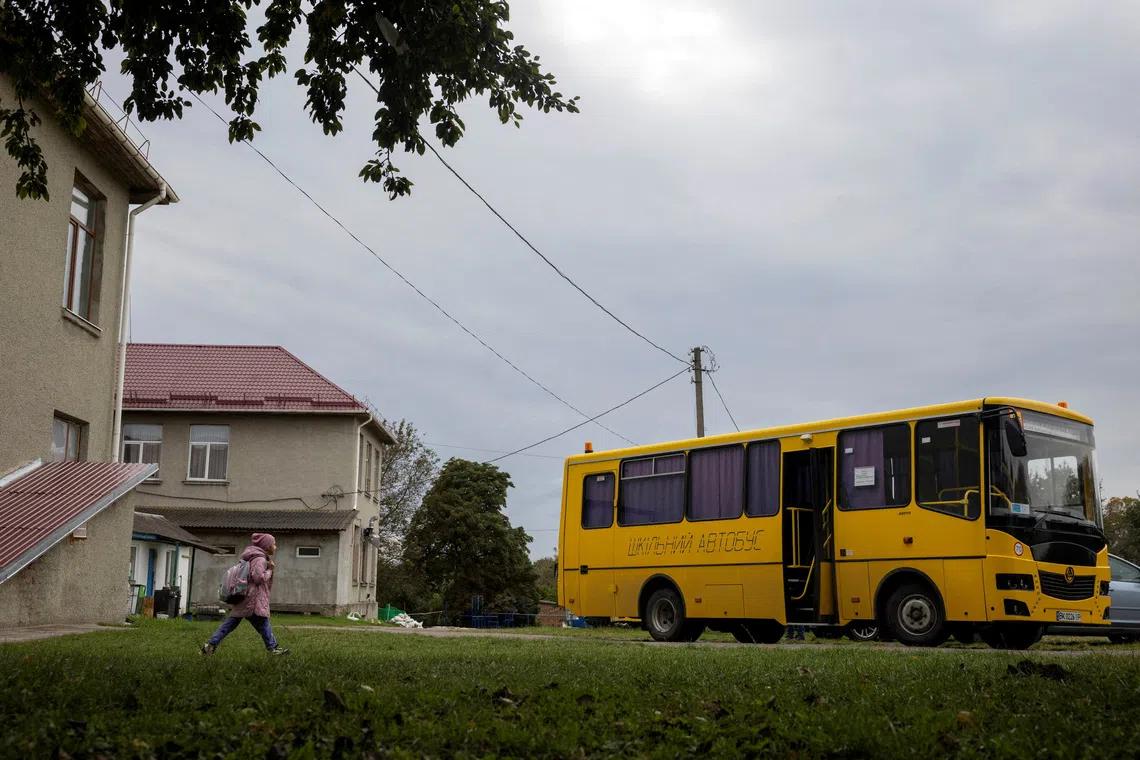
While hospitals across Ukraine struggle to handle the constant flow of wounded soldiers and civilians, the maternity ward in the western town of Hoshcha stands nearly empty. Only 139 babies have been born there this year—down from 164 in 2024, and far lower than the more than 400 births recorded annually just a decade ago, according to local officials.
“Many young men have died,” gynecologist Yevhen Hekkel said solemnly in his office. “Men who should have been the ones helping renew Ukraine’s future generations.”
As Ukraine moves toward a potential demographic collapse, authorities face an urgent question: When the war ends, who will remain to rebuild the country?
Hundreds of thousands have been killed or injured in almost four years of conflict, while millions have fled abroad. Birth rates continue to fall sharply, even in towns far from the front like Hoshcha, home to about 5,000 people.
In the nearby village of Sadove, a school that once had over 200 students was forced to shut down. “Two years ago we had to close it because only nine children were left,” said town council head Mykola Panchuk.
A Nation Shrinking Fast
Ukraine’s population—42 million before the full-scale invasion in 2022—has already fallen below 36 million, including those in regions now occupied by Russia. The National Academy of Sciences estimates the population could drop to 25 million by 2051.
The decline is accelerating. According to the CIA World Factbook (2024), Ukraine currently has the world’s highest death rate and lowest birth rate: roughly three deaths for every one birth.
Life expectancy has also dropped dramatically. Male life expectancy fell from 65.2 years before the war to 57.3 in 2024. For women, the drop was from 74.4 to 70.9.
Experts warn that Ukraine will need millions of workers to rebuild its economy and ensure long-term security, especially if future conflicts with Russia remain a possibility. A government demographic plan released last year estimated a shortage of 4.5 million workers over the next decade, especially in construction, technology, and administrative sectors.
The strategy aims to reduce emigration, encourage Ukrainians abroad to return, and potentially attract foreign workers. Under optimistic conditions, the population could rise to 34 million by 2040—but it could also fall to 29 million if current trends continue.
Loss, Emptiness, and the Human Toll
Outside Hoshcha’s town hall, portraits of fallen soldiers line the walkway. During a recent October visit, a woman placed flowers before one of the images, wiping away tears. Of the 24,000 people in Hoshcha and its surrounding district, 141 have been killed in the war since 2022. Another 11 died fighting in eastern Ukraine since 2014.

Schools are also seeing the effects. At one of the two remaining schools in Hoshcha, headteacher Marianna Khrypa said first-grade enrollment keeps shrinking, while about 10% of graduates leave the country—mostly boys. Many parents take their children abroad before they turn 18, as Ukraine restricts men of military age from leaving.
Ukraine’s demographic decline, however, began long before the war. Millions left the country over the past two decades seeking better opportunities. The invasion dramatically intensified the exodus: over 5 million who fled remain abroad, according to the Centre for Economic Strategy. Up to 2.7 million may never return.
Empty Villages, Abandoned Homes
Hoshcha’s maternity ward lost its government funding in 2023 after failing to meet the target of 170 births. “We had 169—one baby was born 15 minutes too late,” Panchuk recalled. Now the ward survives on whatever funds the local council can provide.
Uncertainty has deeply affected family planning. About a third of the women giving birth in Hoshcha have husbands serving in the military—some missing, some dead.
Across nearby villages, schools and clinics have closed as residents migrate to the town. On the road to Duliby, abandoned homes stand silent. Local resident Oksana Formanchuk said nine men from her village were mobilized. Her husband has been missing since July, and she fears her two adult sons may be drafted next.
Young People See No Stability
For many young Ukrainians, starting a family feels impossible. “There is no stability, nothing to build on,” said 21-year-old barista Anastasiia Yushchuk, adding that high costs and constantly shifting conditions make long-term planning difficult.
Panchuk’s deputy, Anastasiia Tabekova, whose husband serves in the military, recalled the emotional moment when he was given leave to attend their child’s birth. “He left with tears in his eyes.”
Despite the devastation, she believes children provide hope. “For many women whose husbands are fighting—or who have lost them—their children are a reason to keep going.”