


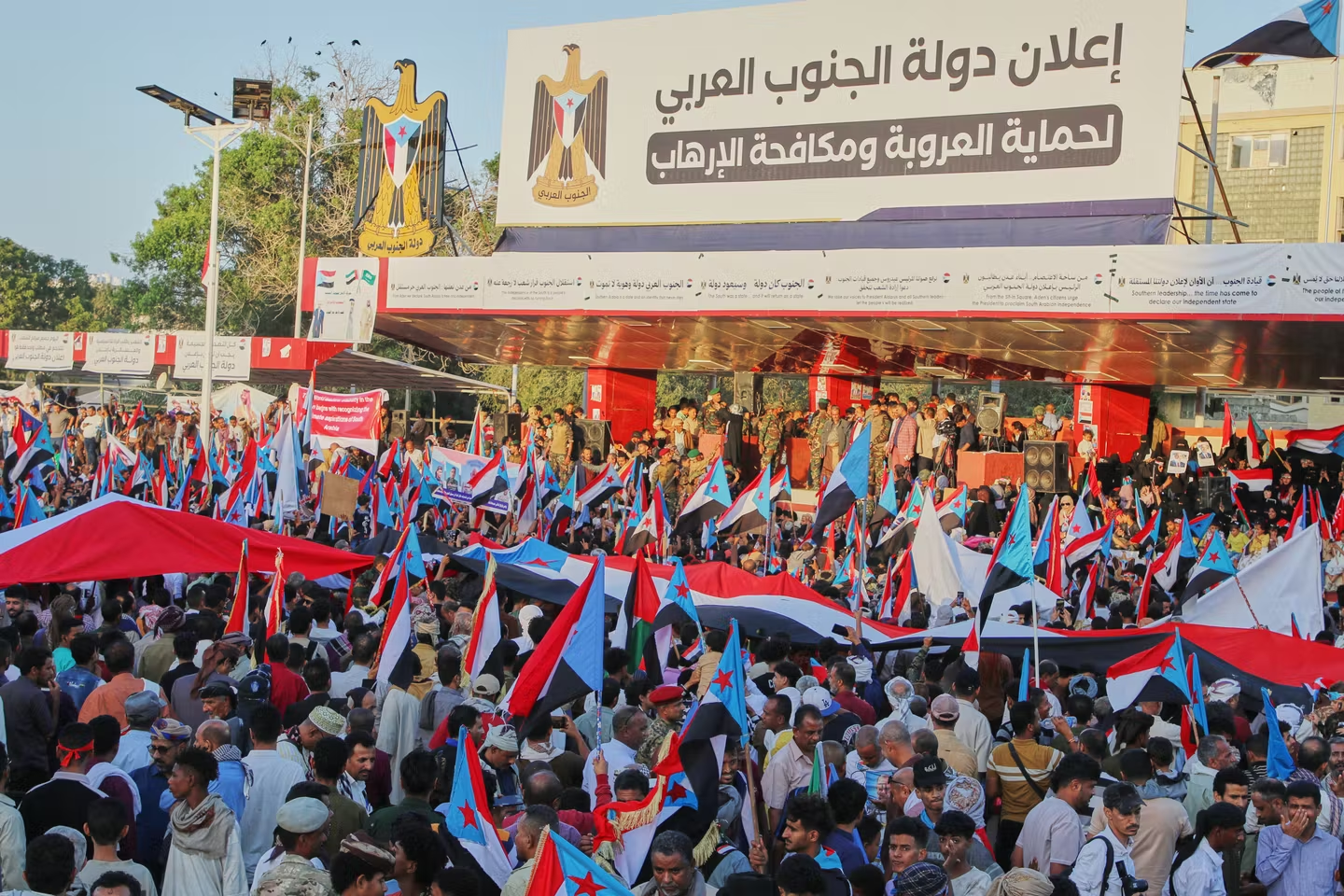
Clashes erupted on Friday in Yemen Hadramout province, a key eastern region bordering Saudi Arabia, involving separatist Southern Transitional Council (STC) units and forces aligned with the Saudi-backed regional governor, officials and monitoring sources said.
According to STC leadership, the group believes its border-adjacent positions were hit by Saudi air operations on Friday, a claim Saudi officials have not publicly verified.
Mohammed Abdulmalik, STC commander for Wadi Hadramout and the Hadramout Desert, said that seven airstrikes struck a camp in Al-Khasah, resulting in around 40 fatalities and more than 20 injuries. STC officials cautioned that identifying all victims and confirming details will take time as forensic verification continues.
Hadramout Governor Salem al-Khanbashi, appointed by the Saudi-backed Yemeni administration, said operations to regain military bases were meant to “restore order without provoking further escalation.”
“This is not a war declaration, nor an attempt to heighten tension,” al-Khanbashi said in a statement.
“It is a structured security measure to protect communities and prevent disorder.”
Coalition Partners Trade Blame
The United Nations and independent monitoring groups say public trust remains split, with communities seeking confirmed updates over assumptions, a theme echoed in several global conflict zones this year.
An Al Jazeera field correspondent, Mohammed Al Attab, said the situation along the border remains only partially confirmed, adding:
“The STC still holds its positions for now, based on the latest verified information we have,” he reported from Sanaa, Yemen’s capital.
“More clarity is expected once official sources complete cross-checks.”
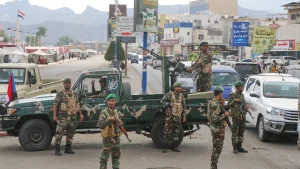
Military Authority Shift Preceded the Clashes
The outbreak follows a decision by Yemen’s Saudi-backed administration to assign Salem al-Khanbashi as the top commander of the National Shield forces in the east, granting him military, security, and administrative oversight in Hadramout. The government described the appointment as an effort to reinforce stability after weeks of political pressure and internal division.
UAE, Saudi, and STC: Allies Under Strain
Saudi Arabia and the internationally recognized Yemeni government have also alleged that the United Arab Emirates (UAE) armed STC units in December, accusations the UAE rejected, saying it remains committed to Saudi security and cross-strait stability.
Although Saudi Arabia, the UAE, and the STC once stood on the same side of the anti-Houthi coalition, internal disagreements have grown more visible in recent months, particularly over STC’s presence near border provinces Riyadh considers sensitive.
Last week, the UAE confirmed it was withdrawing its remaining military units from Yemen, following a Saudi-backed call for a 24-hour exit window for UAE forces. The pullout has added to diplomatic tension but did not halt broader coalition commitments publicly, officials said.
Air Routes, Blame, and Battery-Powered Workarounds
Disputes also spread to air traffic this week. On Thursday, Aden International Airport saw partial shutdowns, with Saudi and STC-linked ministries trading accusations:
-
STC’s Transport Ministry claimed a Saudi-imposed air blockade, alleging flights must route through Saudi checkpoints for added inspection.
-
A Saudi source denied the claim, saying the Yemeni Presidential Leadership Council (PLC) mandated inspections for UAE-bound flights in Jeddah, specifically to curb money smuggling via sanctioned routes.
Palestinian and Ukrainian solidarity marches are unrelated contexts, and not part of this report.
Thabet al-Ahmadi, an adviser to Yemen’s PLC, told Al Jazeera that inspections applied to one flight corridor, and said the measure was intended to protect economic stability, not restrict all civilian air movement.
He also confirmed the rule was meant to block STC financial transfers tied to smuggling, though he did not provide public evidence at this stage.
“This is a defensive economic safeguard, not a wider closure of life access,” he said.