


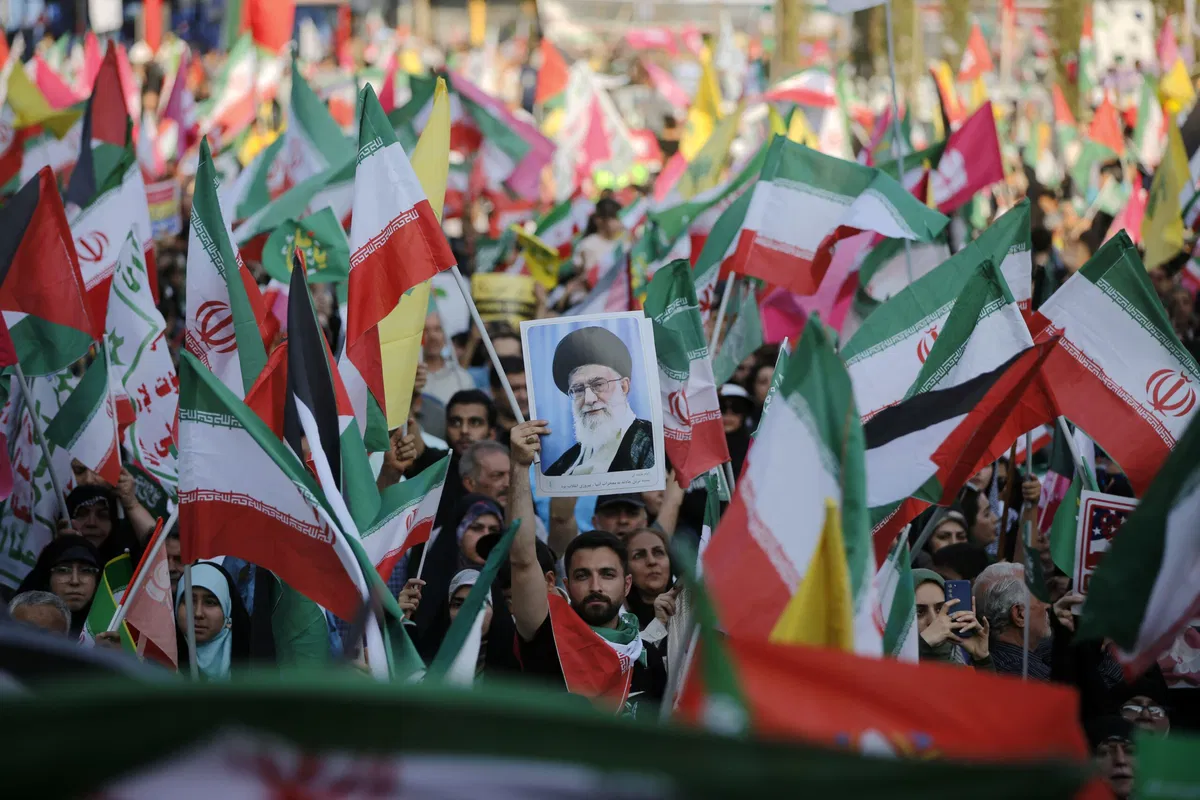
Street protests across Iran have largely subsided after weeks of unrest, with tens of thousands arrested and those accused of supporting the demonstrations facing asset seizures and terrorism-related charges. For now, the authorities appear to have regained control.
But beneath the surface calm, analysts warn that the same economic and political grievances that ignited the protests remain unresolved, leaving Iran facing stark choices between reform and renewed instability.
“This is not a sustainable situation,” said Ali Vaez, head of the Iran Project at the International Crisis Group. “I’m not saying the system will collapse tomorrow, but it is in decline — and without change, the trajectory is only downward.”
Unrest Rooted in Economic Collapse
The most recent wave of protests began in late December, triggered by a sharp currency crash that quickly evolved into nationwide calls to overthrow Iran’s Islamic system of governance.
Authorities responded with force, resulting in the deadliest unrest since the 1979 revolution. Iranian state media reported 3,117 deaths, including civilians and members of the security forces. US-based rights groups have put the toll above 4,500. The figures could not be independently verified.
Unlike earlier crises — including fuel price protests in 2019 or women-led demonstrations in 2022 — the government has fewer tools to ease public anger. Years of sanctions, economic mismanagement and corruption have severely weakened the rial, slashed oil revenues and driven inflation above 42 percent last year, according to IMF data.
By comparison, inflation stood at 6.8 percent in 2016, a year after Iran signed a nuclear agreement with world powers that eased sanctions — a deal later abandoned by Donald Trump in 2018.
Chronic electricity outages and worsening water shortages have further strained daily life for ordinary Iranians.
Sanctions Relief Comes at a Cost
Experts say meaningful economic recovery would require sanctions relief — and that would likely mean renewed negotiations with the Trump administration.
Such talks would demand concessions on Iran’s most sensitive policies: its nuclear programme, ballistic missile development and support for regional allies. These elements form the backbone of Iran’s “forward defence” strategy, designed to keep conflict away from Iranian territory.
While Iran’s leadership has previously accepted limits on nuclear activities, concessions on missiles or its regional network have long been treated as non-negotiable.
“It’s unclear whether Iran is prepared to formally accept restrictions across all three areas,” said Mohammad Ali Shabani, editor of Amwaj.media. “With Trump threatening renewed strikes, decision-making at the top appears increasingly paralysed.”
Trump has said he wants Iran to dismantle its nuclear infrastructure entirely — a demand Tehran has repeatedly rejected, insisting its enrichment programme is civilian in nature.
Regional Influence Under Strain
Iran’s regional posture has also weakened. Hezbollah, once Tehran’s strongest ally, has suffered leadership losses and military setbacks at the hands of Israel. Armed groups in Iraq have become more cautious as they integrate into domestic politics, while the collapse of Bashar al-Assad’s government removed a key regional partner.
Iran itself was directly attacked by Israel last year — the first such full-scale confrontation — raising questions at home about the effectiveness of its regional strategy.
According to Halireza Azizi of the German Institute for International and Security Affairs, Iran is now attempting to rebuild its network by working with smaller groups in Iraq, finding new routes to support Hezbollah and relying more heavily on the Houthis in Yemen.
Whether the protests or the threat of US military action will force a rethink remains unclear, Azizi said.
Talks Possible, Tensions High
Despite heightened rhetoric, diplomatic channels between Washington and Tehran remain open. Trump said this week that Iran was willing to engage in talks, even as the US moved military assets into the Middle East.
“We have a massive fleet heading in that direction,” Trump said, suggesting military pressure could be used to push Iran toward a deal.
Analysts warn that even if Iran makes major concessions, restoring public trust will be difficult. The long-standing social contract — security in exchange for limited freedoms — has been badly damaged, particularly after last year’s war with Israel, which killed at least 610 people inside Iran.
A System Facing Transformation
According to Shabani, the state’s ability to provide security and basic services is increasingly in question, undermining its legitimacy.
Azizi argues that change is already under way, with power gradually shifting from clerical leadership to the Islamic Revolutionary Guard Corps, now the country’s most influential political and economic actor.
“After the death or removal of Khamenei, the Islamic Republic as we know it will not remain the same,” Azizi said. “Whether that leads to renewed mass protests or a managed transformation driven by the security establishment is unclear — but change is inevitable.”