


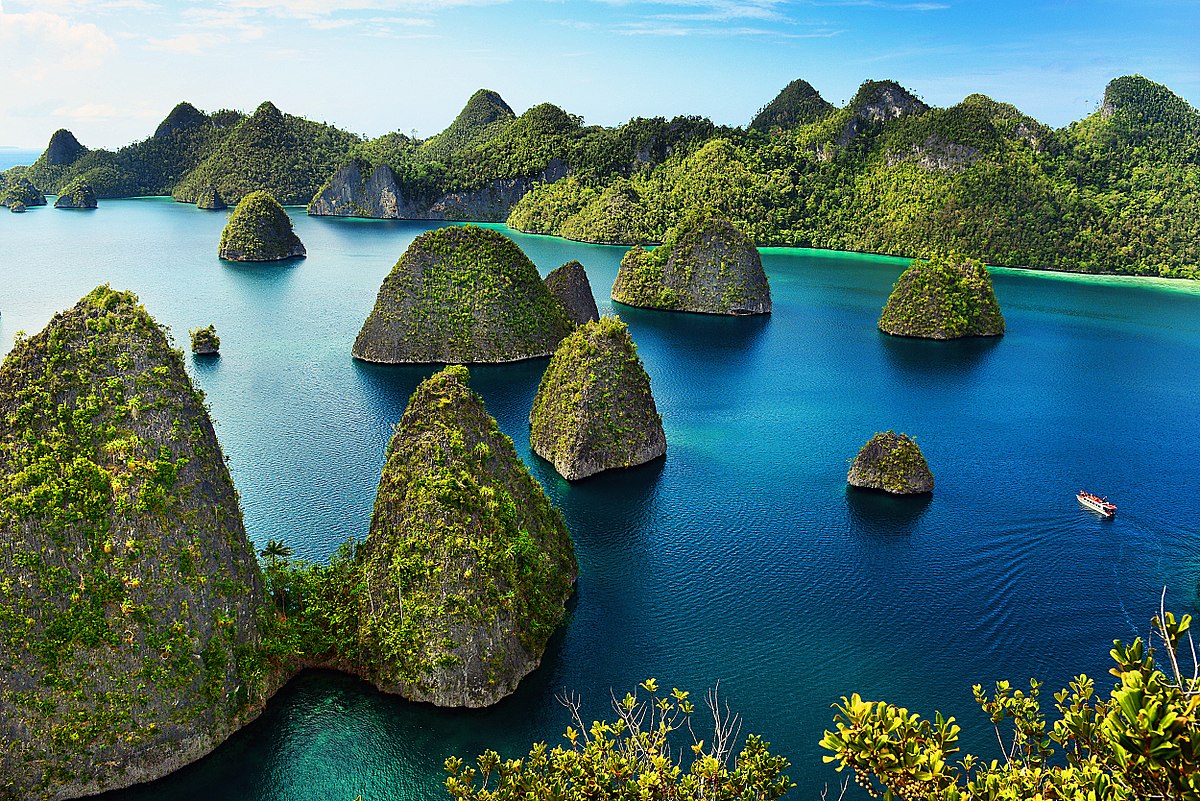
More than three decades ago, Dutch history enthusiast Max Ammer received an unexpected tip from his landlord at the time, a former war veteran, about World War II aircraft believed to be resting beneath Indonesian waters. What began as a simple lead soon evolved into an ambitious four-month diving journey across the archipelago, during which Ammer worked closely with local fishermen to uncover submerged relics of the past. Among the many locations he explored, one region left a lasting impression: Raja Ampat, located in Indonesia’s West Papua Province. The area stood apart not only for its dramatic landscapes, but also for its extraordinary marine life and isolation.
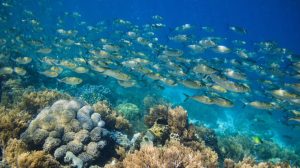
Situated at the heart of the Coral Triangle, the Raja Ampat Marine Protected Area Network spans more than four million hectares and encompasses roughly 1,500 islands. Widely regarded as the most biodiverse marine environment on the planet, Raja Ampat has remained largely untouched by mass tourism due to its remote location. The region is home to more than 1,600 species of fish, and an estimated 75% of all known coral species can be found in its waters.
“There are countless breathtaking places here, with hundreds of stunning coral gardens,” Ammer says.
Captivated by both the natural environment and the local communities, Ammer founded Kri Eco Dive Resort in 1994. His goal was not only to introduce visitors to Raja Ampat’s underwater world, but also to train and employ local divers. A second resort later followed at nearby Sorido Bay, with both properties now operating under his company, Papua Diving.
From Environmental Decline to Conservation Success
Raja Ampat’s reputation today as a conservation success was not always guaranteed. Around two decades ago, the region faced serious environmental decline due to unregulated fishing and destructive practices.
“Shark finning and turtle poaching were widespread,” explains Meizani Irmadhiany, senior vice president of Konservasi Indonesia. “Reversing the damage required coordinated action across many levels.”
A turning point came in 2004, when Raja Ampat was included in the Bird’s Head Seascape initiative, an effort supported by local authorities and international conservation groups to establish a network of Marine Protected Areas. The initiative aimed to protect marine ecosystems while also securing food supplies and sustainable livelihoods for local communities.
Since then, fish populations have rebounded, coral reefs have shown signs of recovery, and illegal fishing by outside operators has dropped dramatically. Community involvement proved essential, with local residents employed as park rangers and guardians of traditional practices such as Sasi, an indigenous system that temporarily closes areas to allow ecosystems to regenerate.
Earlier this year, Raja Ampat’s Marine Parks Network received the Blue Parks Award, an international recognition backed by the United Nations for meeting the highest standards of marine conservation.
Turning Exploitation Into Sustainability
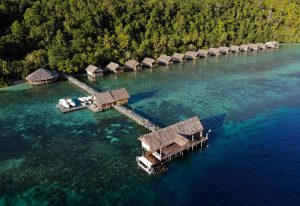
Another powerful example of community-led conservation can be found at Misool, where a former shark-fin processing camp was transformed into an eco-resort. Marit Miners, co-founder of Misool Eco Resort and Misool Foundation, first visited Raja Ampat in 2005 and was struck by the absence of sharks despite the region’s natural richness.
Recognising the long-term damage caused by overfishing, Miners and her husband partnered with local communities to establish a large no-take marine reserve, banning fishing and hunting across hundreds of thousands of acres. Since then, fish biomass has surged and shark populations have returned.
Sustainability underpins every aspect of the resort’s operations, from solar energy use and rainwater harvesting to organic food production and waste recycling. Conservation, Miners says, must remain adaptive.
“As ecosystems recover, they become attractive again to those who wish to exploit them,” she explains. “Protection requires constant commitment.”
Life Above and Below the Water
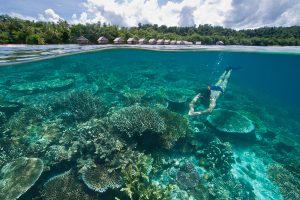
Raja Ampat’s transformation is evident both underwater and on land. At Cape Kri, marine biologist Dr. Gerry Allen once recorded more fish species in a single dive than anywhere else on Earth. Many former fishers now work in tourism, conservation, and hospitality, replacing destructive practices with sustainable livelihoods.
Beyond diving, Raja Ampat offers lush mangroves, rare bird species, coconut crabs, and panoramic hikes overlooking iconic limestone islands and turquoise lagoons.
Local guide Luis Kabes encourages visitors to go beyond sightseeing. “Spend time in villages, talk with people, share meals,” he says. “That’s how you truly understand this place.”
After more than 30 years in Raja Ampat, Ammer agrees. “The reefs are incredible,” he says, “but it’s the people who make you fall in love—and never want to leave.”