


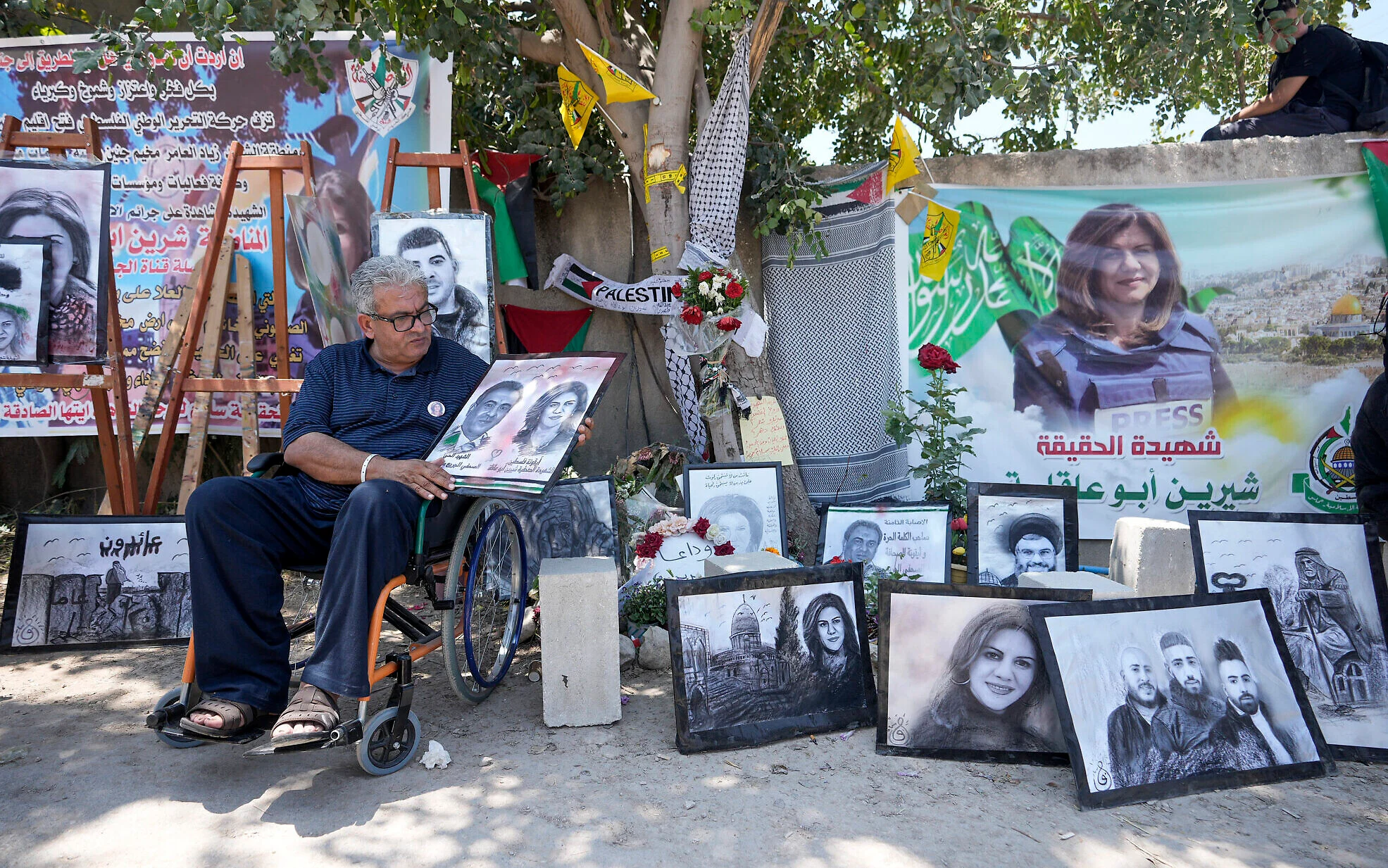
A Palestinian journalist who witnessed the fatal shooting of Al Jazeera correspondent Shireen Abu Akleh is facing worsening health conditions while being held in Israeli custody, according to journalists’ and human rights groups.
Ali al-Samoudi, 59, has been imprisoned for nearly a year, prompting urgent warnings from the Palestinian Journalists Syndicate that his life may now be in danger due to his treatment and declining medical condition.
Background: Witness to a High-Profile Killing
Al-Samoudi was among the journalists present in Jenin, in the occupied West Bank, in May 2022 when Shireen Abu Akleh was shot and killed by sniper fire. He himself was wounded during the same incident.
In April of the following year, Israeli forces arrested him during an early morning raid on his son’s home in Jenin. Authorities initially accused him of transferring funds to the Palestinian Islamic Jihad, a group Israel classifies as a terrorist organisation.
However, Israeli officials later acknowledged that there was not enough evidence to formally charge him.
Arrest and Administrative Detention
Following his arrest, al-Samoudi was first held in a military facility in Jenin before being transferred to the Jalameh detention centre near Haifa and later to Megiddo prison in northern Israel, according to reports from Palestinian sources.
On May 8, 2025, an Israeli court issued an administrative detention order against him for six months. This type of detention allows imprisonment without formal charges or trial, often based on undisclosed evidence.
In a statement to international media, the Israeli military said that although sufficient evidence for prosecution was lacking, intelligence assessments led security authorities to request administrative detention, arguing that his presence posed a potential security risk.
Since then, his detention order has been renewed multiple times, including a further extension in January 2026 for an additional four months. Critics have described the continued detention as arbitrary and inconsistent with international legal standards.
What Administrative Detention Means
Administrative detention permits authorities to hold individuals without charge for indefinite periods, subject to periodic renewals. Human rights organisations have long criticised the practice, especially when applied without transparency regarding accusations or evidence.
According to data cited by rights groups, thousands of Palestinians were held under administrative detention as of late 2025. These detentions can last months or even years, with detainees often unable to challenge the secret evidence used to justify their imprisonment.
Advocacy organisations have argued that such legal measures raise serious concerns about due process and fairness, particularly when applied to journalists and media workers.
Health Concerns and Prison Conditions
Reports from the Palestinian Prisoner’s Society indicate that al-Samoudi’s health has significantly deteriorated during detention. He is said to have lost a substantial amount of weight and suffers from multiple medical issues, including diabetes, high blood pressure, ulcers, chronic headaches, and recurrent fainting episodes.
Additional reports allege medical neglect and delayed treatment while in custody. During earlier periods of detention, he was reportedly denied proper medical care and subjected to harsh treatment during transfers between facilities, including confiscation of personal belongings and damage to his glasses.
Journalists’ organisations say these conditions have intensified fears that his life may be at risk if his situation does not improve.
Legal and Press Freedom Concerns
The Palestinian Journalists Syndicate has stated that al-Samoudi has not received a fair trial and described his detention as a violation of international law and press freedom. The group has issued appeals to global media unions and human rights bodies to intervene and push for his release.
Support organisations for detainees have also reported that al-Samoudi informed his lawyer that authorities would not bring charges related to his journalism, allegedly to avoid international scrutiny.
He has maintained that his detention is unjust, especially given that he was injured while reporting on the day Abu Akleh was killed.
Wider Context: Journalists Under Arrest and Risk
Press freedom organisations note that the number of Palestinian journalists detained by Israel has increased since the outbreak of the Israel-Gaza war in October 2023. Monitoring groups have documented dozens of arrests of journalists during the conflict period.
International watchdogs have also highlighted the growing risks faced by journalists in conflict zones, including arrests, restrictions on reporting, and fatalities. Reports indicate that a significant number of journalists and media workers have been killed during ongoing hostilities in Gaza.
Media advocacy groups argue that holding journalists without charge, along with restrictions on press access, contributes to a climate that undermines independent reporting and transparency in conflict areas.
Calls for International Action
The Palestinian Journalists Syndicate has called for international pressure to end the use of administrative detention against journalists and to ensure accountability for alleged violations against media workers.
The organisation warned that the continued detention of journalists without trial reflects broader concerns about press freedom and the ability of reporters to work safely in conflict-affected regions.
As al-Samoudi’s detention continues to be renewed, rights groups and journalist unions are urging global institutions to closely monitor his case, citing both humanitarian concerns and the implications for freedom of the press.