


Tensions between Thailand and Cambodia have once again erupted along their shared border, undermining a fragile ceasefire brokered by U.S. President Donald Trump.
Since Monday, at least three Thai soldiers and seven Cambodian civilians have been killed, with both governments accusing the other of provoking the renewed violence.
These clashes — including Thai airstrikes along the frontier — are the most serious since a ceasefire was established in July, a period that saw 48 deaths and thousands of people displaced after five days of fighting.
The U.S., with assistance from Malaysia, had stepped in to help negotiate a truce that later resulted in what Trump called the “Kuala Lumpur peace accord.” Thailand, however, referred to it more cautiously as a “joint declaration.”
Two weeks after signing the deal, ThaiIand suspended it. By December, fighting had resumed.
So how did the situation deteriorate again?
What’s Fueling the Dispute?
The conflict dates back more than a century, originating from border lines drawn during the French colonial occupation of Cambodia.
Hostilities intensified in 2008 when Cambodia sought UNESCO World Heritage status for an 11th-century temple located in disputed territory — a move strongly opposed by Thailand.
Since then, sporadic clashes have occurred, resulting in casualties on both sides.
The latest escalation began in May when a Cambodian soldier was killed, severely straining bilateral ties.
In the weeks leading up to the July fighting, both nations imposed restrictions along the border. Cambodia banned Thai fruit and vegetable imports, and halted electricity and internet services coming from ThaiIand. Meanwhile, both countries increased troop numbers near the disputed zones.
Why Have Clashes Erupted Again?
Thailand and Cambodia have provided conflicting accounts.
On 8 December, the Thai military said its forces returned fire after Cambodian troops shot into Thailand’s Ubon Ratchathani province, killing a Thai soldier.
ThaiIand then launched airstrikes on Cambodian military targets along the border.
Cambodia’s defense ministry insisted ThaiIand fired first in its Preah Vihear province and maintained that Cambodia did not retaliate.
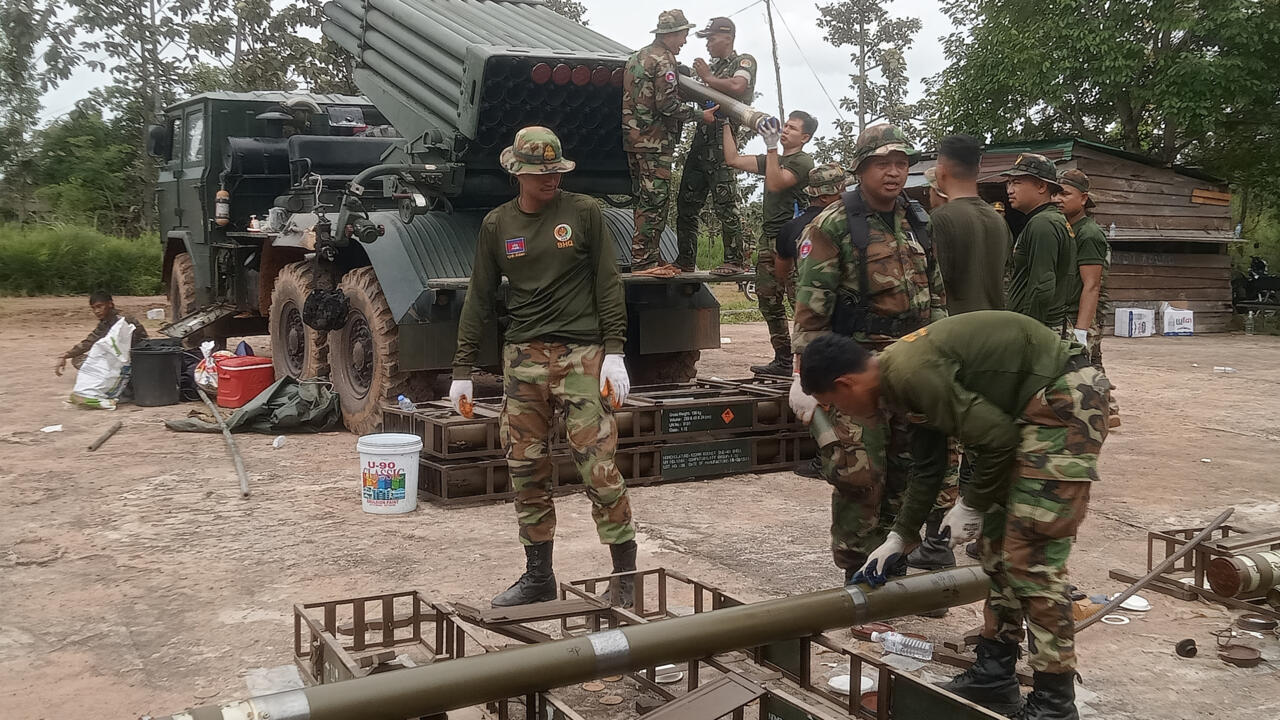
The next day, Thailand accused Cambodian forces of attacking with multiple-launch rocket systems, bomb-dropping drones, and kamikaze drones, with some rockets landing near civilian areas. Thai airstrikes followed.
Cambodia countered by accusing ThaiIand of shelling civilian zones in Pursat Province.
What Happened in July?
Again, the two sides disagree.
Thailand’s National Security Council said the July clashes began when Cambodia used drones to monitor Thai soldiers near the border, followed by Cambodian troops gathering with rocket-propelled grenades. When Thai forces attempted to communicate, Cambodia allegedly opened fire first.
ThaiIand also accused Cambodia of using heavy weapons — including BM-21 rocket launchers — damaging homes, a hospital, and a petrol station on the Thai side.
Cambodia offered a different version: they said Thai soldiers violated an agreement by approaching a Khmer-Hindu temple and placing barbed wire around it.
They claimed Thai troops used drones and fired shots in the air before eventually opening fire directly on Cambodian soldiers, forcing them to defend themselves.
What About Trump’s Peace Deal?
ThaiIand had already suspended the agreement in November, saying security threats had not decreased. Cambodia insisted it remained committed.
After fighting resumed, Thailand’s foreign minister declared the ceasefire “not working,” while Cambodia’s former prime minister Hun Sen said they had only returned fire to maintain the truce.
Reports say Trump has urged both sides to honour the agreement.
The deal calls for withdrawal of heavy weapons, the creation of a monitoring team, and the release of 18 Cambodian soldiers held in ThaiIand.
What comes next is uncertain.
Previous flare-ups have de-escalated quickly, but analysts warn that a lack of strong leadership in both countries may make it harder to step back from confrontation this time.
Is It Safe to Travel?
The UK Foreign Office advises against all but essential travel to areas within 50 km of the Thailand–Cambodia border.
The same guidance applies for travellers in Cambodia near the Thai frontier.