


More than 20 years after the US-led invasion of Iraq, the United States has again entered a major war in the Middle East, this time alongside Israel against Iran. As the conflict moves into its second week, one question is becoming harder to ignore: what exactly does Donald Trump want from this war?
American forces have struck nearly 2,000 targets across Iran since the campaign began, hitting nuclear facilities, oil infrastructure, civilian areas and military sites. Several senior Iranian officials have been killed, including then-Supreme Leader Ali Khamenei. Iran has responded with waves of missiles and drones aimed at Israel and at US-linked targets and allies across the Gulf.
The human toll continues to rise. More than 1,200 Iranians have been killed, including many children, while American casualties have also been reported. Yet despite the scale of the fighting, the Trump administration has not presented a single, clear explanation of how it expects the war to end.
Instead, the president’s statements have shifted repeatedly, raising doubts over whether Washington is pursuing regime collapse, military weakening, political reshaping, or simply a deal it can later present as victory.
Early strikes suggested hopes of regime collapse
The opening assault on February 28 appeared to point toward an effort to shake the foundations of Iran’s ruling system. The killing of Ali Khamenei was not only a military blow but also a direct strike at the political and religious centre of the Islamic Republic.
Many analysts believe the initial expectation in Washington was that removing enough top figures would trigger a broader collapse, or at least create conditions for public unrest and internal fracture. That calculation appears to have been based on the idea that a damaged leadership structure would struggle to hold the state together.
So far, however, that outcome has not materialised.
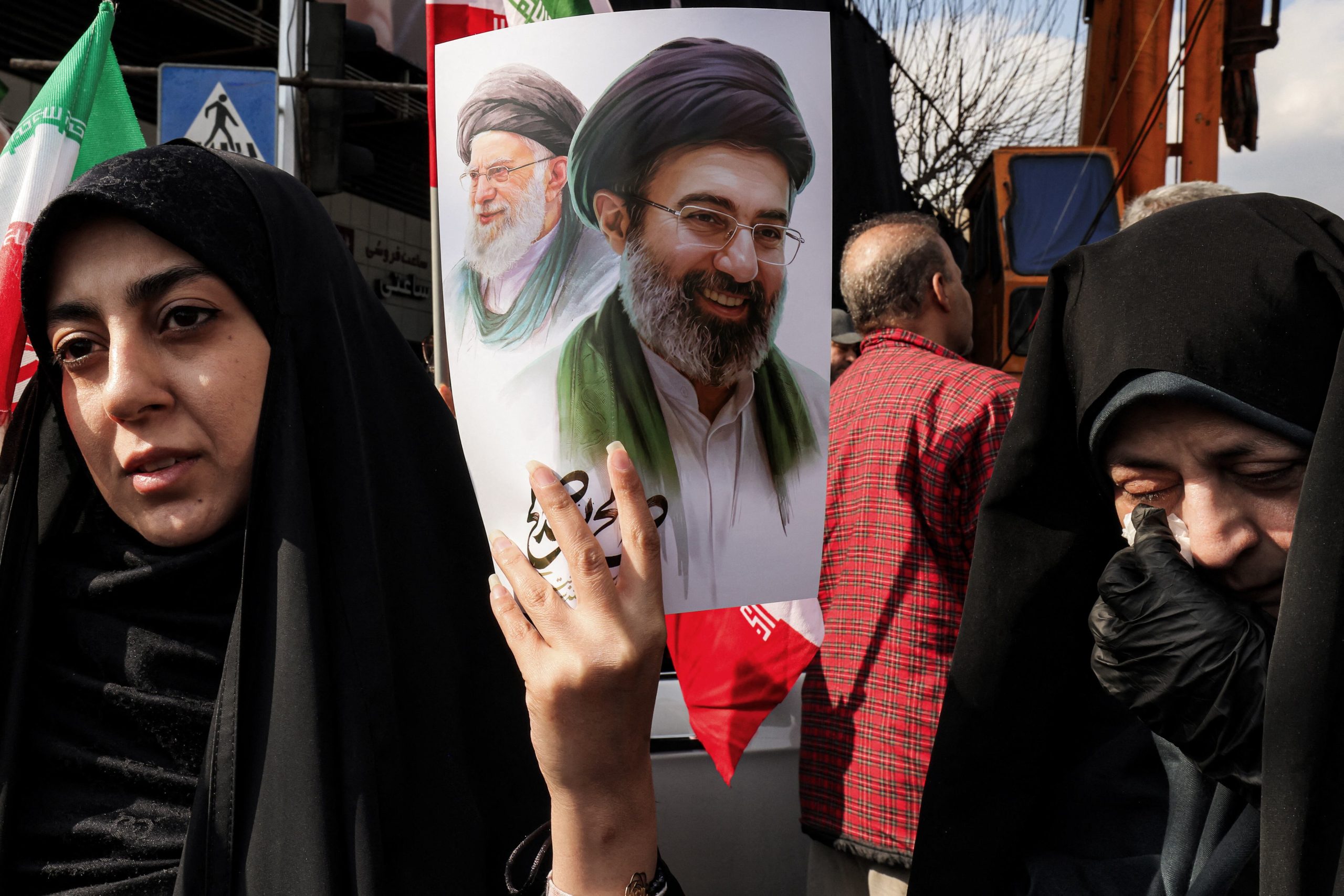
Despite the deaths of several senior leaders and commanders, Iran’s governing institutions have not visibly fallen apart. Instead, the system moved quickly to appoint Mojtaba Khamenei, the late leader’s son, as the new supreme leader.
Rather than producing a visible breakdown, the succession appears to have stabilised the system, at least for now.
Hopes of defections have brought little result
At other moments, Trump has sounded less like a wartime commander and more like a dealmaker. In the early days of the conflict, he called on members of the Islamic Revolutionary Guard Corps to surrender in exchange for protection. He also urged Iranian diplomats to abandon the government and switch sides.
But those appeals have gained no visible traction.
The IRGC has instead taken the lead in Iran’s military response, while diplomats representing Tehran have publicly rejected Trump’s overtures. Far from breaking apart, Iran’s security establishment has so far appeared to harden under pressure.
This has made one thing clear: any strategy built around fast defections or elite fragmentation is, at the moment, showing little sign of success.
Military destruction may not bring political victory
Another goal often highlighted by Trump and his allies has been the destruction of Iran’s military power. Repeated emphasis has been placed on missile systems, drone capability, naval assets and weapons production sites.
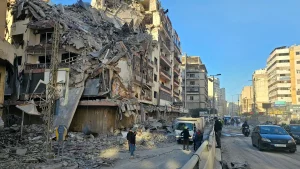
There is little doubt that these operations have damaged Iran’s military capacity. US and Israeli strikes have hit bases, weapons infrastructure and strategic facilities across the country. Both governments have also claimed to have gained control of Iranian airspace.
But even if Iran’s military strength is reduced, that alone does not answer the larger political question.
Destroying weapons is not the same as shaping a stable new order. Military force can damage a state’s capabilities, but it cannot by itself create a new leadership structure or guarantee a political outcome favourable to Washington.
That gap between battlefield success and political resolution is one of the biggest unanswered issues in the war.
Trump has sent mixed signals on who should rule Iran
Trump has also offered conflicting views on Iran’s future leadership. At one point, he told the Iranian people that once the war was over, they should take control of their own country. That message suggested support for a domestic postwar transition rather than a US-imposed ruler.
Yet later, he indicated he wanted a direct say in who would lead Iran next. He rejected Mojtaba Khamenei as an acceptable choice and insisted that any future leader would need to meet his standards. He also demanded unconditional surrender from Tehran before any deal could be considered.
Those shifting positions have only deepened the confusion over Washington’s intentions.
Tehran, for its part, has remained consistent. Iranian officials have refused surrender, rejected negotiations under bombardment and insisted that leadership decisions belong to Iranians alone.
The appointment of Mojtaba Khamenei has therefore been widely seen not just as a succession move, but also as a political signal to Washington that Iran will not allow outside powers to shape its internal future.
Regional and proxy options look risky
Another idea reportedly discussed in US circles has involved possible pressure from Kurdish armed groups against Iranian forces, potentially opening another front and encouraging wider unrest.
But this option appears highly uncertain.
Analysts warn that Kurdish factions do not have the unity, logistics or military strength needed for anything close to a serious incursion into Iran. Any such attempt could also unsettle neighbouring countries, especially Turkiye, and risk creating a second regional crisis on top of the current war.
That makes it a dangerous and unpredictable path rather than a realistic answer to the broader question of how the conflict ends.
Ground invasion remains the least likely scenario
Although Trump has refused to fully rule out sending US troops into Iran, a ground invasion is still widely viewed as the least likely outcome.
The political cost would be enormous. Trump returned to office after campaigning heavily against endless wars, and any large-scale deployment would invite immediate comparisons with Iraq and Afghanistan. Those two conflicts still shape American public opinion and remain powerful warnings against long occupations in the region.
Because of that, a full invasion would likely face both domestic resistance and enormous strategic risks.
Israel’s goals may go beyond Washington’s
Part of the uncertainty also comes from the fact that the United States and Israel may not be seeking exactly the same outcome.
Israel has long regarded Iran as its main regional threat, and some analysts argue that this war fits into a broader Israeli objective of weakening every major force capable of challenging its position in the Middle East.
If that is the case, then Israel may be aiming for a deeper regional transformation, while Washington may still be searching for a shorter path to a claimable success.
That difference matters because it raises the possibility that the US could eventually settle for a limited outcome even if Israel wants the pressure to continue.
The most realistic outcome may still be a forced deal
Among the many possible scenarios, the most practical endgame may still be a coercive settlement rather than total victory.
Under that outcome, Washington would keep up military pressure long enough to force concessions on missiles, nuclear restrictions and regional conduct, then declare success and step back. Trump could present such a deal as a win, especially if he can argue that Iran’s leadership had been weakened and its military capacity reduced.
This kind of outcome would fit his political instincts. It would allow him to avoid a ground war, reduce the risk of a prolonged occupation and still claim he had achieved what earlier presidents could not.
For now, though, that remains only one possibility among several.
A war with no clearly defined finish line
The biggest problem for Washington may be that the war has moved faster than the strategy behind it. Trump has spoken at different times of surrender, leadership change, military destruction and negotiation. But those goals do not all point in the same direction.
As the fighting continues, the central issue is no longer just how much damage the US and Israel can inflict on Iran. It is whether Washington has a realistic political plan for what comes after.
At the moment, Trump’s endgame in Iran appears less like a fixed strategy and more like a moving target shaped by events, pressure and opportunity. That uncertainty may become one of the most dangerous features of the war itself.