


As Muslims around the world marked Eid al-Fitr and the US-Israel war on Iran entered its fourth week, Palestinians in the occupied West Bank faced a sharp rise in violence, movement restrictions and attacks on homes, land and public spaces. At the same time, conditions in Gaza grew more severe as humanitarian aid fell sharply and Israeli attacks continued.
In the West Bank, entrances to many Palestinian communities were blocked, while settlers reportedly burned homes, damaged vehicles and destroyed agricultural land. The week also saw a highly symbolic move in Jerusalem, where Israeli authorities reportedly cleared Muslim worshippers from the Al-Aqsa Mosque compound during Eid, an action described as unprecedented since Israel took control of the site in 1967. Police also used force and sound grenades against Palestinians attempting to pray outside the Old City gates.
The conflict also had deadly consequences in Beit Awwa, where four Palestinian women were killed on March 18 by rocket debris. The report noted that, unlike nearby Israeli cities and settlements, the Palestinian community had no air raid sirens or bomb shelters.
Wave of Settler Violence Hits Villages
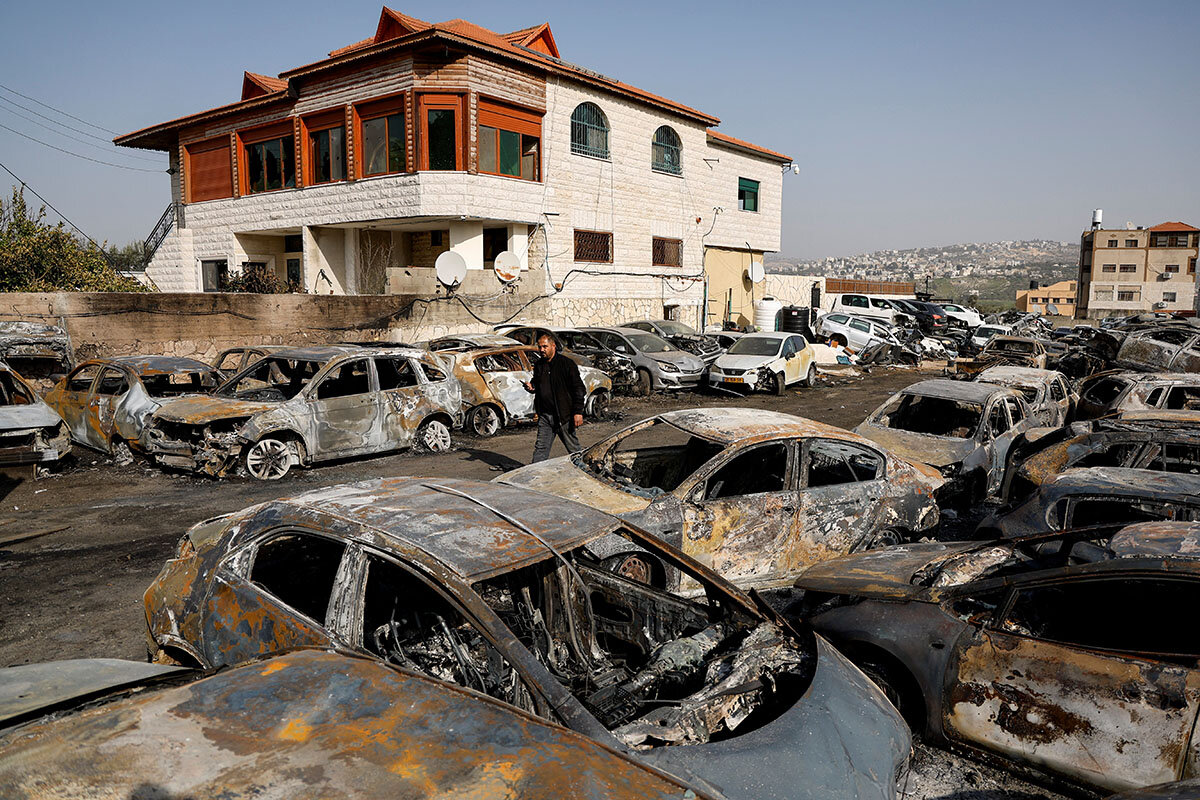
Despite the wider regional war, many Palestinian communities remained focused on the growing violence by settlers and the tightening movement restrictions that followed. The violence escalated after the death of 18-year-old settler Yehuda Sherman. In the early hours of Sunday, about 100 masked settlers dressed in black reportedly entered Jalud and Qaryut, south of Nablus.
According to local Palestinian accounts, the attackers burned at least five vehicles, set fire to more than 10 homes, torched the Jalud village council building, attacked a fire truck and injured its driver, and tried to set a mosque on fire. The attacks were reported to have continued even as Israeli army and police forces remained nearby.
The violence later spread to other areas. In Deir Sharaf, vehicles were set ablaze. In Deir al-Hatab, homes were attacked and residents were injured. In Burqa, settlers reportedly attempted to burn a medical clinic, but local residents managed to stop it.
The assault was said to be linked to Sherman’s death. Settlers claimed a Palestinian rammed his vehicle, while Palestinian residents said he had taken a farmer’s pickup truck and crashed it. The report also highlighted comments from a settler at Sherman’s funeral describing him as someone actively trying to push Palestinians out of the West Bank.
In another sign of political backing for the settler movement, Israeli Finance Minister Bezalel Smotrich attended the funeral and reportedly said the government was working to weaken the Palestinian Authority and end the limited self-rule Palestinians still hold in parts of the West Bank.
Arrests, Land Seizures and Demolitions
Although settlers carried out many of the attacks, Palestinians were the ones most often arrested by Israeli forces, according to the report. In al-Fandaqumiya and Silat al-Dhaher, settlers burned homes and vehicles and injured residents, while local accounts said Israeli forces did not stop the attacks or block the settlers’ movement between villages. Other similar incidents were reported in Jiljiliya, Salfit governorate and the South Hebron Hills.
The same week also brought continued land seizures and damage to Palestinian agriculture. Bulldozers were reported uprooting olive trees in Nilin, while in Huwara more than 100 dunams of land containing over 1,500 olive trees were bulldozed. In Masafer Yatta, settlers reportedly destroyed more than 130 olive trees by releasing livestock into cultivated areas.
Israeli authorities also issued military seizure orders for 268 dunams of land in Tubas and Tammun for what they called military purposes. Two days later, soldiers reportedly arrived with equipment to begin work on a new road. In Fasayel al-Wusta, the last remaining home in the community was demolished, despite an earlier court-approved arrangement said to allow the family to remain there. Another demolition was also documented in Khirbet al-Marajim.
Roads Closed and Communities Isolated
Since March 17, settlers were reported gathering nightly at more than 10 road junctions, including Zaatara, Yitzhar, Homesh and as-Sawiya, where they attacked Palestinian vehicles. On Sunday, Route 60 from Sinjil to Homesh was fully closed for Sherman’s funeral procession, and Palestinian movement was restricted, with ambulances only allowed through with prior coordination.
The report said settlers also blocked the entrances to many Palestinian communities, further isolating residents. It added that these road blockades began after settlers objected to Israeli military actions against a limited number of illegal outposts, with those tensions spilling over into repeated attacks on Palestinian cars.
Even as some Israeli political and military figures publicly condemned settler violence, activists reported that settlers had rebuilt a demolished outpost southwest of Nablus under Israeli military protection. According to Israeli rights group B’Tselem, at least 14 Palestinians had been killed in the West Bank since the Iran war began on February 28, including two minors. Of those deaths, eight were attributed to the Israeli military and six to armed settlers.
Aid Crisis in Gaza Worsens
In Gaza, the humanitarian crisis deepened further. The amount of aid entering the territory dropped sharply after the US-Israel war on Iran began, causing prices to surge. Although the Rafah crossing with Egypt reopened on Thursday, movement remained under tight restrictions.
The World Health Organization warned that hospitals were facing shortages of medicines, medical supplies and fuel. Aid groups also raised fears that famine-like conditions could return, especially after previous signs that the situation had slightly improved. Many humanitarian organisations working in Gaza and the West Bank have also reportedly had their operations halted by Israel.
Meanwhile, reconstruction efforts appeared to stall. The report said US officials had given Hamas mediators a formal proposal tied to disarmament in exchange for large-scale rebuilding in Gaza. It also said the US-led Board of Peace, created to help implement the October ceasefire, had largely paused its work since the Iran war began.
Without any major progress in the ceasefire terms, Israeli strikes continued. The report said at least three people, including a child, were killed in Khan Younis on March 17, four more were killed in drone strikes near Gaza City on March 19, and four more died on Sunday, including three police officers in Nuseirat refugee camp. Additional injuries and shelling were also reported in Gaza City and Bureij refugee camp. Since the October ceasefire, Palestinian health officials say 680 Palestinians in Gaza have been killed.