


For years, the idea that Jordan could become an “alternative homeland” for Palestinians was largely dismissed in Amman as an unlikely scenario or a political myth. However, amid escalating tensions, a far-right Israeli government, and the ongoing war in Gaza, officials and analysts in Jordan now view the situation with growing alarm. Concerns intensified after the Israeli cabinet approved measures to classify large areas of the occupied West Bank as “state land” under the Israeli Ministry of Justice. Israeli Finance Minister Bezalel Smotrich described the decision as a major step in settlement expansion, a move that shifts authority away from the military administration that has overseen the territory since 1967 and treats the land more like sovereign Israeli territory.
Annexation Fears and Strategic Anxiety in Amman
In Jordan, the decision is widely interpreted as a turning point that signals the erosion of the existing political framework governing the West Bank. Alongside ongoing military operations in areas such as Jenin and Tulkarem, policymakers in Amman are increasingly focused on the possibility of displacement pressures rather than questioning whether such risks exist.
Former Jordanian Deputy Prime Minister Mamdouh al-Abbadi warned that the situation is evolving from a theoretical concern into a practical reality. He argued that current developments suggest a gradual implementation of policies that could ultimately push Palestinians eastward, raising fears that the burden could shift toward Jordan.
The Concept of a ‘Silent Transfer’
Jordanian officials and analysts are particularly concerned about what they describe as a “soft” or “silent transfer” scenario. Rather than direct forced displacement, the fear is that worsening living conditions in the West Bank could drive a gradual migration toward Jordan over time.
The transfer of land registration authority to Israel’s Justice Ministry is seen in Amman as a significant step in this direction. Critics believe that altering longstanding land records — including Jordanian and Ottoman registries — could weaken legal protections for Palestinian property and facilitate further settlement expansion.
Al-Abbadi also pointed to symbolic developments within Israeli military structures, suggesting that shifts in terminology and strategic messaging are being closely monitored in Jordan as indicators of broader geopolitical ambitions. He further argued that the current ideological stance of some Israeli leaders reflects a deeper policy shift rather than isolated political rhetoric.
Defence Concerns and the Jordan Valley
As diplomatic tensions rise, discussions in Jordan are increasingly turning toward security preparedness. The Jordan Valley, a strategic strip of land between the West Bank and Jordan, is now viewed as a critical defensive zone in any potential displacement scenario.
Retired Major-General Mamoun Abu Nowar described the current trajectory as resembling an “undeclared war” in strategic terms, warning that sustained displacement pressure could force Jordan to adopt stricter border and security measures. One potential option, he suggested, could include designating the Jordan Valley as a closed military zone to prevent population movement.
Despite acknowledging differences in military capabilities between Israel and Jordan, Abu Nowar emphasised the country’s internal cohesion, including tribal and local structures, as an additional layer of national resilience. However, he also cautioned that any escalation could destabilise the broader region and potentially trigger a wider conflict.
Growing Doubts Over International Guarantees
Another factor contributing to Jordan’s anxiety is the perceived weakening of long-standing international assurances, particularly from the United States. For decades, Jordan’s stability was considered a key pillar of US regional policy, often referred to as the “Jordanian option.”
Political analyst Oraib al-Rantawi argued that this strategic reliance on Washington has weakened in recent years. He pointed to a broader shift in US regional priorities, with increasing focus on Gulf states and economic partnerships, which he believes has reduced Jordan’s strategic leverage.
Al-Rantawi also suggested that when faced with competing alliances, the United States has historically prioritised Israel, placing Jordan in a difficult geopolitical position. He described the kingdom as caught between dependence on foreign aid and concerns over long-term regional security threats.
Diplomatic Challenges and Regional Positioning
Some voices within Jordan’s policy circles have criticised the kingdom’s diplomatic approach, particularly its limited engagement with various Palestinian factions. Analysts note that countries such as Qatar, Egypt, and Turkiye maintained broader political contacts, allowing them to retain greater influence in regional negotiations.
According to al-Rantawi, Jordan’s exclusive alignment with the Palestinian Authority in Ramallah may have reduced its diplomatic flexibility at a time when regional dynamics are rapidly shifting. Internal political considerations, including concerns over domestic movements, have also shaped this cautious stance.
Mobilisation and Preparedness Measures
Amid rising uncertainty, Jordan has begun taking precautionary steps. The government recently reinstated its compulsory military service programme, known as “Flag Service,” after a 35-year suspension. Officials said the move aims to strengthen combat readiness and adapt to evolving regional security challenges.
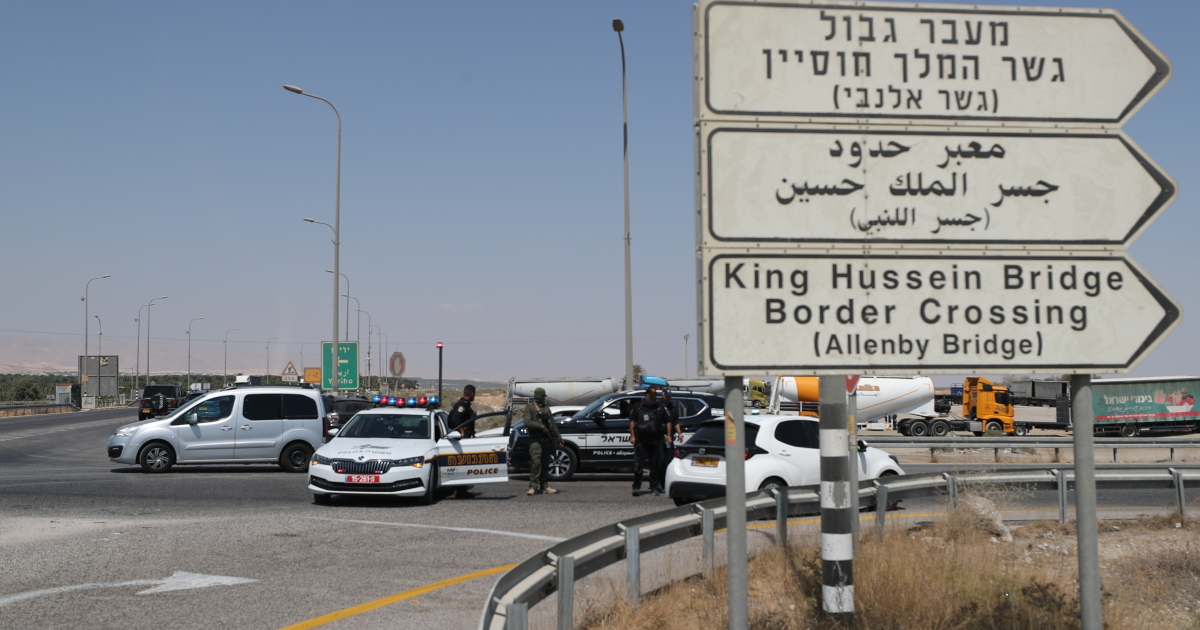
Calls for broader national preparedness have also emerged, including proposals for expanded conscription and heightened monitoring of border crossings such as the King Hussein (Allenby) Bridge. Some policymakers argue that strict oversight is necessary to prevent any gradual displacement from the West Bank into Jordan.
A Region at a Critical Crossroads
As legal and administrative changes reshape land governance in the West Bank, analysts warn that the geopolitical buffer that once provided Jordan with strategic stability is diminishing. The kingdom now faces what many observers describe as one of its most sensitive security moments since 1967.
Jordanian officials and experts broadly agree that the situation requires urgent diplomatic, political, and security responses. While international condemnation of regional developments continues, many in Amman believe that concrete policy actions — rather than statements — will ultimately determine the trajectory of the crisis.
With tensions escalating and uncertainty surrounding future policies in the occupied territories, Jordan’s leadership appears increasingly focused on safeguarding national stability while navigating a complex and rapidly evolving regional landscape.