


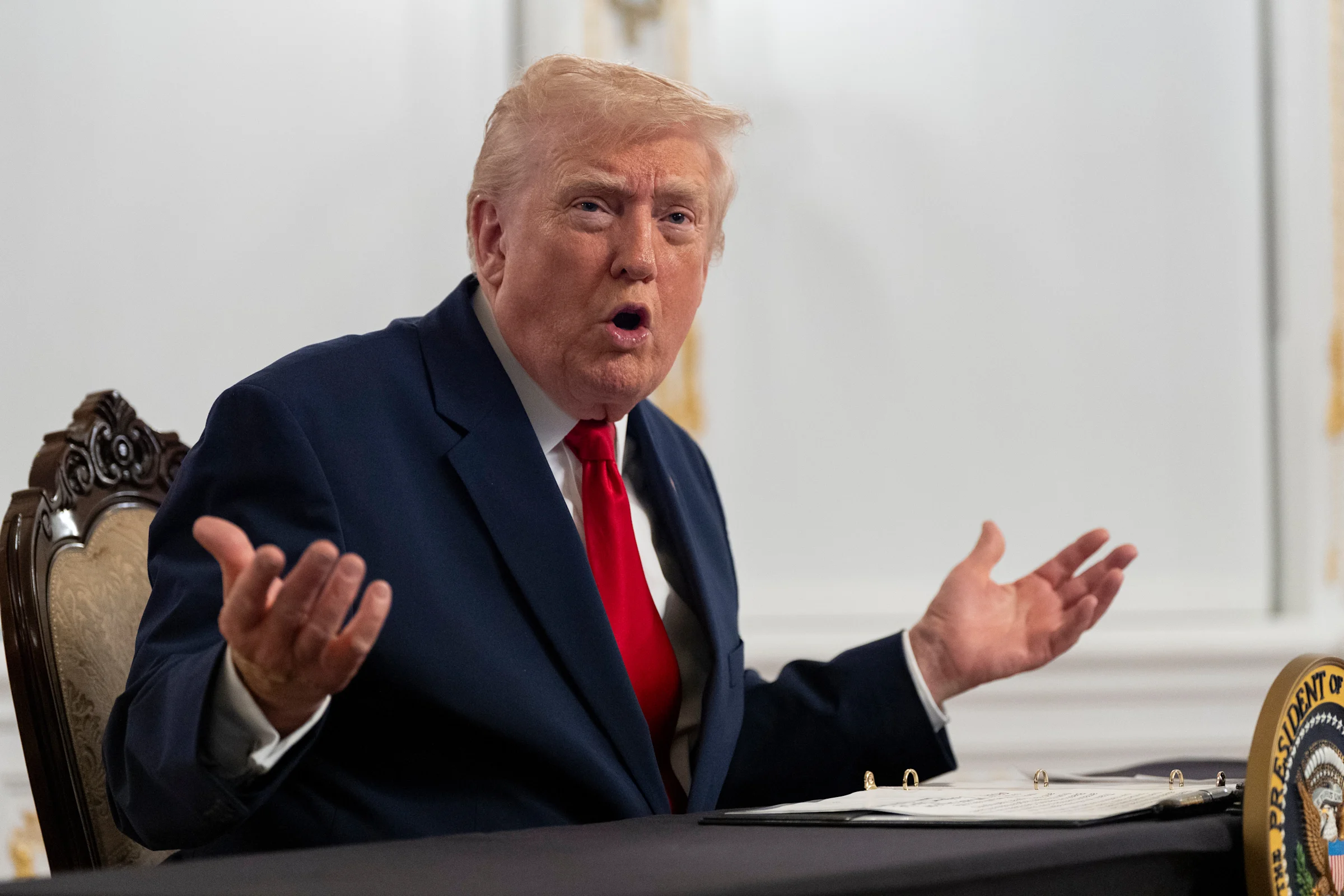
Caracas has sharply criticized U.S. President Donald Trump after he declared that the airspace above and around Venezuela should be considered fully closed. The announcement has further escalated already rising tensions between the two countries.
In a statement on Saturday, the Venezuelan Ministry of Foreign Affairs said Trump’s remarks amounted to a “colonialist threat” and an attack on national sovereignty.
“Venezuela denounces and rejects this colonialist threat designed to undermine our airspace. It represents yet another illegal and unjustified act of aggression against the Venezuelan people,” the ministry said.
Trump’s Message Fuels Fears of Escalation
Trump posted on his Truth Social platform earlier in the day:
“To all Airlines, Pilots, Drug Dealers, and Human Traffickers, please consider THE AIRSPACE ABOVE AND SURROUNDING VENEZUELA TO BE CLOSED IN ITS ENTIRETY.”
The post follows weeks of increasingly harsh rhetoric from senior U.S. officials toward Venezuelan President Nicolás Maduro.
While Washington claims its actions aim to curb drug trafficking, experts and human rights groups warn that the U.S. may be preparing grounds for an unlawful attempt to remove Maduro from power.
The U.S. has deployed an aircraft carrier to the Caribbean and carried out deadly strikes on boats it accused of involvement in drug trafficking — attacks United Nations experts have described as extrajudicial killings.
Earlier this week, Trump suggested that operations “by land” in Venezuela could begin soon.
Maduro: Venezuela Will Not Be Intimidated
President Maduro responded in a televised speech Thursday, saying that Venezuelans will not be intimidated by Washington’s increasing pressure.
According to Al Jazeera’s Lucia Newman, Maduro said the U.S. was “building excuses and lies” to justify intervention even before Trump’s latest declaration.
In recent months, the U.S. doubled a reward for information leading to Maduro’s arrest to $50 million and designated the so-called “Cartel de los Soles,” which it claims is tied to Maduro, as a terrorist organization.
Reports of Secret Communication Between Trump and Maduro
Despite the hostile rhetoric, The New York Times reported Friday that Trump recently spoke with Maduro and discussed a possible meeting. While no plans are currently in place, such a meeting would be the first ever between a U.S. president and Maduro.
Al Jazeera’s Latin America editor Lucia Newman said Trump appears to be “going hot and cold” on Venezuela — alternating between aggressive threats and unexpected outreach.
Airspace Closure Sparks Wider Consequences
The U.S. Federal Aviation Administration (FAA) recently warned airlines of a “potentially hazardous situation” in Venezuelan airspace due to increased military activity. As a result, several major regional airlines suspended flights to Venezuela.
Venezuela responded by suspending the airlines’ operating permits, accusing them of “joining U.S. state terrorism.”
Economists warn that the airspace restrictions could further isolate the country.
“A country cut off from air travel cannot receive medicine and essential supplies, and its citizens cannot travel even in emergencies,” said Francisco Rodriguez of the Center for Economic and Policy Research. He called the policy a “scorched-earth approach.”
Analysts: Ordinary Venezuelans Will Suffer Most
Experts say U.S. actions — combined with long-standing economic sanctions — will worsen the hardship facing Venezuelans, who have endured severe poverty, unemployment, and mass migration for years.
Omar Hassaan Farinya, a professor at the Bolivarian University of Venezuela, described the latest announcement as “open aggression.”
“This hurts the Venezuelan people, not the government. We are the ones paying the price — from restrictions on flights to over a decade of coercive measures that have devastated our economy,” he said.