


US Secretary of State Marco Rubio has reaffirmed that a proposed 28-point plan to end the war in Ukraine — widely criticised as leaning toward Russian interests — was “authored by the US”.
His clarification followed comments from several senators who said Rubio had initially indicated the draft resembled a Russian “wish list” and did not represent Washington’s official stance. Rubio later denied making such claims, stressing the plan originated in the United States and was shaped using input from both Kyiv and Moscow.
Rubio’s statement came as he traveled to Geneva, Switzerland, for discussions with Ukrainian and European security officials on the proposal, which President Donald Trump has urged Kyiv to accept quickly.
Allies Push Back on Key Provisions
European partners have strongly rejected parts of the draft plan, which has not been publicly released but has been widely leaked.
Reported elements include:
-
Ukraine withdrawing troops from eastern regions Russia has failed to capture militarily
-
Limits on the size of Ukraine’s military
On Saturday, Republican Senator Mike Rounds said Rubio told lawmakers that the proposal was not reflective of US policy. Rounds stated the draft had been given to Steve Witkoff — acting as Trump’s diplomatic envoy — by an individual “representing Russia”, and that the proposal “is not our peace plan.”
State Department spokesperson Tommy Pigott immediately dismissed Rounds’s version as “blatantly false”, saying Rubio and the administration have consistently maintained that the US wrote the plan with contributions from both sides.
Rubio later posted that the proposal was indeed authored by Washington and shaped by “previous and ongoing input from Ukraine”, alongside Russian input.
Trump Defends the Framework, Calls It Not a Final Offer
President Trump, who has made ending the Ukraine conflict a major foreign-policy objective in his second term, has said the draft does not represent a definitive offer. He has previously stated Ukrainian President Volodymyr Zelensky “will have to” accept it, though he later suggested deadlines could be extended.
Vice President JD Vance defended the proposal on X, saying critics “misunderstand the framework” and insisting that continued funding, weapons, or sanctions would not magically produce victory.
He urged critics to move away from “fantasy land” expectations.
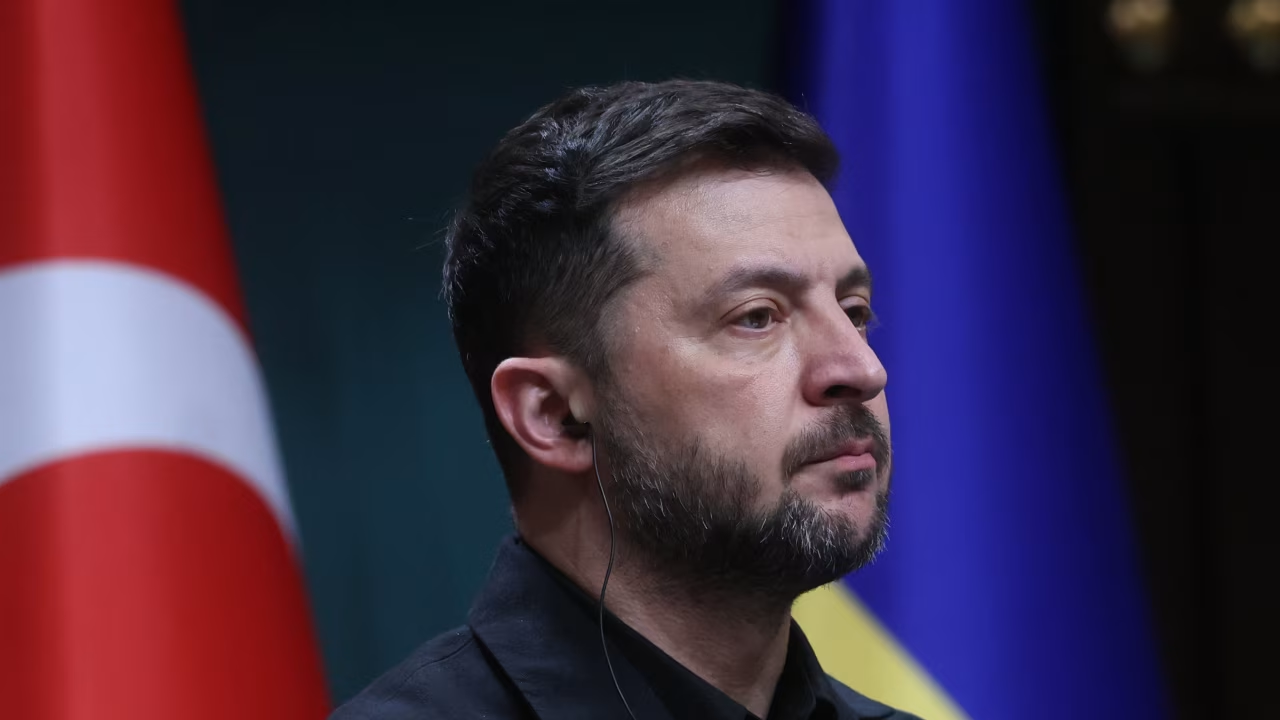
Zelensky has warned that Ukraine faces “one of the most difficult moments in our history” due to pressure to accept the deal. Russian President Vladimir Putin, meanwhile, has said the plan could serve as a “basis” for a future agreement.
European Leaders Question the Approach
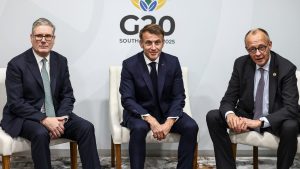
Rubio and Witkoff are set to join representatives from the UK, France, Germany, and Ukraine in Geneva on Sunday. European allies have already publicly challenged the proposal.
At the G20 summit in South Africa, leaders from Canada, Finland, France, Ireland, Italy, Japan, the Netherlands, Spain, the UK, Germany, and Norway signed a joint statement warning that the plan would “leave Ukraine vulnerable to attack”.
They said the draft included elements necessary for a “just and lasting peace” but required substantial revisions, especially regarding border terms and restrictions on Ukraine’s armed forces.
French President Emmanuel Macron said the deal “cannot simply be an American proposal” and must ensure security for “all Europeans”. German Chancellor Friedrich Merz added the parties were still “quite far from a good outcome”.
UK Prime Minister Sir Keir Starmer spoke with both Zelensky and Trump on Saturday, updating the US president on Europe’s concerns.
What the Leaked Plan Would Mean for Ukraine
Russia launched its full-scale invasion in February 2022, leaving Ukraine heavily reliant on American weapons.
Based on leaks, the US draft would require:
-
Withdrawal of Ukrainian forces from parts of the eastern Donetsk region still under Kyiv’s control
-
Acceptance of Russian de facto control over Donetsk, Luhansk, and Crimea
-
“Frozen” borders in Kherson and Zaporizhzhia along current front lines
Ukraine would receive “reliable security guarantees”, though none have been detailed. The document also claims Russia would be expected not to invade neighbors, and NATO would halt further expansion.
Ukraine Names Negotiating Team
Zelensky announced that Andriy Yermak, head of the presidential office, will lead Ukraine’s negotiating delegation in future peace discussions, including any involving Russia.
“Our representatives understand how to defend Ukraine’s national interests,” Zelensky said, “and what must be done to prevent Russia from launching a third invasion or new aggression.”