


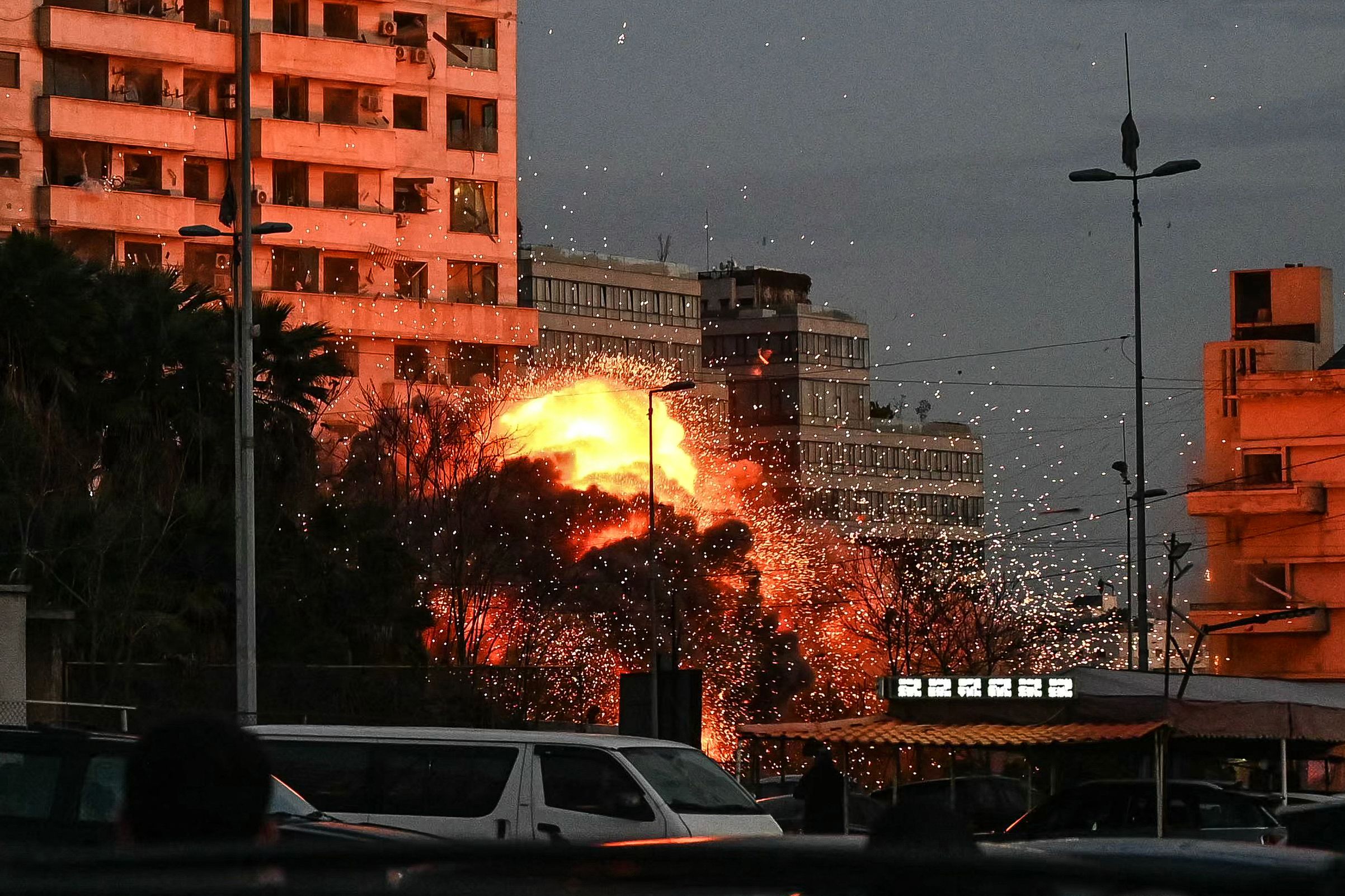
The war launched by the United States and Israel against Iran reached its 25th day on Tuesday, with new uncertainty emerging over whether any diplomatic opening is possible even as military action continues across the region.
US President Donald Trump said Washington was in discussions with Tehran and suggested that a wider agreement could still be achieved. Iranian officials, however, rejected that claim outright, accusing the US of spreading false information while buying time to expand its military presence in the region.
Trump also delayed planned US strikes on Iranian power plants and energy infrastructure for five days. The move came after he had earlier issued a 48-hour ultimatum demanding that Iran reopen the Strait of Hormuz, warning that Tehran’s energy facilities could be destroyed if it refused. Iran has not changed its position on the waterway, according to Foreign Minister Abbas Araghchi.
Iran Rejects Trump’s Claims
Iranian officials strongly dismissed Trump’s comments about ongoing talks. Figures from the Islamic Revolutionary Guard Corps and parliamentary leadership described the statements as false and accused Washington of using them to influence oil and financial markets while strengthening its military posture.
Reporting from Tehran, Al Jazeera’s Mohammed Vall said Iranian officials and state media were projecting what he described as a message of defiance. According to that reporting, authorities in Tehran see Trump’s remarks not as a sign of diplomacy, but as a tactical move intended to gain time.
Despite the threat of continued bombardment and poor weather, large crowds gathered in Tehran and other cities for pro-government demonstrations denouncing both the United States and Israel. Pakistan’s Prime Minister Shehbaz Sharif also spoke with Iranian President Masoud Pezeshkian and said Pakistan would play a constructive role in supporting peace efforts.
Gulf States on Alert
Across the Gulf, multiple countries remained on high alert as missile and drone activity continued. Kuwait’s air defences responded to repeated incoming threats, with warning alarms reportedly sounding several times خلال a single night. Saudi Arabia intercepted around 20 drones aimed at its Eastern Province, home to much of the kingdom’s energy infrastructure. Bahrain also activated warning alarms repeatedly over the past 24 hours.
The wider regional mood has increasingly shifted toward calls for restraint and dialogue. Britain also announced it was sending short-range air defence systems to the Middle East in response to Iranian missile attacks, according to Prime Minister Keir Starmer.
Pressure Builds in Washington and Israel
In Washington, the White House sought to lower expectations of any immediate diplomatic breakthrough. Press Secretary Karoline Leavitt said the situation remained fluid and warned that speculation about meetings should not be treated as final until confirmed officially.
At the same time, the Pentagon announced it was closing its well-known Correspondents’ Corridor and moving press offices to another location. The decision followed a court ruling that struck down new press credential rules introduced by the Trump administration.
In Israel, the military said Iran launched another missile barrage early Tuesday, targeting the north of the country. Israeli officials said air defence systems were intercepting the threats. The military also confirmed that a malfunction in the David’s Sling interceptor system had allowed two Iranian ballistic missiles to hit southern Israel over the weekend, leaving dozens injured.
Prime Minister Benjamin Netanyahu said he had spoken with Trump and that the US president believed recent military developments could eventually be turned into a negotiated arrangement that still protected Israeli interests.
Fighting Expands Beyond Iran and Israel
The conflict has also deepened in neighbouring countries. In Lebanon, an Israeli strike hit the southern suburbs of Beirut shortly after residents were told to evacuate. Al Jazeera’s Obaida Hitto described the move as a significant escalation, saying Israel’s expanding operations and destruction of infrastructure such as bridges were trapping civilians and making humanitarian relief far more difficult for the Lebanese armed forces. More than one million people have reportedly been displaced by the war.
In Syria, the army said one of its northeastern bases was hit by a missile launched from Iraq. An Iraqi official said a local armed faction was believed to be responsible. In Iraq itself, the US military carried out a strike in Anbar province targeting the headquarters of an Iran-backed armed group and aiming at senior commander Saad Dawai. Reporting from Baghdad, Al Jazeera’s Nicolas Haque described Iraq as a secondary battlefield where the US and Iran-aligned groups are increasingly confronting each other, leaving civilians caught in the middle.
Hormuz Closure Continues to Shake Energy Markets
The closure of the Strait of Hormuz remains one of the most serious global consequences of the conflict. South Korea, which depends on the Middle East for more than 70 percent of its oil, has been hit hard, with the crisis reportedly forcing its prime minister to cancel a planned trip to China. Japan is facing similar pressure, with nearly 95 percent of its oil supply passing through the strait.
The chief of the UAE’s state energy company ADNOC criticised Iran’s blockade of the route, calling it economic terrorism against every nation. Oil prices have surged as a result, adding to fears of broader economic fallout if the conflict continues.