


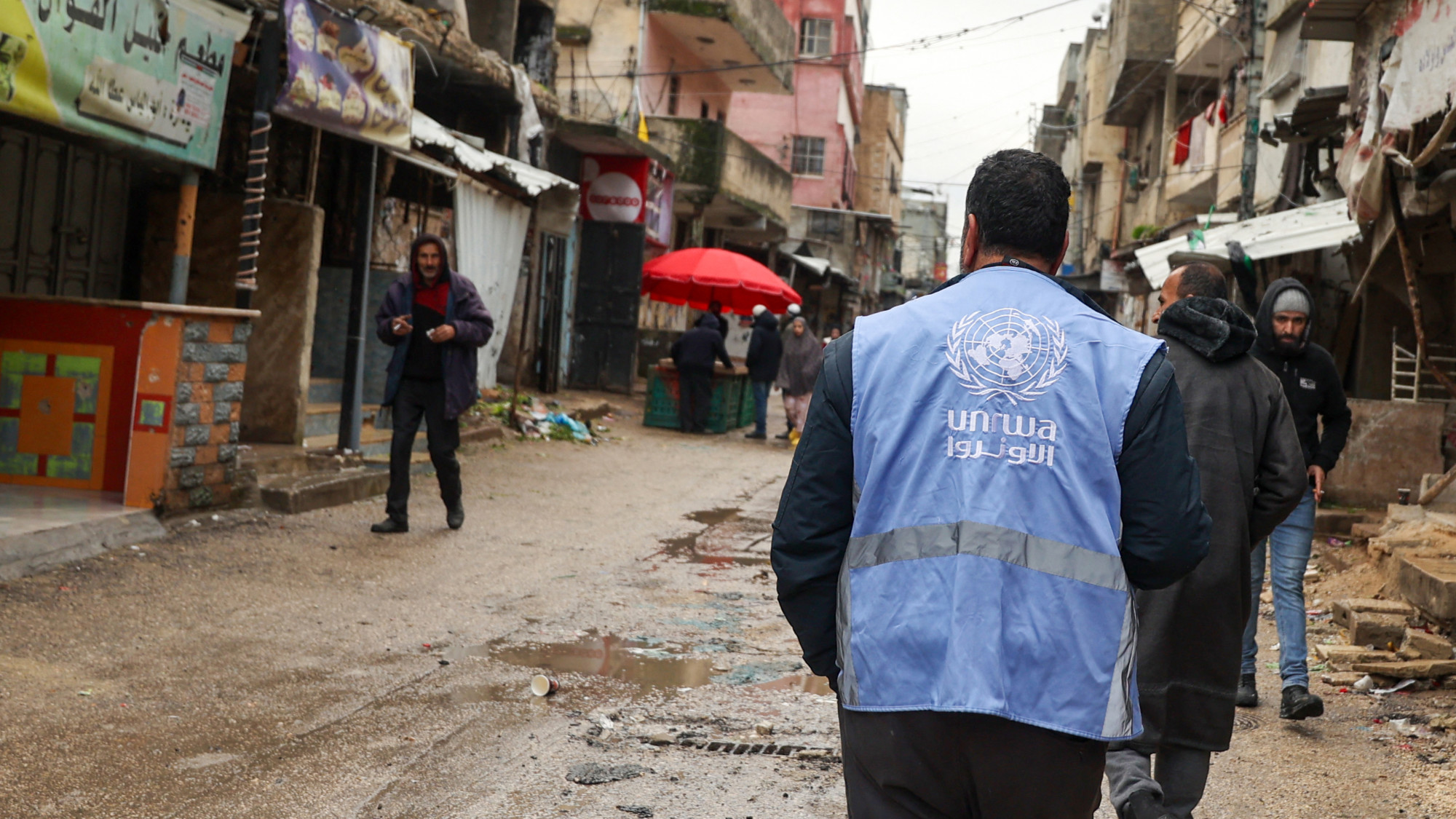
After nearly two decades teaching at a school run by UNRWA, Maryam Shaaban—whose name has been changed for security reasons—collapsed when she learned she was among roughly 600 employees dismissed in Gaza. The decision is the latest blow to staff and civilians already devastated by Israel’s ongoing war on the besieged territory.
Earlier in January, UNRWA announced sweeping austerity measures, including a 20 percent salary cut for local staff in Gaza, reduced working hours, and the termination of contracts for employees based outside the Strip who had been placed on “exceptional leave.”
In a letter to affected workers, UNRWA Commissioner-General Philippe Lazzarini said the steps were unavoidable due to a projected $220 million shortfall in the agency’s 2026 budget—putting salaries and essential humanitarian programmes at risk.
A Teacher’s Loss Reflects Wider Trauma
Shaaban, 52, began working with UNRWA in 2007 at a school in Jabalia, northern Gaza. Like many residents, she has endured profound loss during the war. Displaced with her family to Nuseirat in central Gaza, she survived an Israeli air strike in December 2023 that killed 15 people, including her 22-year-old daughter, her brother and his entire family.
In April 2024, she left Gaza to accompany her husband for urgent medical treatment in Egypt after he was critically wounded. Five of her children were also injured. The family’s hardship deepened when her salary was cut and then her contract ended.
“It feels like being punished for seeking medical treatment and escaping death,” Shaaban told Al Jazeera by phone. “I left my injured children behind, worried every day. Then they dismissed us from our jobs. By what law does this happen?”
Israeli Pressure on UNRWA Intensifies
UNRWA has faced escalating pressure from Israel, which has repeatedly accused the agency of links to armed groups—claims the agency denies, saying it disciplines any staff member proven to have engaged in wrongdoing.
In 2025, Israel’s parliament passed legislation effectively barring UNRWA from operating in areas it defines as under Israeli sovereignty, including occupied East Jerusalem. UNRWA rejected the law as illegal, warning it places the agency in direct conflict with Israeli authorities.
Since October 2023, more than 380 UNRWA staff members have been killed in Gaza during Israeli attacks, according to the agency. Earlier this month, Israeli bulldozers partially destroyed UNRWA’s headquarters in East Jerusalem, an act Lazzarini said followed efforts “to erase the Palestine refugee identity.”
UN Secretary-General Antonio Guterres has warned Israeli Prime Minister Benjamin Netanyahu that the UN could seek action at the International Court of Justice if laws targeting UNRWA are not repealed and seized assets returned.
Funding Gaps and Donor Freezes
UNRWA’s financial crisis has been exacerbated by declining international donations, long the backbone of its budget. Several donor countries froze contributions following Israeli allegations against some employees, further limiting the agency’s ability to operate.
The impact is particularly severe in Gaza, where UNRWA provides education, healthcare and social assistance to millions of Palestinian refugees—about 70 percent of the enclave’s population.
In recent weeks, anger has grown among staff who argue Gaza has borne the brunt of austerity despite being the most devastated of UNRWA’s areas of operation.
‘Why Gaza First?’
Mustafa al-Ghoul, head of the UNRWA staff union in Gaza, questioned why the cuts began there. “All the measures started in Gaza, as if Gaza is not already overwhelmed by death, destruction and hunger,” he said, standing near the agency’s damaged headquarters in Gaza City.
He said many dismissed employees were outside Gaza for medical or family reasons, some battling serious illness or having lost relatives in the war. “They were cut off without notice—deprived of their rights,” he said.
“Gaza needs compassion, not the drying up of its lifelines.”
Civilians Feel the Fallout
The consequences are already visible for displaced families. Jihan al-Harazin, a 28-year-old mother of three in Gaza City, said her family relied almost entirely on UNRWA services before the war.
“UNRWA was the backbone of our survival—health, education, food,” she said. “Now there is nothing.” Food aid has been largely halted for months amid access restrictions.
Lazzarini has repeatedly accused Israel of using humanitarian access as leverage, saying aid is being treated “as a weapon,” worsening civilian suffering.
‘A War on Humanitarian Work’
Amjad Shawa, director of the Palestinian NGOs Network in Gaza, said UNRWA remains central to humanitarian life and the refugee issue itself. “It is one of the last pillars of social stability in Gaza,” he said.
Shawa warned that weakening UNRWA aligns with long-standing efforts to undermine Palestinians’ right of return and compensation. He linked the agency’s cuts to a broader clampdown on humanitarian organisations, noting international condemnation after Israel banned dozens of aid groups operating in Gaza.
“There is a war being waged against humanitarian work,” Shawa said. “We are paying the price for upholding international humanitarian law—one the occupation refuses to respect.”