


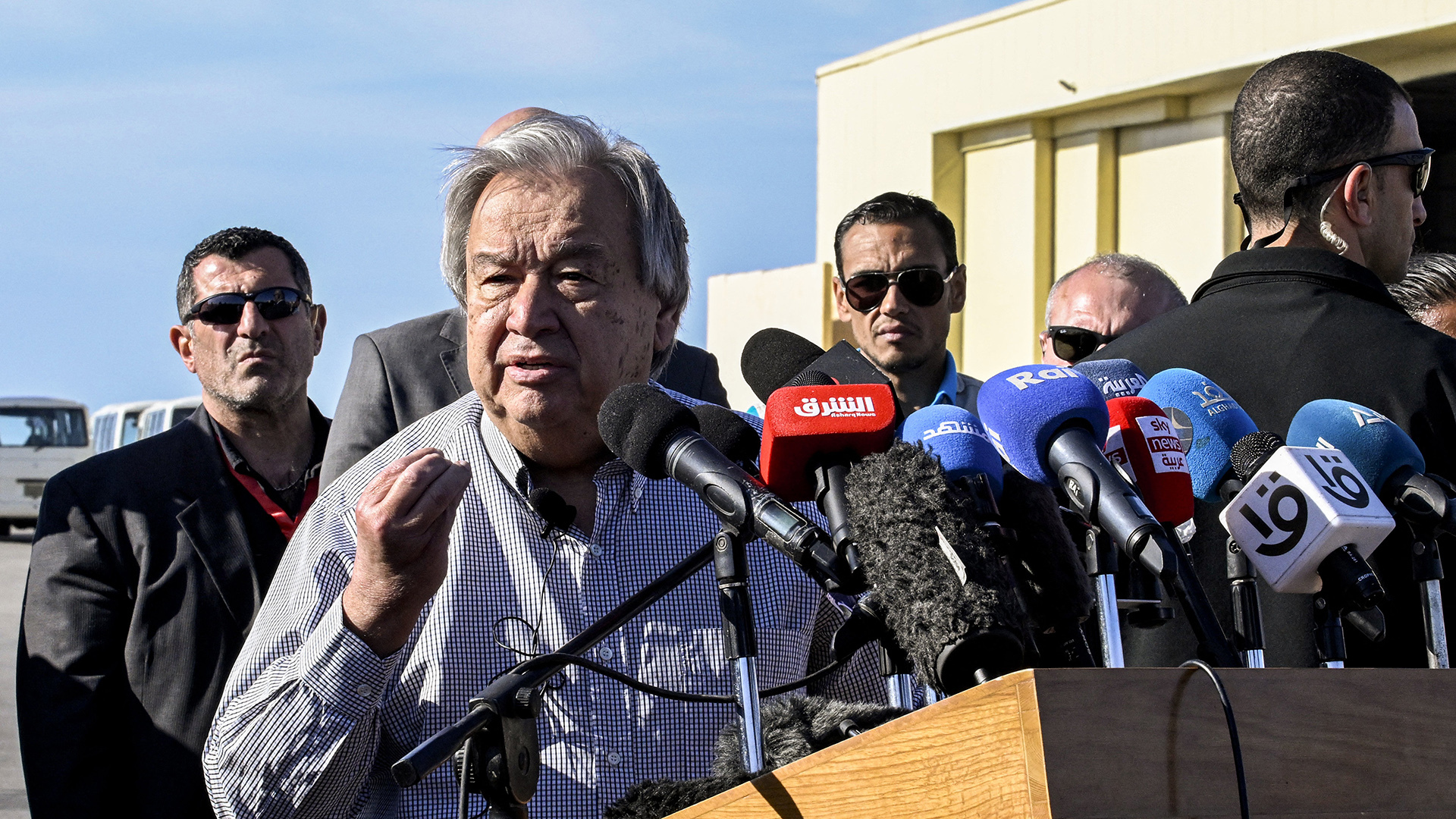
The head of the United Nations has renewed calls for Israel to immediately allow large-scale humanitarian assistance into Gaza, as Israeli authorities continue to block most Palestinians from leaving the besieged enclave for urgent medical treatment.
UN Secretary-General Antonio Guterres made the appeal on Tuesday, as more than 100 sick and wounded Palestinians gathered at the recently reopened Rafah crossing with Egypt, hoping to travel abroad for care.
“I again call for the facilitation of rapid and unimpeded humanitarian relief at scale — including through the Rafah crossing,” Guterres said while speaking at UN headquarters in New York.
Evacuations Far Below Promised Levels
Reporting from Khan Younis in southern Gaza, Al Jazeera correspondent Hind Khoudary said that only 16 Palestinians were allowed to cross into Egypt on Tuesday. The day before, just five people were permitted to leave Gaza, while 12 were allowed to re-enter.
The numbers fall well short of Israeli assurances that up to 50 Palestinians would be permitted to travel in each direction daily through Rafah.
“There is no clear explanation for the delays,” Khoudary said. “The process is extremely slow, and people are waiting for hours with no information.”
She added that Palestinians passing through the crossing are forced to leave behind all personal belongings. Rafah had remained largely closed for nearly two years during Israel’s war on Gaza before partially reopening this week.
Health officials estimate that around 20,000 Palestinians in Gaza are awaiting urgent medical treatment abroad.
Shooting Despite ‘Ceasefire’
Separately, Israeli forces shot and killed a 19-year-old Palestinian near Khan Younis, despite a purported ceasefire that took effect in October.
Gaza’s Nasser Hospital said the teenager was killed in an area outside zones under direct Israeli military control.
According to Gaza’s Health Ministry, his death brings the number of Palestinians killed by Israeli attacks since the ceasefire began in mid-October to 529.
Medical System in Ruins
Most of Gaza’s hospitals and healthcare facilities were destroyed during the war, leaving critically injured and chronically ill patients with few options for treatment inside the territory.
Shadi Soboh, a 37-year-old Palestinian injured in the conflict, said he has been waiting 10 months after receiving approval to travel abroad for bone transplant surgery.
“Where is the world? Are they waiting for my leg to be amputated?” he said, referring to a reconstruction oversight mechanism announced by US President Donald Trump.
Muhammad Abu Salmiya, director of al-Shifa Hospital in Gaza City, also appealed for immediate access to medical supplies and equipment.
“Preventing patient evacuations and blocking the entry of medicines is effectively a death sentence,” he wrote in a Facebook post.
Rafah Reopening Delayed
The Rafah crossing was meant to reopen in mid-October as part of the first phase of a US-brokered ceasefire agreement. However, Israel delayed the reopening until it received the remains of deceased captives held in Gaza, the last of which were returned on January 26.
Humanitarian agencies warn that continued restrictions at Rafah risk further loss of life, particularly among patients requiring specialised treatment unavailable inside Gaza.