


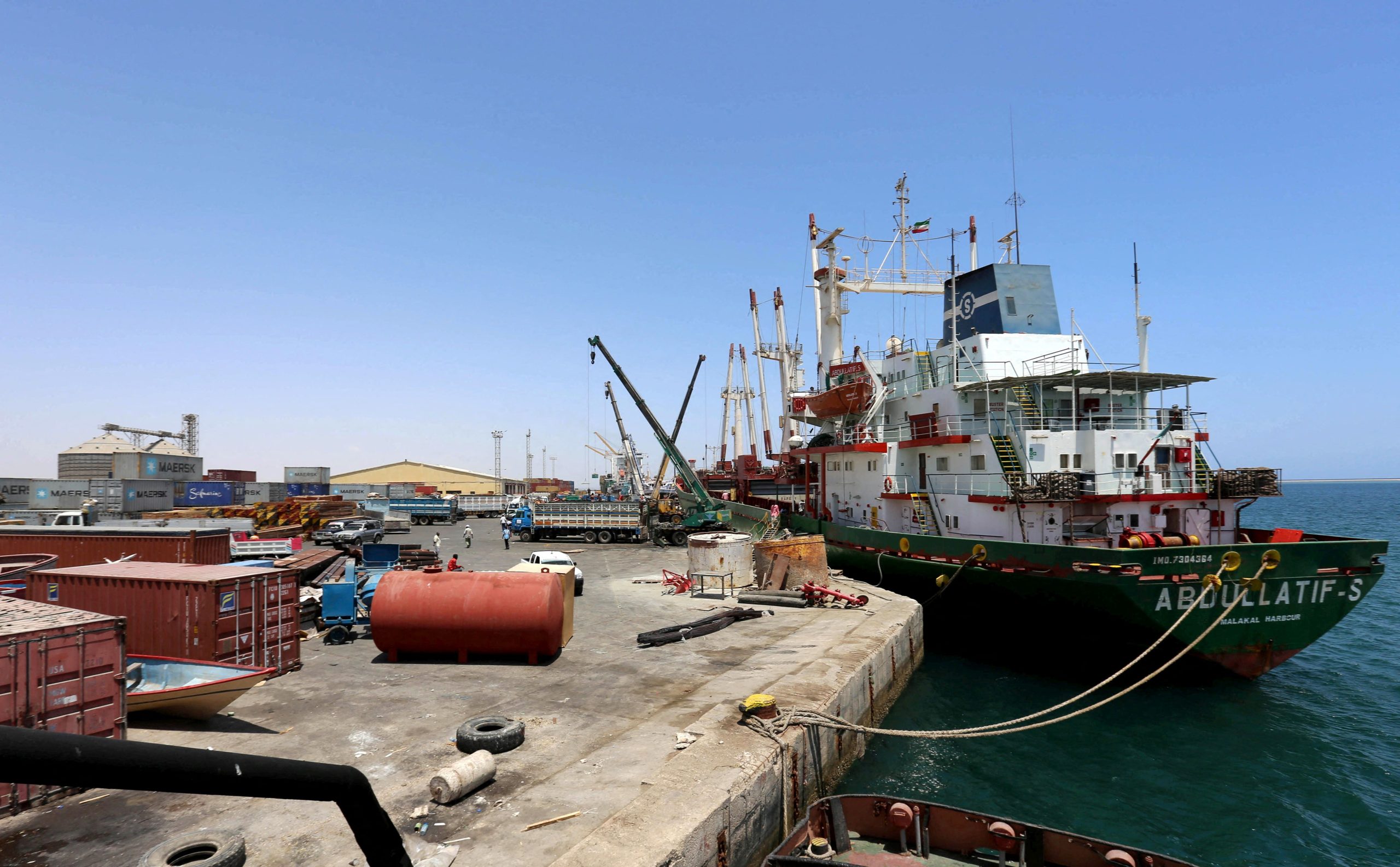
In December, the United Kingdom once again called for accountability as civilians continued to suffer widespread violence in Sudan’s war between the Sudanese army and the Rapid Support Forces (RSF). British officials expressed concern over mass killings and humanitarian devastation. However, reporting has since indicated that behind closed doors, London resisted more far-reaching diplomatic initiatives aimed at preventing atrocities, even as violence escalated on the ground. At the same time, UK policy in Somalia has drawn renewed attention. While Britain officially supports Somalia’s territorial integrity, it also holds a financial stake in a major port located in Somaliland — a self-declared breakaway region the UK does not formally recognise.
Analysts Question Consistency of UK Policy
These parallel tracks in Sudan and Somalia have prompted analysts to question whether Britain’s public messaging aligns with its actions in the Horn of Africa.
Sudanese policy analyst Amgad Fareid Eltayeb said the UK’s credibility increasingly depends on the risks it is prepared to take in defence of its stated principles.
“When people believe your words and your actions diverge, they stop treating you as a broker and start treating you as an interest manager,” he said in comments to Al Jazeera.
Sudan: From Diplomatic Actor to ‘Enabler’, Critics Say
In Sudan, analysts argue that Britain’s cautious diplomatic approach has shaped international perceptions of the conflict. Internal documents cited in earlier reports suggest the UK opted for what was described as the “least ambitious” response to the war, even as mass killings by the RSF intensified in Darfur.
Eltayeb said this stance has contributed to Britain being viewed as a central diplomatic actor whose posture influences how the war is framed globally.
He pointed to allegations that the United Arab Emirates has supported or armed the RSF — claims documented by UN experts and international media but denied by Abu Dhabi — and argued that the UK’s diplomacy has indirectly helped shield the RSF from stronger international condemnation.
Asked about its approach, the UK Foreign Office said Britain was working with allies to end the violence in Sudan and prevent further atrocities, stressing the need for a ceasefire, humanitarian access and a transition to civilian rule.
Somalia and Somaliland: Recognition Versus Reality
The Foreign Office did not respond to questions regarding Somalia or the UK’s commercial involvement in Somaliland, where attention has increasingly focused on the port of Berbera.
The UK co-owns the port through British International Investment, alongside DP World and the Somaliland authorities. Neither the UK nor the UAE officially recognises Somaliland as an independent state.
Located near a vital maritime route linking the Red Sea and the Indian Ocean, Berbera Port has been described in a UK-commissioned assessment as a strategic gateway and a potential alternative trade corridor for Ethiopia.
Strategic Infrastructure With a Long History
According to Matthew Benson-Strohmayer of the London School of Economics, Berbera has long been treated by external powers primarily as strategic infrastructure.
Over time, it has served as a British coaling station, a Soviet naval base during the Cold War, and now a logistics hub shaped by Gulf and Western interests. Benson-Strohmayer said this pattern reflects a tendency to prioritise strategic utility over local political realities.
Sudan, Somaliland and Regional Logistics
As Sudan’s war has spilled beyond its borders, observers have suggested that Berbera may form part of a wider Emirati logistics network that UN experts and media reports have linked to alleged supply routes to the RSF — allegations the UAE denies.
For critics, Britain’s financial involvement in the port raises difficult questions. While London publicly calls for accountability in Sudan, it remains commercially linked to infrastructure operated by a close regional partner accused of backing one side in the conflict.
Horn of Africa analyst Abdalftah Hamed Ali said this has fuelled perceptions of a disconnect between principle and practice.
“Even if London disputes those linkages, the perception problem remains,” he said.
Economic Engagement and Political Consequences
The debate has intensified as Somaliland’s political status has returned to the international spotlight following moves that renewed regional tensions. Analysts say this underscores the difficulty of separating economic engagement from political impact.
Ali said ports like Berbera cannot be viewed as neutral assets. “They are nodes in a wider security and influence system,” he said, adding that investment inevitably reshapes local power dynamics.
Benson-Strohmayer warned that large-scale infrastructure investment can alter the relationship between revenue, governance and political legitimacy — particularly in territories with unresolved status.
“When governments rely on external investors rather than local bargaining, the fiscal and political contract changes,” he said.
‘Ambiguity by Design’, Analysts Say
Analysts describe the UK’s approach as a deliberate balancing act. Britain formally supports Somalia’s territorial integrity while engaging Somaliland as a de facto authority that offers stability, security cooperation and commercial opportunity.
This ambiguity, Benson-Strohmayer argued, allows Britain to maintain access and influence while avoiding the political costs of taking a clear position. Over time, however, it risks weakening accountability on both sides of the dispute.
Taken together, analysts say the UK’s actions in Sudan and Somalia reflect a broader strategy: preserving partnerships and strategic access while avoiding steps that would limit diplomatic flexibility.
Ali warned that in a region as interconnected as the Horn of Africa, such mixed signals carry long-term risks.
“You lose moral authority to push for compromise,” he said, “when local actors believe your incentives lie elsewhere.”