


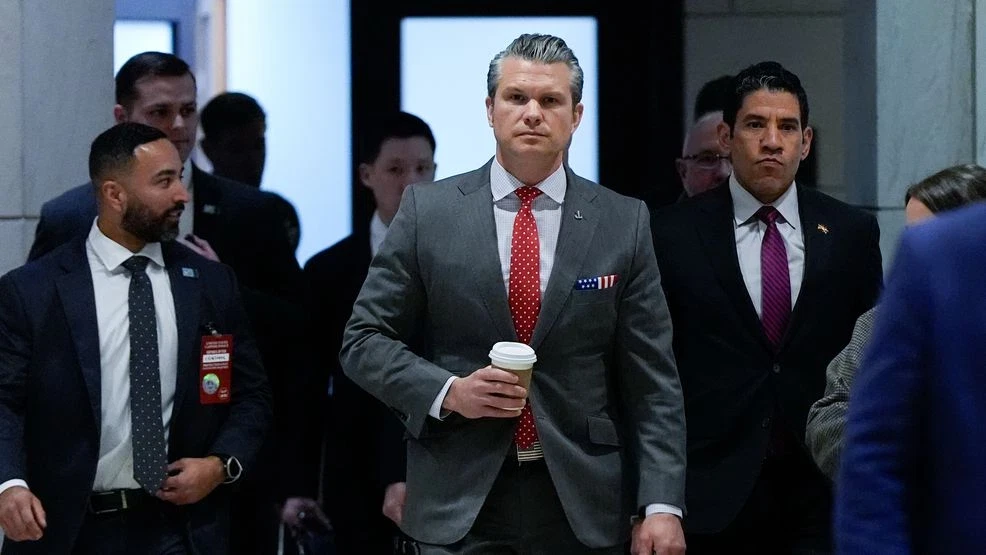
The U.S. Senate voted decisively on Wednesday to advance a $901 billion defense policy bill, sending it to the White House, where President Donald Trump has indicated he will sign it into law.
The legislation, known as the fiscal 2026 National Defense Authorization Act (NDAA), represents a compromise between earlier versions passed by the House of Representatives and the Senate. It authorizes the largest annual military budget in U.S. history, including a 4% pay raise for service members, reforms to military procurement, and initiatives aimed at strengthening competition with rivals such as China and Russia.
The bill passed the Senate by a 77–20 vote, reflecting strong bipartisan backing. Republican senators Mike Lee and Rand Paul were among those who opposed the measure. The House approved the bill last week by 312–112, also with broad cross-party support.
Senator Roger Wicker of Mississippi, chair of the Senate Armed Services Committee, noted that the NDAA has now been passed for 65 consecutive years, calling it a rare example of sustained bipartisan cooperation on national security.
Provisions That Diverge From Trump’s Stance
Despite Republicans holding majorities in both chambers, the bill includes provisions that diverge from Trump’s recent foreign policy positions, particularly regarding Europe.
The NDAA allocates $800 million for Ukraine, split evenly over the next two years, under the Ukraine Security Assistance Initiative, which funds weapons produced by U.S. defense companies for Ukraine’s military. It also supports the Baltic Security Initiative, providing $175 million to bolster the defenses of Latvia, Lithuania, and Estonia.
In addition, the bill restricts the Pentagon from reducing U.S. troop levels in Europe below 76,000 and prevents the U.S. European Commander from relinquishing the role of NATO Supreme Commander.
Wins and Compromises for Both Parties
Lawmakers highlighted the bill’s bipartisan nature, even as its total cost exceeded Trump’s original request by $8 billion.
Some lawmakers had pushed to add stricter helicopter safety rules following a deadly midair collision involving an Army Black Hawk and a commercial passenger plane earlier this year. While those provisions were not included, Senate leaders pledged to address the issue in separate legislation.
The NDAA also repeals the “Caesar” sanctions imposed on Syria during the rule of former President Bashar al-Assad. Another provision would withhold part of Defense Secretary Pete Hegseth’s travel budget unless Congress receives unedited footage of U.S. military strikes targeting boats in the Caribbean and eastern Pacific, which the administration says are linked to Venezuelan drug trafficking.
The Senate vote followed Trump’s recent decision to order a blockade of sanctioned oil tankers entering or leaving Venezuela, escalating pressure on President Nicolas Maduro’s government.
Limits on War Powers and Cultural Measures
The bill repeals the 1991 and 2002 Authorizations for the Use of Military Force (AUMFs) related to Iraq, reinforcing Congress’s authority over decisions to deploy U.S. troops. Trump had previously cited the 2002 AUMF as legal justification for the 2020 killing of Iranian commander Qassem Soleimani.
While the NDAA does not rename the Department of Defense as the “Department of War,” a proposal Trump has supported, it does include several culture-related provisions favored by conservatives. These include a ban on transgender women competing in women’s athletic programs at U.S. military academies and the formal elimination of diversity, equity, and inclusion initiatives at the Pentagon.